After Orbán: Can Russia keep its grip on Magyar’s Hungary?
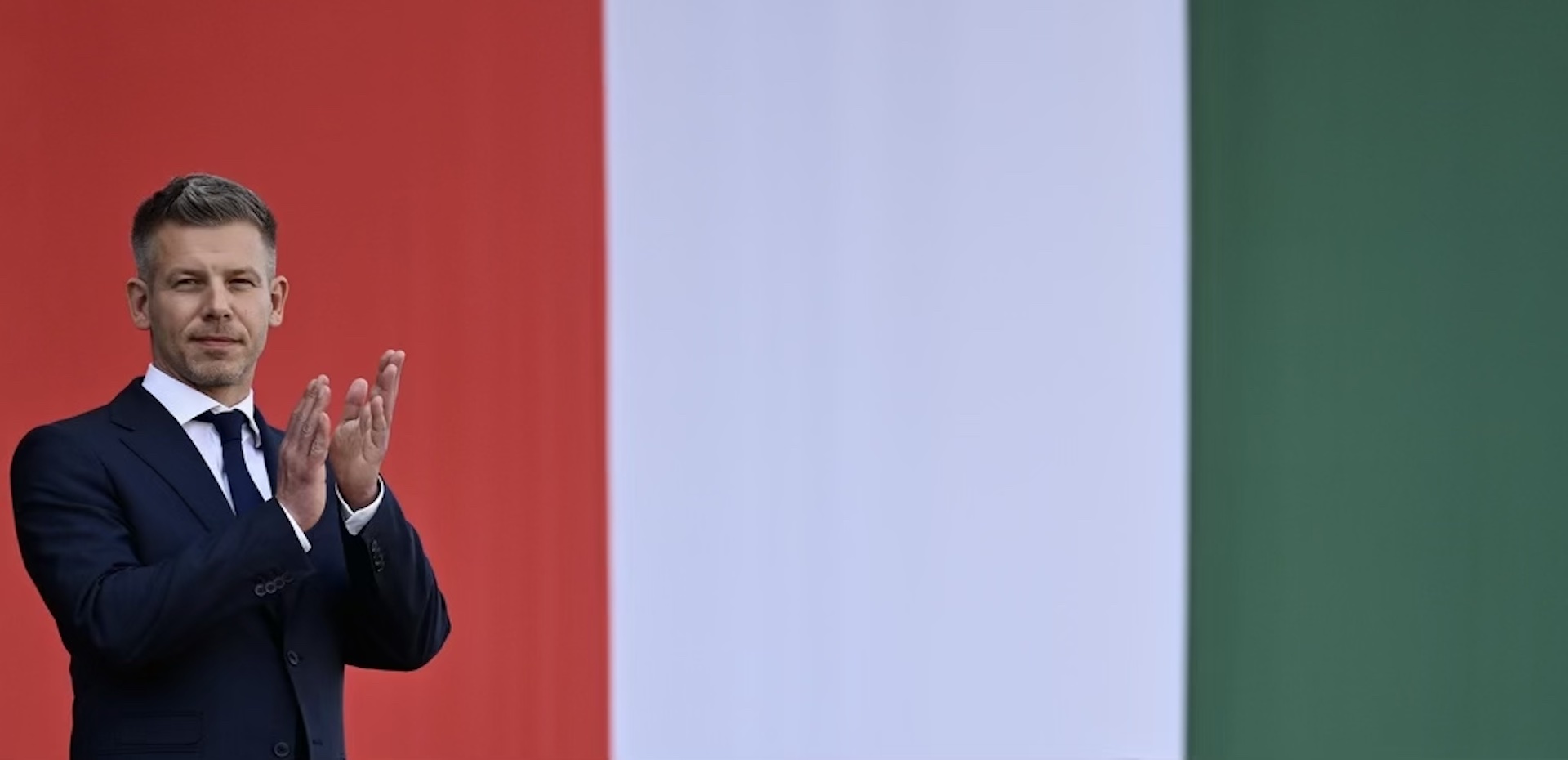
Viktor Orbán’s defeat was unwelcome news for the Kremlin: Putin has lost a loyal, veto-wielding ally within the EU who regularly complicated European policy on Ukraine, sanctions, and energy. However, the victory of Péter Magyar and the TISZA party does not in itself guarantee either genuine democratisation or a complete break with Orbán’s legacy in Hungarian foreign policy.
Magyar appears less a liberal pro-European idealist than a conservative anti-Orbán pragmatist, building his campaign around promises of more competent, less corrupt governance and of ending Hungary’s international isolation. This raises some key questions: which elements of the Orbán system the new government will dismantle, which it will preserve, and whether Russia will be able to exploit the remaining vulnerabilities in Hungary’s energy policy, governmental institutions, and party politics.
The challenges of de-Orbánisation
The defeat of autocrats in elections is often assumed to lead automatically to democratisation. In practice, this is not the case. Even after a transfer of power, old institutions, patronage networks, media outlets, economic cliques, and legal arrangements may continue to work in favour of the ousted party – or be co-opted by the new winners.
The main test for Magyar’s government, therefore, will lie not only in anti-corruption rhetoric or symbolic distancing from Orbán, but in its willingness to restore independent institutions even where this limits TISZA itself.
Magyar has made a number of statements which indicate his commitment to strengthening Hungarian democracy, including a pledge to limit prime ministers to two terms in office. Such a measure could indeed reduce the risk of the concentration of power in the hands of a single individual. But it also has an obvious political benefit: it would make Orbán’s return more difficult. It should therefore be assessed not in isolation, but in connection with Magyar’s implementation of wider reforms, such as changes to the electoral system, and the restoration of the independence of the judiciary, the prosecution service, public media, and anti-corruption bodies.
One of the key tests will be the electoral system. The rules created under Orbán were criticised for disproportionality and for their tendency to amplify the advantage of the largest party. If TISZA benefits from these rules, it will face a natural incentive not to revise them. This does not mean that the party will necessarily preserve the Orbán-era system, but its handling of this issue will make clear whether its commitment to its democratic programme is stronger than its short-term interest in retaining power.
Party organisation
Magyar stressed that TISZA is ‘certainly not building Fidesz-light’, yet TISZA’s electoral success was based largely on the promise of more honest and competent governance, not on an ideological rejection of Orbán’s conservatism. The risk, therefore, is not that TISZA is merely a copy of Fidesz, but rather that once in power it may adopt some of the old system’s governing practices – especially if they prove politically convenient.
On a number of sensitive issues – Ukraine, migration, agriculture, and some aspects of European integration – TISZA adopted cautious or ambiguous positions, at times echoing the Fidesz line. However, this does not indicate that the party has embraced a pro-Russian orientation. It may instead reflect electoral caution, the party’s own conservatism, the sensitivities of Hungarian public opinion, or an attempt not to grant Fidesz a monopoly over the nationalist vote.
More revealing than any individual issue will be the broader pattern of behaviour: whether Hungary under Magyar blocks sanctions on Russia, provides military assistance to Ukraine, diversifies its energy sources, and generally follows EU decisions, or instead moves away from Orbán’s enthusiastic wielding of the veto towards a more pragmatic and cooperative course.
Magyar’s background as a former Fidesz member is an important but ambiguous factor. On the one hand, it may indicate that he is accustomed to the Orbán regime's informal networks, governing habits, and political culture. On the other hand, former insiders often become effective dismantlers of old systems precisely because they understand how those systems function from within. Magyar’s biography, therefore, does not in itself prove either his democratic reliability or that he is liable to drift towards authoritarianism. It merely increases the importance of empirical benchmarks in assessing his leadership, such as personnel appointments, institutional reforms, and foreign policy decisions.
A separate risk is linked to TISZA’s technocratic style and reliance on Magyar’s personal popularity. The party’s rapid growth around the figure of Magyar allowed it to distance itself from the discredited ‘old’ opposition and present itself as a new force. However, this model also has weaknesses: dependence on a single leader, a lack of stable intra-party governance, limited ideological development, and potential discipline problems once in power.
In itself, the refusal to cooperate with the old opposition is not a sign of anti-democratic politics. But if TISZA continues to use Magyar’s personality to mobilise its supporters once the party enters government, this may hinder institutional democratisation.
Personnel policy will be one of TISZA’s most difficult challenges. During the years of Fidesz rule, appointees loyal to Orbán were deeply embedded in the civil service, the judiciary, regulatory bodies, the media, and business. The new government will inevitably face the question of how to restore the impartiality of public institutions without appearing to make its own partisan appointments.
For democratic de-Orbánisation and the restoration of institutional autonomy, what matters is not mass firings as such, but the appointment of officials through transparent, meritocratic procedures, with judicial oversight and verifiable accountability criteria. Otherwise, the struggle against the Fidesz legacy could easily be presented as revanchism or used to install a new ruling elite.
A second set of risks lies within TISZA itself. As long as the party served mainly as an instrument for replacing Orbán, its heterogeneity was an advantage: it brought together people from different political backgrounds who were tired of corruption, stagnation, and international isolation. But after victory, the anti-Orbán consensus will no longer be sufficient. The party will have to make decisions on taxation, social policy, Ukraine, migration, minority rights, energy, and relations with the EU.
This is precisely where the party’s lack of established institutions may become apparent: the absence of internal coordination mechanisms, dependence on the leader, and the potential for conflict among TISZA’s liberal, centrist, and conservative voters are all potential vulnerabilities.
Authoritarianism does not automatically lead to a pro-Russian course. The Law and Justice (PiS) party in Poland demonstrated that conflict with the EU’s liberal institutions can coexist with a strongly anti-Russian foreign policy. Conservatism, Euroscepticism, authoritarianisation, and alignment with the Kremlin are not automatically linked with each other.
The Hungarian case differs in that, under Orbán, an infrastructure of transactional relations with Moscow was established: energy contracts, the Paks II nuclear power project, a distinct rhetoric of ‘peace’, regular conflicts with Brussels, and the use of Hungary’s veto over EU decisions as a bargaining instrument. It is this – rather than Magyar’s conservatism in itself – that creates the risk that Russian leverage will endure.
The main risk for the EU, therefore, is not that Magyar is from the outset an ‘Orbán 2.0’ figure or a covert ally of the Kremlin. Such a conclusion would be premature. A more realistic risk is partial de-Orbánisation: the new government could dismantle the most toxic elements of the old system, while preserving institutional mechanisms which it found useful, the use of ‘national-conservative’ rhetoric, and, to some extent, Hungary’s energy dependence on Russia.
In this scenario, Hungary may cease to be as overt a Kremlin proxy as it was under Orbán, while still not becoming a reliable driver of a common European policy on Ukraine and Russia. For Brussels, this means not only welcoming the change of government, but also closely monitoring concrete indicators: electoral reform, the independence of the media and judiciary, the transparency of Paks II, oil and gas diversification, and Hungary’s behaviour in votes on sanctions and assistance to Ukraine.
The inertia of energy dependence
Energy remains one of the main channels through which Russia may preserve influence over Hungary even after Orbán’s departure. This is not necessarily a matter of direct political control from Moscow. More important is the fact that breaking with reliance on Russian oil, gas, and nuclear infrastructure would impose a high cost on Budapest. The more expensive and painful energy diversification becomes, the easier it is for any Hungarian government to justify caution, demand exemptions from the sanctions regime, and break with the rest of the EU in its approach to relations with Russia.
The most visible vulnerability concerns oil. Hungary remains heavily dependent on Russian supplies, while its refining infrastructure has historically been adapted to Russian crude. This does not mean that there are no alternatives. But a transition to other oil sources – above all via Croatia’s Adriatic pipeline – would require political agreements, technical capacity assessments, pricing compromises, and probably temporary financial support from the EU.
A similar logic applies in the gas sector. Hungary has alternative routes and regional interconnectors, but long-term contracts, pricing, infrastructure constraints, and political inertia preserve dependence on Russia. The key question, therefore, is not whether Hungary can theoretically diversify, but whether the new government is prepared to pay the short-term political and economic cost of energy diversification.
A separate and long-term source of leverage is nuclear energy. The Paks II project, involving Rosatom, may preserve technological, financial, and regulatory ties with Russia for decades. Yet exaggeration should also be avoided here: the use of nuclear energy in itself does not imply that Hungary has adopted a pro-Russian course. The problem lies primarily in the specific structure of the project: the contractor, financing, technology, fuel supply, servicing arrangements, and contractual transparency, as well as the degree of dependence on Russian decisions entailed by all of these.
The EU’s task, therefore, should consist not only of pressuring Budapest but also of reducing the cost of ending dependence on Russian energy. In the oil sector, this could mean an audit of the Adria route’s capacity, negotiations between the Hungarian oil company MOL and Croatia’s JANAF, temporary compensation mechanisms, and consumer protection against sharp price increases. In the gas sector, it could involve support for alternative supply routes, regional procurement, LNG infrastructure, and interconnectors. In the nuclear sector, it could mean demands for greater transparency around Paks II, a legal and financial audit of the project, and, where possible, discussion of European refinancing or partial technological diversification.
In other words, the Kremlin’s strength here does not lie in Hungary having ‘no exit’. An exit exists. The Kremlin’s strength lies in the fact that this exit is costly, contentious, and politically inconvenient.
Indicators of rapprochement with the Kremlin or with Europe
- Political communication. If Orbán-era rhetoric on Ukraine, the Hungarian minority in Zakarpattia, the EU, and Hungary’s friendship with Russia begins to return, this will be the first sign of a shift towards a more pro-Russian stance.
- Energy diversification. The clearest indicator of a pro-European stance would be the development and implementation of a detailed plan to reduce dependence on Russian oil and gas by 2035. In the near future, Magyar’s initial efforts towards diversification should become visible. This also applies to the nuclear sector: Magyar has spoken about reassessing the financing of Paks II, and about the possibility of developing small modular reactors with partners such as France and the United States.
- European solidarity. The most obvious indicator in this regard is voting behaviour on various European initiatives. The key issues here are financial and military assistance to Ukraine and sanctions against Russia. It was precisely in blocking such initiatives that Orbán proved particularly effective. Moreover, this does not concern the EU alone: Hungary also delayed Sweden’s accession to NATO until the last moment, prolonging the process for almost two years after Stockholm submitted its application.
- Direct contacts with Moscow. It will be important to monitor how frequently diplomatic meetings occur, at what level, and in what form. Particular attention should be paid to informal meetings, since many agreements during the Orbán period were reached precisely through such channels.
- Personnel appointments in strategic sectors. Another important indicator of Hungary’s future course will be who gains control over foreign policy, energy, the intelligence services, the nuclear sector, state media, and negotiations with the EU. Regardless of the government’s public rhetoric, continuity with the Orbán era or the appointment of pro-Russian figures in these sectors could preserve the old model of influence.
These indicators should be understood within the broader context of regime change in Hungary. Regression in democratisation, increased contacts with Moscow, and new infrastructure contracts with Russian companies would clearly indicate a drift towards the Kremlin.