All in: The Kremlin’s new expectations of regional elites
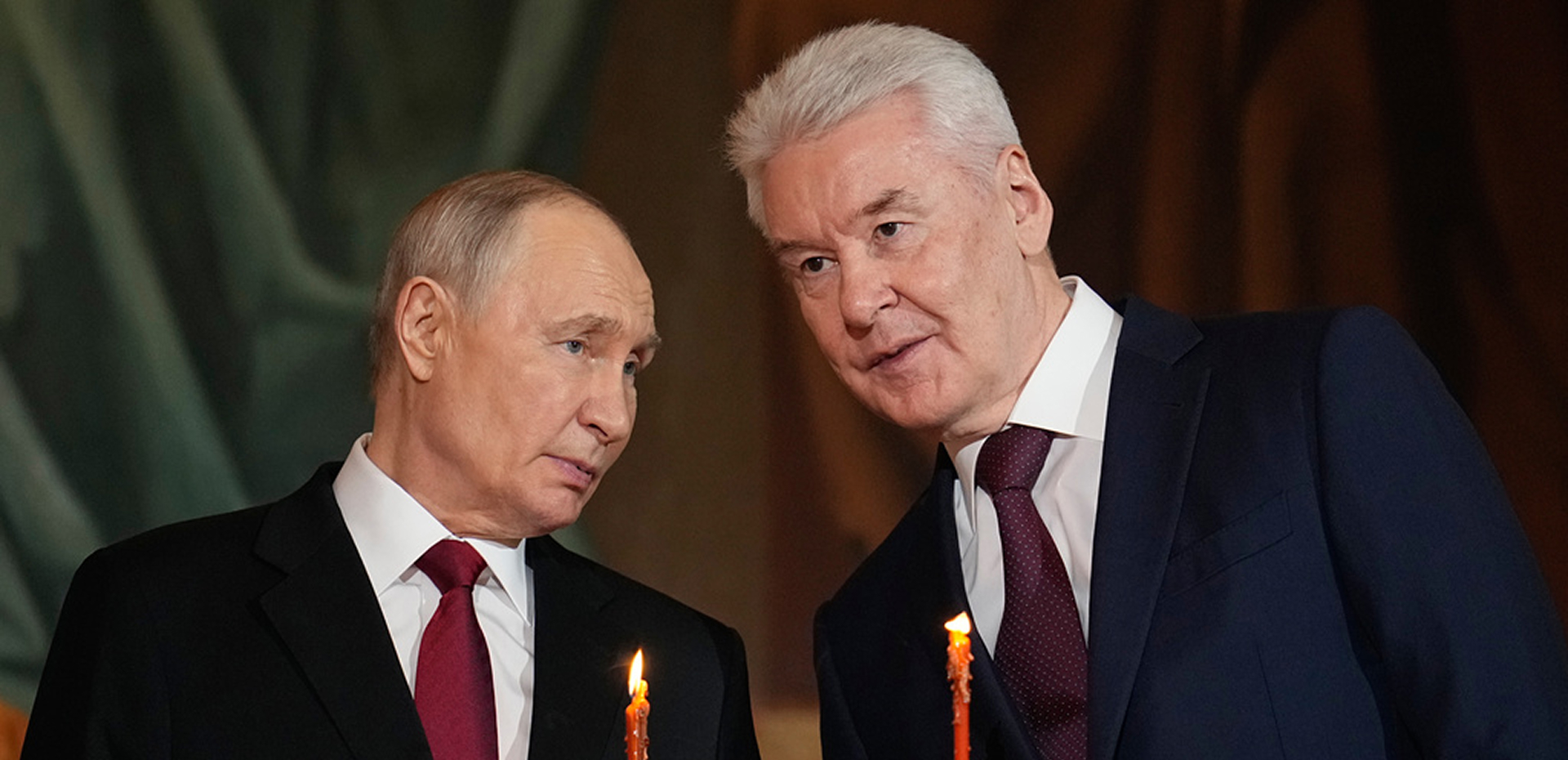
Two senior Russian officials – Moscow Mayor Sergei Sobyanin and Krasnoyarsk Krai Governor Mikhail Kotyukov – have recently made notable public statements about their regions’ contributions to the war against Ukraine. These statements reveal the federal authorities’ expectations of regional officials: the success of their work is measured primarily by how well they serve the war effort. Even Moscow, which previously showcased the continuation of normal life during the war, can no longer distance itself from the fighting.
Sobyanin spent many years cultivating an image as a ‘competent administrator’ and avoiding warlike rhetoric. For Western analysts, the most notable part of his interview with TASS Director General Andrei Kondrashov was therefore his strong statement about the ‘futility’ of the idea of a militarised economy, and of supporting the war effort at the price of disrupting normal life. This was read as the reflection of an intense debate within Putin’s circle about the economic cost of the war. However, the main audience for Sobyanin’s interview was undoubtedly domestic: the governors of Russia’s regions, for whom the Moscow mayor is an informal leader.
In his interview, he pointed out that Moscow is the largest centre of the military-industrial complex. He emphasised how the capital’s civilian authorities are working with the Ministry of Defence to equip air defence positions and organise the production of their own drone interception systems. The city hosts dozens of defence enterprises and research institutes which produce technological, medical, and electronic equipment required for the front.
Sobyanin’s deliberate emphasis on Moscow’s role in the defence industry, and on the deployment of more than 100,000 volunteers from Moscow to the front, is particularly significant given his traditional role as an apolitical technocrat. It shows that the capital cannot ignore the demands imposed by the war.
Vladimir Putin’s meeting with Krasnoyarsk Krai Governor Mikhail Kotyukov in the same week directly indicated what the federal authorities expect from regional officials. While Putin’s meetings with governors previously tended to focus on the economy and social issues, their regions’ support for the war effort has now come to the fore, as it did in Sobyanin’s case. Putin and Kotyukov discussed the development of the defence-industrial complex around JSC Reshetnev, a key Roscosmos subsidiary. The plant produces around two-thirds of all Russian satellites, supporting the orbital communications and navigation network that is critical for military needs. In addition to satellite production, the meeting covered the Military Engineering Institute, which conducts research and development for defence plants and trains air defence and artillery officers, as well as programmes to appoint war veterans to government positions.
Putin’s meetings with governors usually receive far less coverage and go into much less detail. It seems that the Kremlin attaches particular importance to the example set by Kotyukov, who received unusually close attention in the Russian media. The fact that senior regional officials – Sobyanin and Kotyukov – made these public statements at the same time has two implications. On the one hand, it symbolically places Moscow on the same footing as other regions in the face of a war that is penetrating ever more deeply into Russians’ everyday lives. On the other hand, Sobyanin’s and Kotyukov’s public reports set a new standard for all governors. They are no longer expected to be politically neutral technocrats, but will now be judged by their ability to build effective infrastructure for the war effort.