Beneficiaries of the war versus advocates of peace: Elite expectations and the reality of war
Over the course of the war against Ukraine, a broad group of beneficiaries has emerged in Russia – from major business groups to the security services and military combatants. For them, an end to the war would mean a loss of income, a reduction in political influence, and the need to adapt to an economy in which the opportunities linked to wartime mobilisation are rapidly narrowing. Yet supporters of an early peace – many of whom have lost out as a result of the war – also risk failing to achieve their aims: a return to the pre-war model of cooperation with the West remains unlikely in the context of degraded institutions, nationalised assets, and a high level of political uncertainty.
What happened?
On 2 December an American delegation comprising Donald Trump’s special envoy, Steve Witkoff, and businessman Jared Kushner, the son-in-law of the US president, arrived in Moscow for talks with Vladimir Putin that lasted more than five hours. Following the meeting, Yuri Ushakov, the Russian president’s aide, stated that the parties had reached agreement on some points, but that ‘no compromise option was found’. The territorial question, which is fundamental for Moscow, remains unresolved.
Diverging expectations
Although both the Russian elite and wider society appear united around the president and supportive of his foreign policy, this cohesion is not ideological but compelled. It is maintained by a combination of repression, the absence of an ‘exit option’, and, for the elite, the direct link between their own survival and that of the Putin regime, which in turn depends on the outcome of the war in Ukraine.
Yet behind this façade of unity lies a persistent internal divide between two groups. The first consists of the beneficiaries of the mobilisation economy, for whom an end to hostilities is economically and politically undesirable. These actors are not necessarily advocates of the war, but they have learned to extract direct or indirect benefits from it. The second group includes those who expect an early end to the war and a return to economic cooperation with the West.
Neither group is in a position to influence the president’s decision on whether to continue or end the war. Whichever side loses will be forced to adapt to new conditions, and the winning side will not obtain what it expects.
Who profits from the war in Russia?
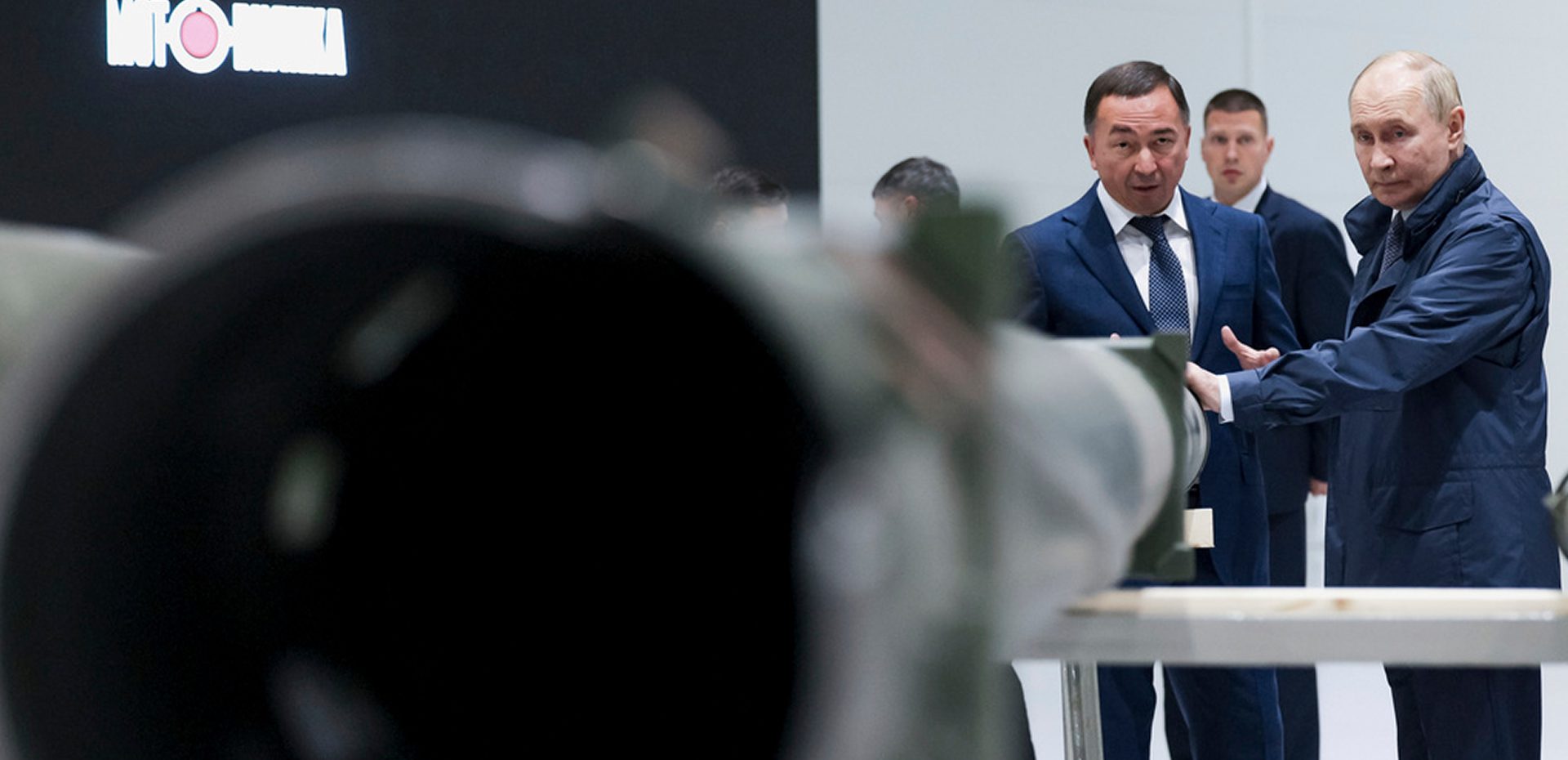
More than 80 Russian oligarchs participate in the system that arms and supplies the Russian military. For example, Kalibr missiles are produced by companies linked to Vagit Alekperov, Alisher Usmanov, Viktor Vekselberg, and other billionaires. The production of FAB-500 bombs involves organisations associated with Leonid Mikhelson, Gennady Timchenko, Oleg Deripaska, and others. The total value of publicly available contracts between major Russian business figures and the Ministry of Defence from 2014 to 2023 is at least 220 billion roubles (approximately $2.3–2.5 billion in current terms).
According to the Stockholm International Peace Research Institute (SIPRI), Russia’s two largest state corporations – Rostec, headed by Sergey Chemezov, who served with Putin in the KGB, and the United Shipbuilding Corporation, led by banker Andrey Kostin – increased their combined revenue from arms sales to 31.2 billion dollars in 2024, a rise of 23 per cent compared with 2023.
In total, more than 6,000 enterprises are involved in Russia’s state defence procurement system. Around 850 of them – ranging from furniture manufacturers to construction, engineering, transport, logistics, and food companies – had not previously worked with the defence sector. They now receive state contracts for supply, logistics, repair, and related services.
The war benefits not only those who receive direct income from meeting military needs, but also those who exploit the indirect economic and political opportunities that arise around it. Sanctions and the breakdown of previous trade links have prompted Russia to accelerate its shift towards the Asian markets, above all China. This restructuring has created new niches for businesses involved in logistics, transport infrastructure, intermediary operations, parallel imports, and transit services.
Growing dependence on new external partners also expands opportunities for companies that provide payment arrangements, insurance, technical support for transactions, and mechanisms for circumventing restrictions. At the regional level, gains accrue to territories located along the new trade routes, and within the political system to groups whose positions are strengthened by their control over the distribution of resources associated with this reorientation.
Apart from big business, the greatest gains from the war accrue to low-skilled workers, employees of security agencies, and defence-sector specialists, as well as combatants1 and their families2. They account for the main share of the overall increase in household incomes, which reached 8.4 per cent in 2024 after inflation, and 9.2 per cent in January–September 2025. The total share of war beneficiaries in society is estimated at 20–25 per cent.
If the war ends, some defence enterprises – several of which have already encountered stagnation this year – risk losing their orders. This would lead to reduced output and workforce cuts. In addition, the end of accelerated mobilisation would be followed by the discharge of a significant number of service personnel. As a result, several hundred thousand people and their families would face a direct decline in income, and labour-market pressures would grow in regions with high levels of mobilisation for the war.
The beneficiaries of the war will be dissatisfied, but lacking any means to influence political decision-making, they will be forced to seek new sources of income.
Business as usual
Those sections of the elite hoping for an early end to the war and a return to the pre-war economic model assume that, once hostilities cease, Western businesses – driven by the pursuit of profit – will push for sanctions relief and a return to the Russian market, and will ultimately succeed.
In this context, the visit by Witkoff and Kushner to Moscow may be interpreted as a signal to European counterparts: if the American side accepts the possibility of future commercial engagement, European companies should also consider an early return to Russia.
However, the key structural obstacle to the return of Western business – and one that this group may not fully appreciate – is the profound degradation of the institutional environment: weakened property-rights protection, expanded administrative control, heightened political risks, and regulatory unpredictability, all of which make long-term investment practically impossible.
As of July 2025, at least 102 enterprises located in Russia had been expropriated by the state since the start of the full-scale invasion of Ukraine. The total value of the seized assets amounted to roughly 3.9 trillion roubles (approximately $43–44 billion). The assets of at least 16 foreign companies were placed under temporary administration, and those of at least four of them – Danone, Carlsberg, Rolf, and Ariston – were sold to new owners. On average, the process from filing a claim to registering the change of ownership in the state register took around two months, and many cases were resolved in a single court hearing.
Even if sanctions are relaxed, institutional constraints, reputational costs, and the relatively limited size of the Russian market – notwithstanding a possible rise in deferred demand for consumer goods after the war – would discourage most Western companies from returning.
Under these conditions, only a limited number of businesses are likely to return to Russia, primarily in sectors where high profit margins justify elevated risks: energy, resource-related services, and certain business-to-business transactions. Some companies, such as Boeing or Airbus, may consider restricted forms of engagement limited to servicing the existing fleet. However, for most major corporations – from banks to auditing and law firms – re-entry into the market will remain undesirable until political and legal conditions change at a structural level.