Government reshuffle: Austerity beckons
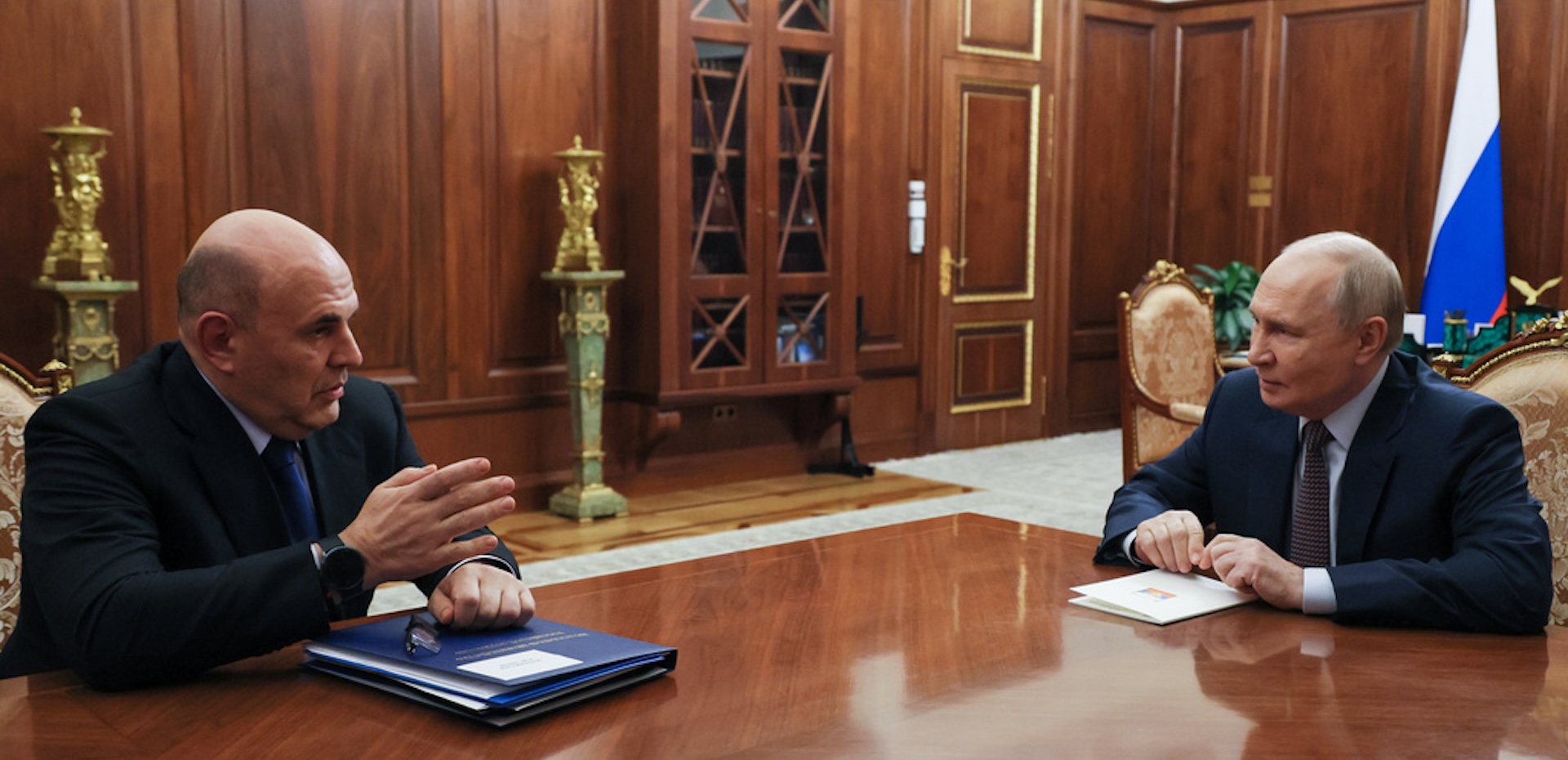
Russia has carried out its biggest government reshuffle since 2024. The changes weaken Prime Minister Mikhail Mishustin’s position and make it harder for ministers to secure funding for economic development schemes. The re-organised government’s overriding priority now is to cut spending across the board in order to finance the war.
The most significant change in last week’s government reshuffle was the promotion of Finance Minister Anton Siluanov to deputy prime minister while letting him keep his existing portfolio. His deputy, Irina Okladnikova, will take charge of the government apparatus, which controls the flow of documents to the prime minister’s desk. She will also serve as deputy prime minister, replacing Dmitry Grigorenko, a long-time ally of Mikhail Mishustin who has served as his right-hand man for almost seven years.
'The departure of Dmitry Grigorenko, one of Mishustin’s closest allies since their time at the Federal Tax Service, effectively deprives the prime minister of direct control over the government apparatus. Under Grigorenko, the apparatus served as a source of influence for Mishustin, allowing him to counterbalance ministers and deputy prime ministers appointed without his involvement.'
Nikolai Petrov
Senior Research Fellow
Grigorenko screened all documents submitted to the prime minister. He also oversaw the finance and digital development ministries, the ‘national projects’, and the government’s digitalisation programme. Amid the deepening economic crisis, the government likely concluded that there was no place for large-scale development spending. In any case, the security services have gained full control over the digital economy. Since 2025, the FSB’s Second Service has overseen internet blocking, while the Ministry of Digital Development, under Grigorenko’s remit, tried to limit the most radical restrictions.
Siluanov’s promotion to deputy prime minister puts him on an equal footing with officials such as Denis Manturov (first deputy prime minister), Tatiana Golikova (deputy prime minister in charge of social policy), and Marat Khusnullin (deputy prime minister), who are powerful lobbyists for the sectors they oversee, routinely seeking funding for industry, social programmes, and major construction projects. Under the previous system of checks and balances, Grigorenko could rein in the finance minister. Now Siluanov and Okladnikova can exercise full control over incoming budget requests and block any initiatives from ministers and deputy prime ministers that fall outside the government’s core priorities.
The promotion of Siluanov and Okladnikova indicates that the Kremlin prioritises sweeping spending cuts over investment in developing the economy. This year, government spending will exceed the planned level by more than 10 per cent, doubling the budget deficit. The draft 2027 budget already envisages severe fiscal consolidation. Compared with previous plans, spending on social policy will be cut by 7 per cent, healthcare by 6.8 per cent, subsidies and infrastructure by 7.4 per cent, and education by 6 per cent. All freed-up resources will go to the military sector, with spending on defence and security set to rise 27 per cent to a record 17.1 trillion roubles (212 billion dollars)
The reshuffle reflects a shift in the Russian leadership’s priorities. The government’s main task is now to prevent the financial system from collapsing and to ensure an uninterrupted flow of resources to the war effort.
'Russia’s political leadership is depriving the government of the ability to plan for the future or address any significant strategic issues. The Russian finance minister’s planning horizon extends only to the end of the budget year, with 1 January always marking a fresh start. The whole government will now live by the same rules. The slogan ‘Everything for the front, everything for victory’ is becoming a way of life.'
Sergey Aleksashenko
Head of Economics