High-level discussion of Russia’s economic problems is taking place for a reason
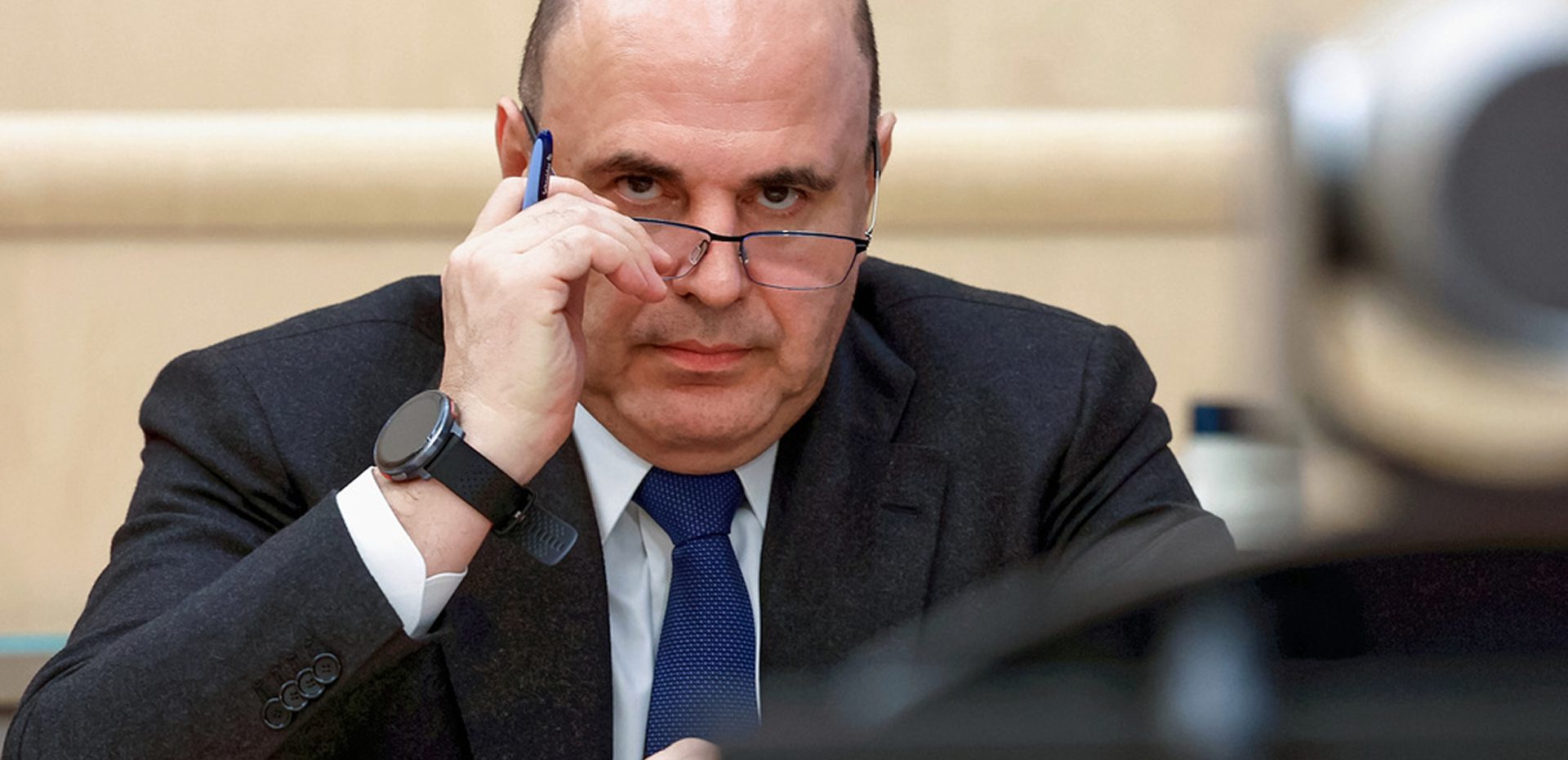
Criticism of the Mikhail Mishustin government for failing to meet economic development targets is one of the key themes to watch in domestic politics in the coming weeks. The Russian political system is under electoral stress in the run-up to the State Duma elections. This period is traditionally accompanied by intra-elite mobilisation and increased competition for resources and influence.
On 15 April, at a meeting with the government and the Central Bank, Vladimir Putin demanded an explanation for the deterioration in macroeconomic indicators – a 1.8 per cent contraction in GDP, as well as negative dynamics in industry and construction. Several days later, the Minister of Economic Development, Maksim Reshetnikov, stated that a significant share of the country’s economic reserves had been exhausted.
It is not typical for Putin to publicly acknowledge economic underperformance, and the economic situation is far from being so severe as to require it. Given that public debate is tightly controlled, such interventions are impossible if they are not related to specific political scenarios. One of them is the deliberate increase of pressure on the Mishusitin government ahead of the elections, potentially leading to its resignation.
A change of government was used as part of an electoral strategy in 2004, 2007, and 2020. The cabinet's resignation is a means to correct the authorities' low approval ratings. This is precisely what is indicated by the state polling organisation VCIOM (Russian Public Opinion Research Center), which reports a record decline in Putin’s approval rating since the start of the war. Notably, as a state-controlled pollster, it shows a more pronounced drop than surveys by other organisations, including FOM (Public Opinion Foundation) and the independent Levada Center.
Public discussion of economic problems and low ratings can be seen as a continuation of a broader competition between the civilian administration and the security services. Above all, this concerns the expansion of the FSB’s influence.
One of the key arenas of this struggle is internet regulation. Previously, the internet fell within the remit of the domestic policy bloc of the Presidential Administration, overseen by Sergei Kiriyenko. Fearing public reaction, he opposed introducing strict restrictions until the end of the electoral campaign.
However, more recently, effective control over internet regulation – including blocking messaging services and restricting mobile communications – has been assumed by the FSB’s Second Service, a unit responsible for countering the opposition.
In response, the Presidential Administration allowed the ‘systemic’ opposition– the Liberal-Democratic Party of Russia (LDPR), the Communist Party of the Russian Federation (CPRF), and New People – to criticise the blocking measures, and secured approval from the Central Electoral Commission to conduct election campaigning on the blocked Telegram platform
Discussion in public of declining presidential approval ratings against the backdrop of digital restrictions can also be seen as part of a strategy by Kiriyenko’s team, which seeks to apply pressure on the security bloc. It is signalling that the source of governance risks lies not so much with the government as with the actions of the security bloc.
This week’s issues to watch
- The Ukrainians have stabilised the situation on the battlefield, in particular through the large-scale deployment of a new generation of medium-range strike drones – primarily FP-2 and Rubaka – equipped with heavy warheads (up to 100 kg) and jam-resistant communication links, which Russian electronic warfare systems have so far struggled to disrupt. This has extended the effective strike range to 200–250 km, recreating the ‘HIMARS effect’ of 2022–2023 but with a far larger number of strike assets. Over the past 12 months alone, at least 365 confirmed strikes have been recorded at depths of 50–250 km inside Russian-held rear areas. Command centres, logistics infrastructure, electronic warfare and air defence systems, as well as assault group staging areas, have been systematically targeted. According to ISW, this has slowed the pace of Russian advances since the start of 2026. The approach has already produced results in the south, where around 50 square kilometres of territory were retaken in March. It is unclear whether the Russian command will be able to identify ways to counter these new technical capabilities before the announced spring–summer offensive, which, according to Ukrainian intelligence, aims to capture Donbas by September.
- Hybrid military mobilisation continues. The Russian authorities are introducing additional mechanisms, including quotas for higher education institutions, under which 2 per cent of male students are to be sent to the war. It is unclear whether these quotas will be implemented in practice or remain formal. If the plan is fulfilled, the Russian army will receive up to 44,000 personnel with educational backgrounds that enable them to rapidly master modern high-technology methods of warfare.
- Pro-war Z-bloggers express dissatisfaction with internet blocking and censorship: their criticism is not political but functional – the restrictions hinder the war effort. It is unclear whether this position will persist or whether a public shift towards justifying the restrictions will begin, including under pressure on specific authors.
- On 24 April, the Bank of Russia’s Board of Directors will meet to set the key interest rate. A 50-basis-point cut appears largely predetermined and would not signal a substantive shift in monetary policy. A 100-basis-point cut, however, would suggest that business lobbies and senior government officials have persuaded Putin to increase pressure on Elvira Nabiullina, Governor of the Central Bank of Russia, to ease more decisively, effectively shifting primary political responsibility for the rapid slowdown of the economy onto the Central Bank. It remains unclear which scenario will prevail, but the scale of the cut will serve as an indicator of whether inflation or recession is the more pressing concern for the Kremlin.