Moscow’s dream scenario: Russia and the US aligned against Ukraine
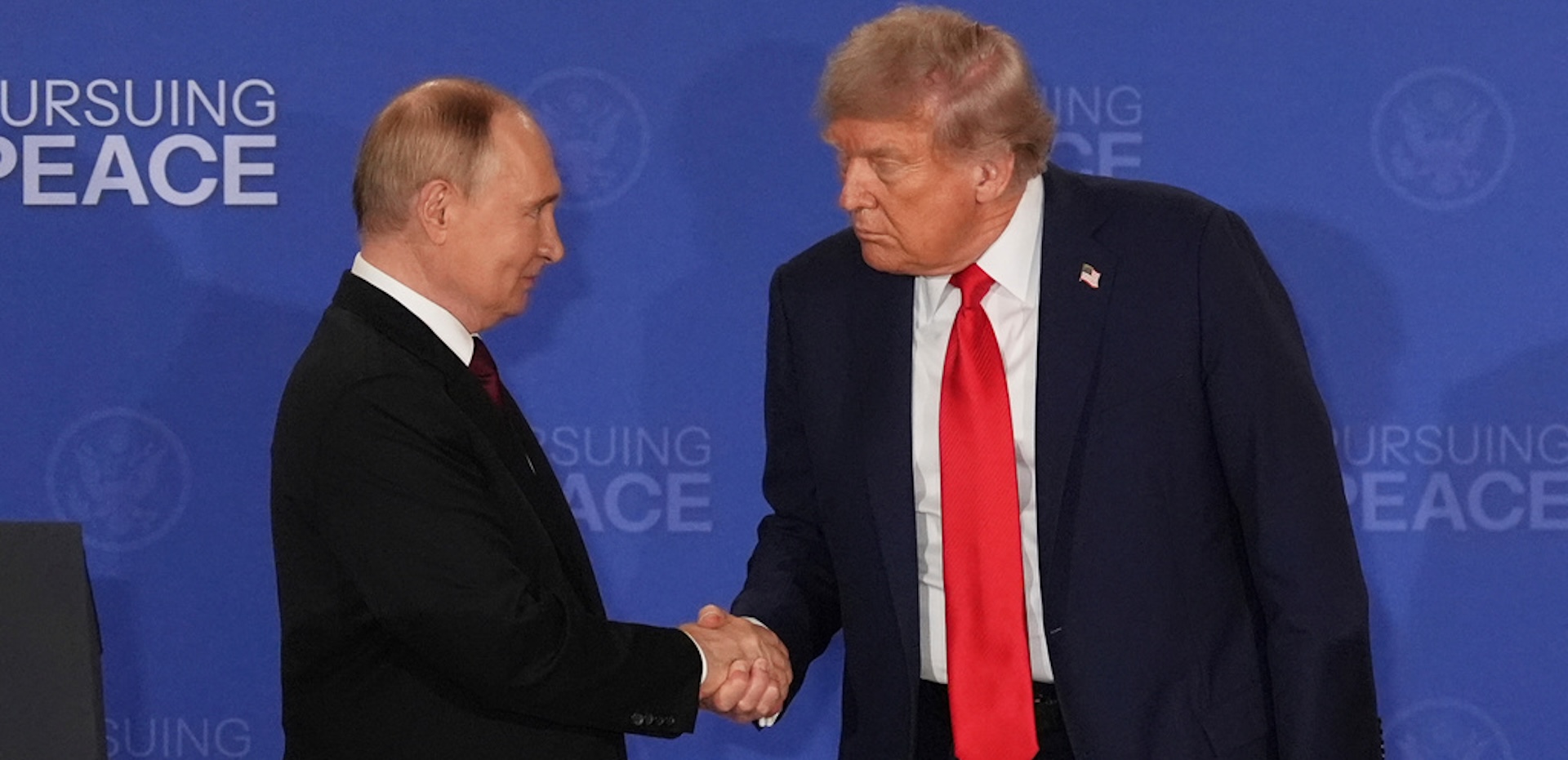
As a new rift between Donald Trump and Volodymyr Zelensky deepens, Moscow is taking a wait-and-see approach. Mindful of Trump’s unpredictability, Russian officials have cautiously expressed agreement with the White House’s position and have said that they are ready to renew economic cooperation between the US and Russia before the war in Ukraine ends. Kyiv, by contrast, has condemned Trump’s initiatives, triggering a war of words between Zelensky and Trump. Moscow sees the deterioration in relations between the two leaders not as a one-off event, but as part of a broader divergence between America and Europe at a time when European countries are still far from ready to manage their security on their own.
On 9 October, following a telephone conversation with Vladimir Putin, Donald Trump announced a ‘diesel deal’ in which Russia agreed to provide fuel for the US and global markets. Putin commented on the announcement in strictly businesslike terms, stating merely that the move would ‘have a positive impact on the global economy’. His press secretary, Dmitry Peskov, also emphasised the deal’s commercial aspect, describing it as ‘an energy deal, not a diplomatic one’.
In more optimistic statements, presidential aide Yuri Ushakov and special envoy Kirill Dmitriev stressed that the initiative came from the US, and that European countries should follow the American example. Russia’s diplomatic establishment is promoting a consistent narrative: Zelensky is the main obstacle to peace. With its criticism of the Ukrainian leadership, Moscow repeats the White House’s arguments and interprets Kyiv’s condemnation of the deal both as proof of its inability to negotiate and as a ‘direct challenge to Trump’.
'The Kremlin’s objectives are quite straightforward: to reduce US support for Ukraine as much as possible and to widen the gap between the US and European positions as much as possible, not only on the war in Ukraine but also on preserving the North Atlantic security system. It is clear to any observer that the Kremlin’s tactics are achieving some success.’
Sergey Aleksashenko
Head of Economics
These developments threaten not only Ukraine’s defence capabilities but also European security. While Trump’s positions on individual issues often fluctuate, his overall strategy of distancing the US from Europe has remained unchanged throughout his second presidential term. A breakdown in the alliance between Washington and Kyiv would leave Europe to face Moscow alone, allowing Russia to play a key role in shaping a new European security framework.
Seen from Moscow, Zelensky’s response is playing into its hands: the harsher Kyiv’s criticism of the White House, the deeper the crisis in their relations. For the Kremlin, the Ukrainian leader’s emotional reactions have become a no-cost resource. Putin does not need to become Trump’s ‘friend’ but simply to allow the escalation of the clash between Trump and Zelensky to continue. In contrast to an ‘unconstructive’ Kyiv, Moscow seeks to present itself as a predictable, pragmatic partner, hoping that Trump will ultimately blame the Ukrainian leadership for the lack of progress towards a peace agreement with Russia.
'Putin will be hoping that Trump blames Zelensky for the poor showing of the Republicans in the midterms and that the US-Ukraine relationship will not recover. For Moscow, this scenario brings the promise of increased damage to US-Europe relations and, ultimately, the end of NATO.’

John Lough
Head of Foreign Policy