Playing for time: How Europe’s rightward shift strengthens the Kremlin’s belief in victory
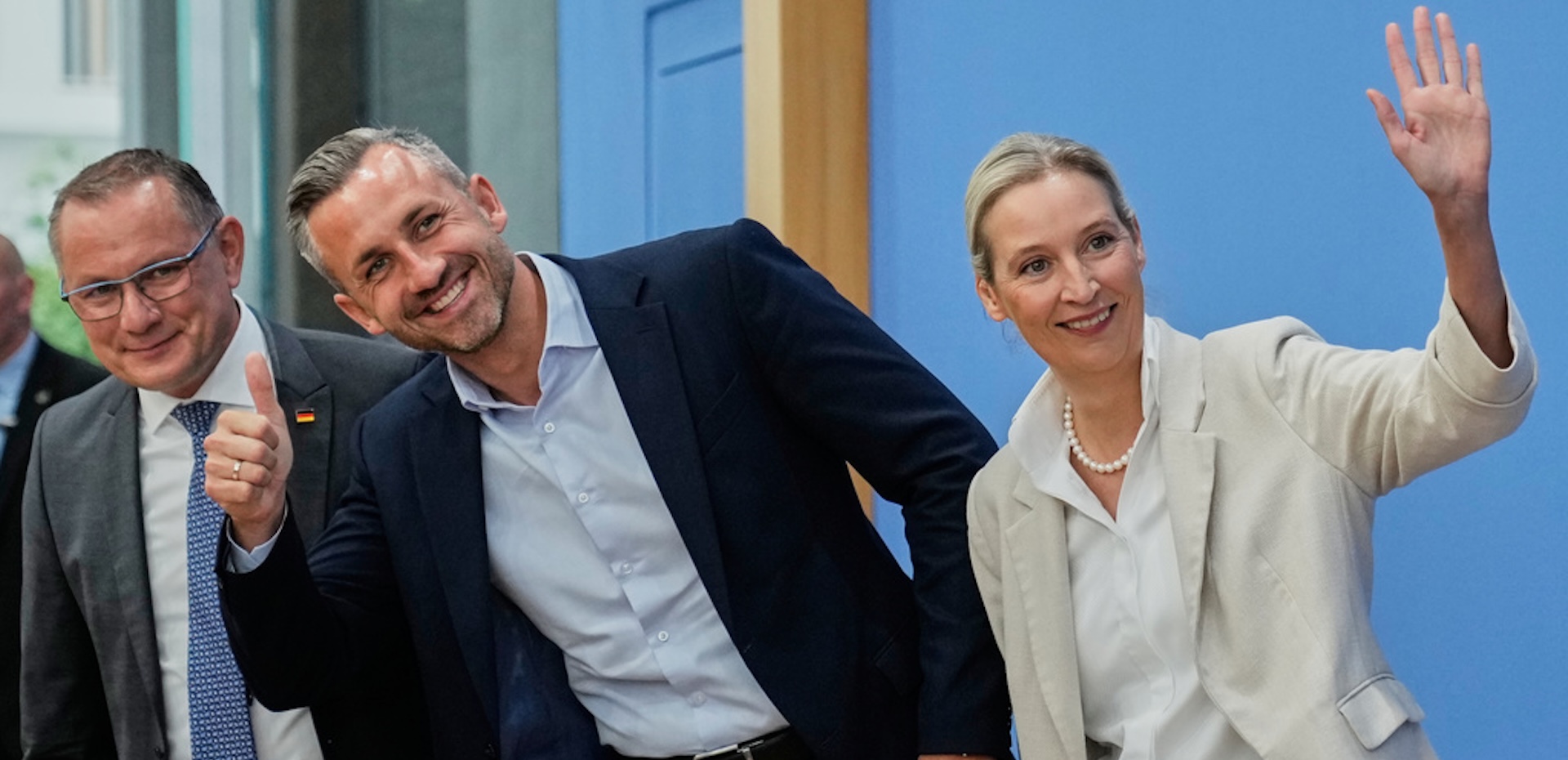
The Alternative for Germany (AfD)'s election victory in Saxony-Anhalt has shocked Europe. The far-right party showed that it could more than double its vote without making compromises with the political mainstream, including openly calling for the restoration of relations with Moscow. This has occurred against the backdrop of growing support for the far right in many EU countries, which fully serves Vladimir Putin’s interests. This reinforces the Kremlin’s view that its long-term strategy of dividing the West is bearing fruit, and that Moscow’s opponents will eventually fall victim to their own democratic processes.
In the election to the Saxony-Anhalt state parliament, the AfD won a convincing victory, receiving 43.8 per cent of the vote. Whether or not the party forms a government, this result marks an important shift in German politics. Alongside its hard-line anti-immigration rhetoric, the AfD openly advocates lifting sanctions against Russia, ending military assistance to Kyiv, and resuming purchases of Russian oil and gas. AfD party members have repeatedly been accused of having financial ties to the Kremlin, while several representatives attended this year’s St Petersburg International Economic Forum despite a warning from the German Foreign Ministry.
The Kremlin has good reasons to be delighted with the AfD’s election result in Saxony-Anhalt. Not only is it a huge embarrassment for Chancellor Merz, who Moscow views as a Russophobe and ideological enemy, it also complicates the government’s task of selling the message to the electorate that Germany must continue to support Ukraine and invest in defence against Russia.
John Lough
Head of Foreign Policy
Although it is still too early to forecast how the AfD will perform at the next federal election – it is not due until 2029 – elections will be held in 2027 in other key EU countries, including France, Italy, Poland and Spain where right-wing parties are poised to perform strongly. Marine Le Pen is comfortably leading the polls ahead of France’s presidential election next April. Her party, the far-right National Rally, opposes supplying Kyiv with long-range weapons capable of striking targets deep inside Russia. Of course, not all European right-wing parties are sympathetic towards Moscow to the same degree. Yet for the Kremlin, the elections offer the chance to increase its efforts to undermine European unity over sanctions and support for Ukraine.
The prospect of the reactionary right coming to power in Europe gives the Kremlin a strong incentive to continue the war. It gives Putin hope that the course of the war could change once ‘new Europe’ limits its support for Ukraine. There are grounds to believe that it is precisely with this hope in mind that the Kremlin is now shaping its long-term strategy of ‘tightening belts to win the war of resources’.
Vladimir Pastukhov
Research Director
At the same time, the US will hold its midterm congressional elections in November. According to the polls, the Democrats could win a majority in the House of Representatives, allowing them to hold the White House in check. In this case, Trump would still retain substantial room for manoeuvre in foreign policy which could lead to continued pressure by Washington on other NATO countries and increase doubts about the viability of the Alliance.
This would make it easier for the Kremlin to maintain an advantageous negotiating position vis a vis western countries and fits perfectly within the ideological worldview that Putin has developed over the past three decades. He envisions an era of ‘post-global’ managed chaos, in which sovereignty and political flexibility matter more than institutions and international norms. In the Kremlin’s view, only powerful states capable of adapting to constant instability and forming effective tactical alliances will survive and prevail.
Putin’s problem, which he is unable or afraid to articulate, is that, unlike the Soviet Union, modern Russia has neither allies nor satellite states that would underline its importance in discussions of global issues. Putin believes that Russia is one of the centres of a multipolar world, although no one sees it in this role.
Sergey Aleksashenko
Head of Economics