Putin’s industrial policy: Nationalise and make the private sector pay
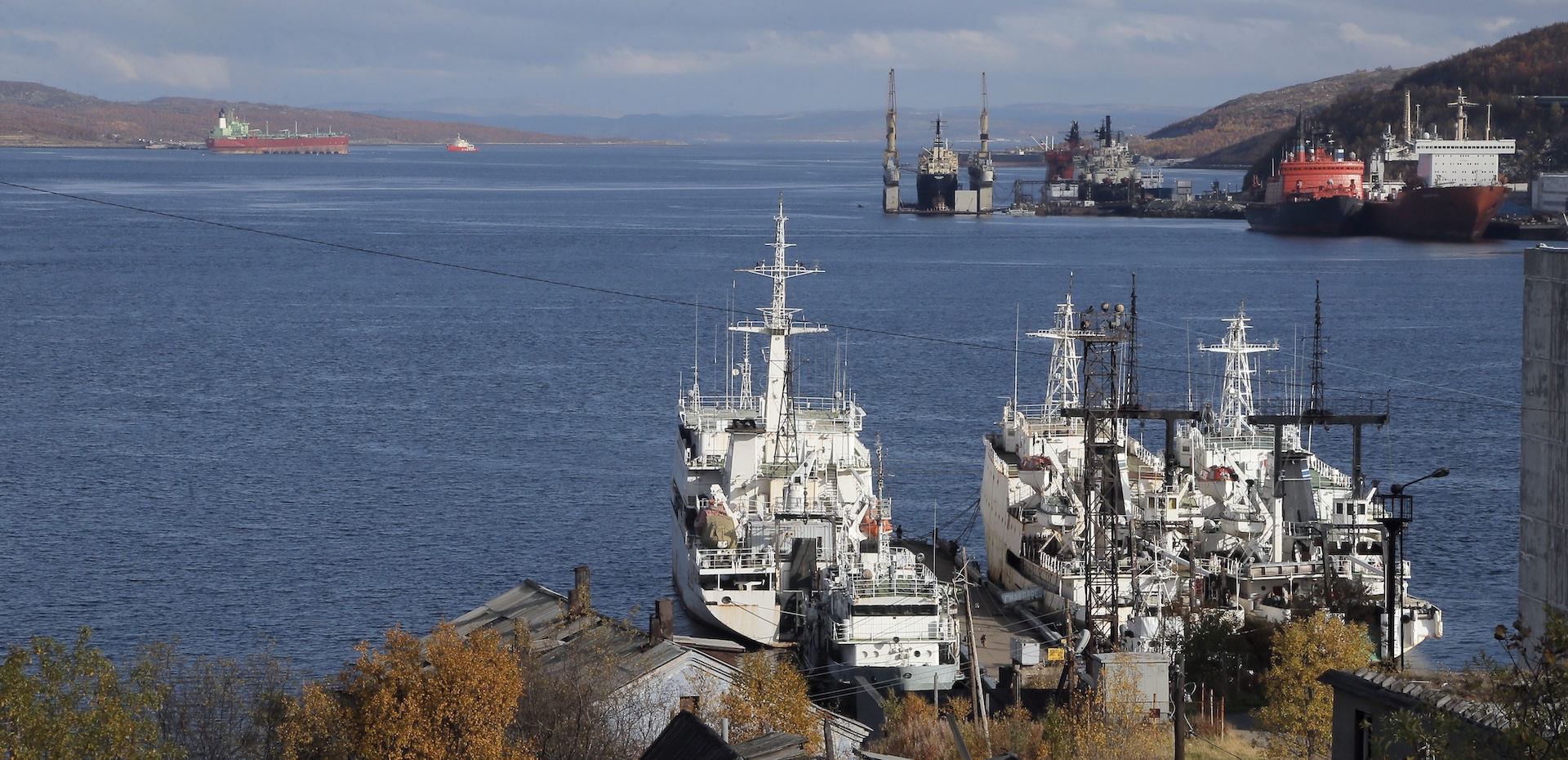
At the end of May 2026, it was revealed that the Russian authorities are planning to ban river-sea vessels more than 40 years old from calling at Russian seaports, and to introduce special surcharges on tariffs and port dues for their owners. These measures are expected to generate around US$3 billion for the state budget, which will be used to finance programmes offering the preferential leasing of new vessels.
This news could easily have passed unnoticed – for those outside the sector, the government's plans are clear only in broad terms. Yet the new policy provides an important illustration of Vladimir Putin's now well-established economic approach. The state identifies a strategic sector, nationalises most of the companies operating within it, and creates its own state leasing monopoly. Private businesses are then compelled to finance the state's plans through mandatory payments. This is how Russian industrial policy operates.
This article is part of a series devoted to the micro-level of the Russian economy, examining individual sectors, companies, regions, and markets. Focusing on these details will provide the necessary perspective for understanding the economic changes unfolding in Russia, which are not always apparent from macroeconomic sources.
The shipbuilding industry at rock bottom
Putin first turned his attention to the problems of the shipbuilding industry in March 2007, when he established the United Shipbuilding Corporation (USC) by presidential decree to consolidate the sector and place its development under state control. Today, the corporation controls up to 80 per cent of Russia's shipbuilding capacity. The reasons for this decision were clear. Russia's shipbuilding industry entered the 2000s with very few orders, outdated production facilities, and a shrinking skilled workforce. Civilian vessels were generally ordered from foreign shipyards, many Russian shipyards were on the verge of bankruptcy, and employees were leaving for more successful industries. The Kremlin envisioned the USC not as a market-based company, but as a means of bringing together and keeping afloat what it regarded as a strategic sector.
The business model adopted at the outset was based on international cooperation. Russia sought not only to build vessels itself, but also to make use of Western technology, designs, and partnerships. In particular, between 2011 and 2015, it ordered Mistral-class amphibious assault ships from France under contracts that provided for the partial transfer of the underlying technology. Following the Russian annexation of Crimea and the imposition of sanctions, the contract was terminated. International cooperation narrowed sharply, and domestic demand came to depend almost entirely on state defence procurement and government-funded support programmes.
Dependence on military orders grew rapidly. Whereas they accounted for around 50 per cent of USC's order book in 2012, their share had exceeded 80 per cent by the beginning of 2024. Yet arms production in Russia has never been profitable for manufacturers. When agreeing contracts, the Ministry of Defence and the Ministry of Finance have traditionally insisted on minimal profit margins, which are then eroded by delays in fulfilling orders and the need to pay interest on the bank loans which finance production. Although USC's revenue increased from RUB 138 billion in 2010 to almost RUB 280 billion in 2015, during the 2015–2020 rearmament programme, and reached RUB 525 billion in 2025, the company recorded negative financial results in 2022–2024, with only a narrow profit in 2025.
A reluctant rescuer
The Kremlin's attempts to improve the situation by replacing management or imposing tighter administrative control over USC's operations failed to produce any improvement. The full-scale war against Ukraine only made matters worse: the last remaining international supply partnerships disappeared, the company began to accumulate losses, and its debt burden rose rapidly. In 2023, USC's net profit margin fell to –11 per cent, after which Putin tasked VTB Bank with resolving the company's problems, placing USC under the bank's management for a period of five years.
VTB President Andrey Kostin described the government's internal discussions in unusually direct terms: USC is ‘one of the least efficient companies owned by the state. There are plenty of problems: corporate governance, a huge financial hole, and a serious technological lag, especially in civilian shipbuilding. The question was: whose hands should we put it into, so that this barge could be hitched to some kind of tugboat? ... Virtually all of its contracts are loss-making. And the industry is constantly dependent on state support.’
From the outset, this decision was viewed ambivalently. VTB had no significant track record of successfully managing industrial assets. Moreover, its core banking business had never been consistently profitable, with the bank repeatedly posting substantial losses that were covered by the state. It was therefore unrealistic to expect VTB to resolve USC's financial problems. The decision-making process resembled a game of 'hot potato': as Putin considered who should accept responsibility for the task, the aim of everyone involved was to pass it on to someone else. The decisive argument was that, back in 2016, VTB had extended a US$425 million credit line to USC and therefore should have known what was happening inside the company. Since Kostin was not present at the final meeting with Putin, no one objected to the proposal.
It was no secret that VTB did not have the resources to resolve USC's financial problems. When the decision was taken, the Kremlin promised the bank that the Ministry of Finance would provide the necessary funding, although no one could say with certainty how much the company would require. By September 2024, VTB had answered the question: USC would need RUB 1 trillion by 2030 to cover the gap between the contract prices and the production costs of the naval vessels and civilian ships which it had been commissioned to build, as well as a further RUB 500–700 billion to build a new shipyard in the Russian Far East.
Against the backdrop of rising expenditure on the war against Ukraine and the broader deterioration of the Russian government's financial position, the original promise of support for USC could not be met, and responsibility for helping it was divided between different ministries. The Ministry of Defence was instructed to revise the prices of military procurement contracts 'where justified', while the Ministry of Industry and Trade was required to subsidise the construction of fishing vessels, among other measures. This was not enough, however. More creative solutions were needed, and they were soon found.
In 2023–2024, USC received a total of around RUB 80 billion in budget subsidies. In 2025, the company received almost three times as much – RUB 223.2 billion. These funds came from the dividends that VTB paid into the federal budget.1 To make this possible, the Kremlin secured a relaxation by the Central Bank of Russia of the requirement for VTB to rebuild its capital reserves following the financial losses caused by the war.
However, this source of funding proved unstable. In 2026, VTB reduced its dividend payout from 50 per cent to 25 per cent of its profits in order to avoid risking a shortage of capital. As a result, USC will receive only RUB 93.4 billion this year – almost 2.4 times less than last year.
A lifeline
VTB's dividend payments made it possible to address USC's most pressing problems, but they could not provide a sustainable long-term source of funding. At the same time, pressure on the federal budget was growing rapidly. In response, the Russian authorities chose a traditional approach: that of raising funds from private businesses through compulsory payments outside the tax system.
In consequence, the river–sea vessel renewal programme emerged.2 Under the government's plans, Russian shipping companies will be required to retire all river–sea vessels more than 40 years old by 2030. They are to be replaced by around 500 new dry cargo vessels, container ships, and tankers, which USC is expected to build over the same period.
Since Russian shipowners cannot afford to purchase new vessels, the government intends to require state-owned leasing companies to procure ships built by USC and then lease them to private operators. To reduce the financial burden on these operators, the leasing payments will be partly replaced by surcharges on tariffs and port dues. This is intended to spread the financial burden evenly across all market participants and distribute it over an extended period.
At first glance, the government's proposal appears to be a safety measure: old vessels should be retired, and new ones should be built. The ageing fleet is indeed a serious problem. However, the chosen approach illustrates how Russian industrial policy operates. The state first introduces, or discusses introducing, restrictions, and then forces shipowners to replace their vessels under the threat of losing access to the market. As a result, the ageing fleet becomes an instrument for supporting a shipbuilding industry that is effectively monopolised by the state.
Shipowners are not merely incentivised but effectively compelled to purchase new vessels. Shipyards, in turn, receive demand that would not otherwise arise on such a scale. According to estimates from the shipping industry, Russia operates a fleet of around 5,300 vessels, of which approximately 3,500 will be 40 years old by 2030. Around 1,500 of these are cargo vessels. The restrictions could have a particularly severe impact on the river cargo fleet, where, according to one estimate, more than 92 per cent of vessels could fall within their scope.
Each participant in this arrangement has its own interests. USC and its affiliated enterprises secure a long-term flow of orders. VTB obtains the resources needed to restore its financial health and invest in USC. Government officials gain the opportunity to report to the president that they have helped the shipbuilding industry without drawing on budget funds. The losers are the shipowners, who receive not only a renewed fleet but also a much heavier debt burden, and, ultimately, consumers, for whom the programme will result in higher transport costs.
This method of supporting narrow industrial sectors is not unique in Russia. A similar mechanism has already been used in the railway industry. In 2015, rolling stock manufacturers lobbied for a ban on extending the service life of ageing freight wagons, and from 2016 the operation of freight wagons with extended service lives was restricted on the Russian Railways network. Formally, these measures were also justified on safety grounds, but in practice they created compulsory demand for new wagons and shifted the cost of fleet renewal onto operators.
The main question is not whether the ageing fleet should be replaced – it clearly should be renewed. The main question is whether the chosen model will deliver the intended results. The state can raise the necessary funds, restrict the operation of older vessels, and compel shipowners to lease new ones. But if shipyards are unable to deliver vessels on time, at an acceptable price, and to an acceptable standard of quality, the programme will become not a transport modernisation initiative, but another means of keeping an inefficient industry afloat.
A similar programme was launched in the fishing vessel construction sector in 2016. Investment quotas for commercial fishing were allocated in exchange for a commitment to build fishing vessels at Russian shipyards. However, the weakness of this model soon became clear: demand created by state intervention guarantees neither timely delivery, nor quality, nor the financial sustainability of the manufacturer. Between 2017 and 2022, fishing companies terminated contracts for the construction of 16 of the 107 vessels ordered under the programme.
This is how industrial policy works under Putin: the state identifies a strategic sector, nationalises most of the companies operating within it, establishes a state-owned leasing company that uses budget funds to guarantee payment for output regardless of its quality, and compels private businesses to finance the state's plans through mandatory payments.
On paper, the plan appears straightforward and promises that all problems can be overcome. How well the policy will work in practice remains to be seen.