Riding two horses at once: Why United Russia downplays the war ahead of the elections
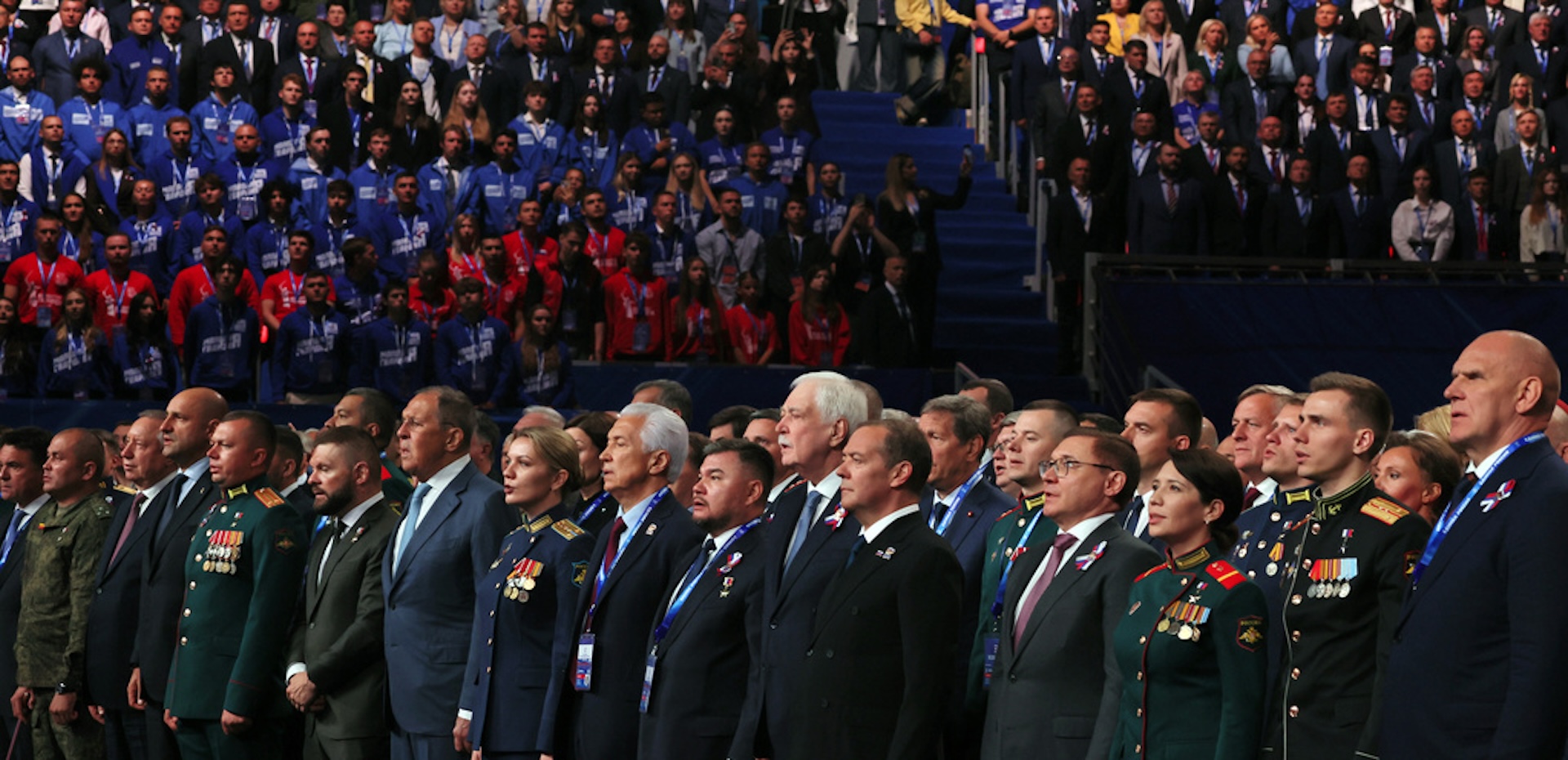
United Russia recently held the second stage of its party congress, at which it approved its programme for the parliamentary elections on 18–20 September. The document reveals two things: the authorities recognise that the war is unpopular among the public, but they cannot offer anything to meet the widespread demand for a return to normality.
United Russia’s programme is fairly abstract and focuses on addressing everyday problems: raising the minimum wage (from €280 to €360) by 2030, building outpatient clinics, renovating kindergartens and student halls of residence, developing the tech sector, and so on. Although purportedly based on 3.5 million suggestions received from ordinary Russians, it nevertheless fails to address the problem which is doing most to worsen the public mood: the growing effect of the war on everyday life in major cities.
Although military issues are almost entirely absent from the party’s programme – with the exception of a few statements about the need to equip the armed forces with modern weapons – speeches at the party congress, by contrast, used the traditional belligerent rhetoric. They included claims of total public support for the war, statements about the party’s readiness to do everything necessary for victory, and a refusal to compromise with the West.
At the same time, the congress deployed the elections themselves in support of a pro-war agenda: Putin presented them as evidence of the state’s resilience in the face of external threats and of citizens’ shared determination to ensure Russia’s sovereignty and security. The vote, which includes the occupied territories and military personnel on the front line, thus serves as a plebiscite not only on the government, but also on the war and on unity around Putin.
In parallel, the authorities are continuing to clear the political field for United Russia. Yabloko, the only party to oppose the war, was barred from the elections before voting began. According to sociologists’ estimates, in July its support among decided voters reached 6 per cent, while its potential share of the vote could have been even higher. By comparison, in July 36 per cent of decided voters were prepared to vote for United Russia, 20 per cent for the Communist Party of the Russian Federation (CPRF), 16 per cent for New People, and 12 per cent for the Liberal Democratic Party of Russia (LDPR).
Having prevented anti-war forces from contesting the elections, the authorities have also begun to weaken more established parties by disqualifying their candidates on various pretexts. For example, Nikolai Bondarenko, the most prominent Communist Party candidate in the media, who frequently criticised United Russia, was fined for displaying extremist symbols and barred from standing for election.
As a result, the authorities have two opposing objectives: to prevent war-weariness from affecting the outcome of the elections, while also presenting the predetermined, restricted outcome as confirmation of public support for the regime’s current course. The authorities promise improvements in everyday life while refusing to address the main reason for growing public dissatisfaction.