Sacred soft power: How Russia uses the Orthodox Church to influence neighbouring regions
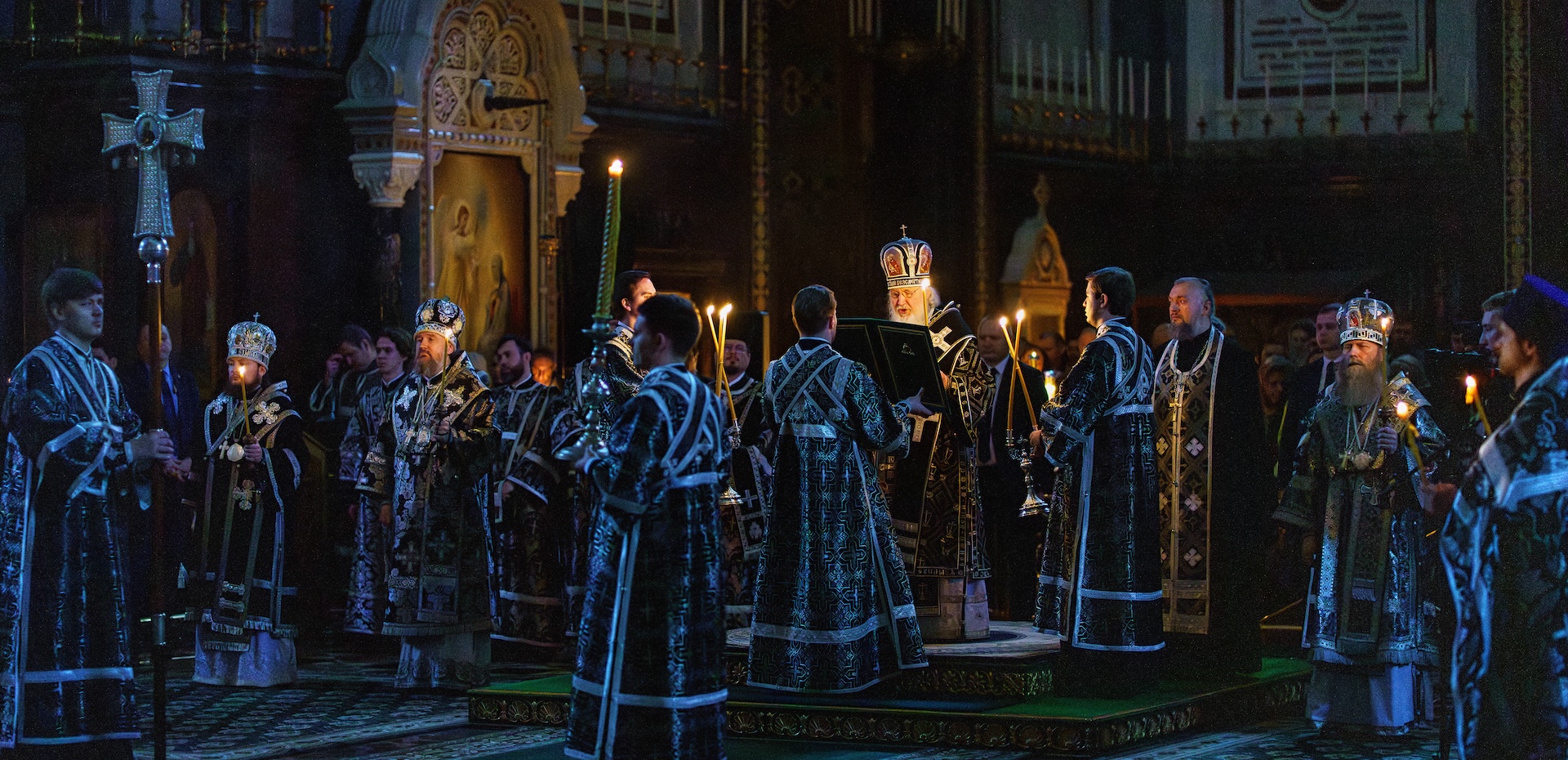
The Russian Orthodox Church has been used by the state as an instrument of ‘soft power’ since the Cold War. The ROC performs a wide range of functions in support of Russian foreign policy, from promoting ideological and propaganda narratives to engaging in informal diplomacy, intelligence activities, and direct interference in elections. The role of the Church should be taken into account when analysing Russian diplomatic, ideological, and covert influence. This is especially true regarding regions which Moscow claims as part of its sphere of influence, and above all where the majority of the population is Orthodox Christian, such as the South Caucasus and the Balkans.
The ‘Orthodox family’: the Church as a conduit of Russian influence
On 18 June 2026, on the eve of the European Council meeting in Brussels, Bulgarian Prime Minister Rumen Radev, who had been elected in May, announced that his country would block the inclusion of Russian Patriarch Kirill in the EU’s 21st package of sanctions against Russia. ‘I am not interested in the Patriarch as an individual. What matters to me is that he is the head of the Russian Orthodox Church, which is Orthodox, just like ours. We are one family,’ he told journalists.
For the Russian authorities, Orthodoxy serves as an instrument for projecting influence, and the Bulgarian Prime Minister’s statement demonstrates its effectiveness. Through the ROC, Moscow builds alliances, intervenes in other countries’ domestic politics, and secures political advantages. At the same time, the ROC may perform different functions in different regions, ranging from ideological influence and the dissemination of propaganda narratives to direct interference in elections, informal diplomacy, and intelligence activities.
The importance which the Kremlin attaches to ecclesiastical issues is reflected in the activity of Russia’s Foreign Intelligence Service (SVR) in this area. Since the beginning of 2026, the SVR has issued a series of press releases describing Ecumenical Patriarch Bartholomew of Constantinople1 as the ‘Antichrist in a cassock’ due to his alleged hostility to the Serbian Orthodox Church, accusing him of attempting to ‘subjugate’ the Georgian Orthodox Church following the death of Patriarch Ilia II, and claiming that the EU conducted a campaign to ‘push the ROC out’ of Armenia ahead of the country’s parliamentary elections. Moscow pays particular attention to developments in countries which it claims are within its sphere of influence, above all those in which the majority of the population is Orthodox.
The nature of the ROC’s relations with churches abroad varies from country to country. Moscow may intervene directly, as it does in Moldova, or operate through friendly national churches, as in Serbia and Georgia. Russia also seeks to exploit conflicts between religious institutions and secular authorities for its own purposes, such as in Armenia, where the Church has emerged as one of the principal critics of Nikol Pashinyan’s pro-European government.
Moldova: direct interference via the Church
Russia’s attempts to interfere in the domestic politics of other countries through ecclesiastical channels are documented in greatest detail in Moldova. The country’s Orthodox Church has autonomous status but remains canonically linked to the ROC as part of the Moscow Patriarchate. The head of the Church, Metropolitan Vladimir (Cantarean), has sought to maintain a balance between the interests of Russia and the West. However, several influential bishops hold strongly pro-Russian views. Around 95 per cent of Moldova’s population identifies as Orthodox, and public trust in the clergy remains high, particularly in small towns and rural areas. As a result, contacts between Moldovan and Russian clergy are significant even at the parish level. These informal ties serve as the primary channel through which Moscow projects its influence.
Ahead of Moldova’s parliamentary elections in September 2025, Reuters published an investigation into Russia’s recruitment of members of the local clergy. The investigation found that hundreds of Moldovan priests had travelled to Russia on Russian-funded pilgrimages. They were given bank cards linked to Russia’s domestic payment system, and were invited to take part in a campaign against the ruling Party of Action and Solidarity (PAS) and Moldova’s path towards European integration. The priests were encouraged to create parish Telegram channels, publish anti-Western content, and portray closer ties with Europe as a threat to ‘traditional Christian values’. Reuters identified nearly 90 channels disseminating the same narratives.
More than 60 Moldovan clerics, concerned by pressure from Moscow, applied to transfer to the Romanian Orthodox Church, the country’s second-largest Orthodox jurisdiction. Before Russia’s full-scale invasion of Ukraine, alternative Orthodox jurisdictions attracted only limited support in the countries where they had emerged during the 1990s as projects intended to compete with ‘Soviet Orthodoxy’.
Besides Moldova, a parallel Orthodox jurisdiction also exists in Estonia, subordinated to the Ecumenical Patriarchate of Constantinople. In recent years, these jurisdictions have gained strength, particularly as governments have come to view the presence of the Russian Orthodox Church on their territory as a potential national security risk. In 2023, Lithuania established such an alternative jurisdiction at the initiative of the authorities, who formally appealed to Patriarch Bartholomew. Although most Orthodox believers continue to attend churches affiliated with the ROC, the religious landscape is gradually changing.
Montenegro and Serbia: influence through partners
The ROC operates in Montenegro and Serbia through the Serbian Orthodox Church (SOC) – an independent but historically close partner. The relationship between the two churches is based primarily on converging interests. The SOC supports the idea of a strong state, backs President Aleksandar Vučić, condemns protest movements, and opposes Serbia’s closer integration with the West.
The Serbian Orthodox Church has consistently sided with Moscow in its disputes with the Ecumenical Patriarchate and does not recognise the independence of the Orthodox Church of Ukraine. Serbian Patriarch Porfirije is the only head of an Orthodox Church to have visited Moscow since the start of Russia’s full-scale war against Ukraine. In May 2025, he met with Vladimir Putin and Patriarch Kirill. During the visit, Porfirije described the student protests in Serbia as a ‘colour revolution’, signalling his support for Russia in its confrontation with the West.
The Metropolitanate of Montenegro and the Littoral, which is part of the Serbian Orthodox Church, operates in Montenegro, a country which is pursuing closer integration with the European Union. This creates one of the principal sources of tension in the Western Balkans. The Church is an important element of Montenegro’s political system and a channel of external influence: the Metropolitanate, as part of the SOC, is followed by the majority of the population.
A similar situation existed in Ukraine for decades. The Ukrainian Orthodox Church, which formed part of the ROC, was the dominant Orthodox jurisdiction, strengthening the narrative that Russians and Ukrainians form a single Orthodox people. The SOC employs similar rhetoric: its hierarchs portray Serbs and Montenegrins as one people, calling Montenegrin statehood into question. Montenegro has no alternative independent Orthodox jurisdiction equivalent to the Orthodox Church of Ukraine (OCU). The unrecognised ‘Montenegrin Orthodox Church’ remains marginal and enjoys little support among Orthodox believers.
Metropolitan Joanikije of Montenegro has adopted cautious and balanced rhetoric. However, the second most senior figure in the Metropolitanate, Bishop Metodije of Budimlja and Nikšić, openly supports pro-Russian and anti-Western forces. The SOC derives its influence in Montenegro from the high level of public trust it enjoys, its ability to mobilise supporters, and its prominent role in questions of identity and historical memory. This was most clearly demonstrated during the 2019–2020 protests against the Law on Freedom of Religion, which would in effect have stripped the SOC of ownership rights over churches built before 1918. The protests, organised in the form of prayer processions (litije), contributed significantly to the ruling coalition’s defeat in the 2020 parliamentary elections and to Montenegro’s first change of government in 30 years.
European leaders also recognise the political significance of the Church in Montenegro. In June 2026, following the EU–Western Balkans Summit, French President Emmanuel Macron met with Metropolitan Joanikije. Europe is engaging with the Metropolitanate of Montenegro in order to persuade it not to oppose the country’s European integration and to prevent tensions from developing along religious lines. The Metropolitanate is sufficiently influential to shape public opinion ahead of Montenegro’s 2027 parliamentary elections, potentially encouraging support for pro-Serbian political forces and increasing scepticism about the country’s planned accession to the European Union in 2028.
Georgia: a longstanding partnership
The Georgian Orthodox Church is autocephalous (independent), enjoys considerable authority in Georgian society, and maintains close ties with the ROC. The two churches engage actively with one another, and share similar positions on the autocephaly of the Orthodox Church of Ukraine and a cautious attitude towards the Ecumenical Patriarchate. Georgian hierarchs often have longstanding personal ties with Russia. Between 83 and 87 per cent of Georgians identify as Orthodox Christians. In March 2026, more than one million people took to the streets of Tbilisi to pay their respects to Catholicos-Patriarch Ilia II, who had led the Georgian Orthodox Church since 1977, when Georgia was still part of the Soviet Union. For Moscow, the significance of the Georgian Orthodox Church extends beyond its influence within Georgia. It is one of the largest and most authoritative Orthodox Churches outside Russia, and its position affects the broader balance of power within the Orthodox world.
Following the death of Ilia II, the Russian SVR accused Ecumenical Patriarch Bartholomew of attempting to bring the Georgian Orthodox Church under his control by promoting his own candidates to succeed the late Catholicos-Patriarch. In May, Shio III was elected to the post. He studied in Russia, graduated from St Tikhon’s Orthodox University in Moscow, has for many years been connected to Moscow’s ecclesiastical circles and the most conservative, pro-Russian factions within the Georgian episcopate, and is widely regarded as an acceptable figure both for the ruling Georgian Dream party and for the ROC. In 2017, Ilia II appointed Shio as locum tenens – effectively the acting Catholicos-Patriarch and his designated successor – following a visit to Tbilisi by Metropolitan Hilarion (Alfeyev), then the head of the ROC’s Department for External Church Relations. After becoming Catholicos-Patriarch, Shio III called for stronger legislation against ‘harmful gender theories and ideologies’.
The Georgian example is significant because the Church has become deeply involved in the country’s domestic political crisis. Since late 2024, Georgia has seen sustained protests against the ruling Georgian Dream party, whose opponents accuse it of abandoning European integration in favour of closer relations with Russia. The Georgian Orthodox Church is one of the country’s most conservative institutions and a key participant in public debates about liberal reforms and national identity. It regards EU standards on rights and freedoms as interference in Georgia’s domestic affairs and as an attempt to impose ‘alien’ ideologies. Members of the clergy supported the law on ‘foreign influence’ and restrictions on the activities of NGOs, and the Church signalled its backing for Georgian Dream in advance of the 2024 elections. As in Serbia, the Georgian Orthodox Church has condemned the protests, although some members of the clergy, including several bishops, have expressed personal support for the opposition. The Georgian Orthodox Church is an important ally for the ROC and the Russian government in their confrontations with the Ecumenical Patriarchate and the West.
Armenia: exploiting domestic conflict
Armenia presents a different case. Whereas the dominant churches in Moldova, Montenegro, and Georgia are Eastern Orthodox, the majority of Armenians belong to the Armenian Apostolic Church, which is Oriental Orthodox, although it maintains friendly relations with the ROC. The ROC’s diocese in Armenia is small, comprising seven priests and eight active churches, two of which are located at Russia’s military base in Gyumri. Despite its limited size, the Russian Orthodox presence in Armenia has also featured in the SVR’s public statements.
In June, the SVR claimed that the European Union was demanding that Yerevan push the ROC out of Armenia as a condition for closer integration with the bloc. The statement came ahead of Armenia’s parliamentary elections, which were won by Nikol Pashinyan’s party, reaffirming the country’s policy of gradually distancing itself from Moscow.
Relations between Russia and Armenia in the ecclesiastical and political sphere, however, extend beyond the ROC’s presence in the country. The central conflict in recent years has been between Pashinyan’s government and the Armenian Apostolic Church. Catholicos Garegin II remains one of the Prime Minister’s most influential critics, while the ROC has openly supported the Armenian hierarchy in its confrontation with the government. The Moscow Patriarchate has also accused Yerevan of attempting to provoke a schism within the Armenian Apostolic Church.
Following Armenia’s defeat in Nagorno-Karabakh and its subsequent turn towards the West, the interests of the Armenian Apostolic Church’s leadership have increasingly converged with those of Russia. Against this backdrop, the SVR’s interest in the fate of the ROC’s small diocese in Armenia does not appear coincidental. Even this limited ecclesiastical presence forms part of the broader struggle over Armenia’s foreign policy orientation and the future of its relationship with Russia.
Conclusion
Russia uses ecclesiastical institutions and narratives of national identity as instruments of influence. The form this takes varies according to local conditions, but the underlying approach remains consistent.
In each of the cases discussed above, the local Church has political agency and interests of its own, which Moscow seeks to exploit. The results, however, may vary. In Moldova, despite the ROC’s direct interference, the pro-European party won the 2025 elections. Attempts to capitalise on the conflict between the Church and the secular authorities in Armenia have likewise failed to produce the desired outcome. Montenegro continues to move steadily towards EU membership. Serbia and Georgia remain reliable partners for Moscow, but they are better understood as fellow travellers than as instruments under its control.
The situation in Bulgaria, an EU member state, is therefore all the more revealing. Bulgarian society is less religious than neighbouring countries in the Balkans and the Black Sea region, suggesting that the Church should play a relatively limited political role in Bulgaria. Yet, in explaining its decision to oppose sanctions on Patriarch Kirill, the Bulgarian government appealed specifically to religious ties. The role of the Church should therefore be taken into account when analysing Russian influence in its diplomatic, ideological, and covert forms. Otherwise, similar developments are likely to continue to catch Europe off guard.