The Iran card and new flashpoints: How Moscow is raising the stakes in its confrontation with the West
The continuation of the US-Israeli military operation against Iran has led to a noticeable shift in Russian rhetoric. Moscow has moved from relatively restrained calls for a diplomatic settlement to more hard-line statements directed at the West. The perceived failure of the American ‘blitzkrieg’ and the lack of progress in negotiations on Ukraine are motivating the Kremlin to further escalate tensions in Europe. This approach includes direct threats to employ naval forces to protect Russian shipping, the expansion of military infrastructure near NATO borders, and hints of provocations on NATO territory.
Escalation of Russian rhetoric
At the start of the conflict in the Persian Gulf, Moscow called for de-escalation and a settlement based on international law. This allowed the Kremlin, on the one hand, not to damage relations with Iran and the Gulf Arab monarchies, which Vladimir Putin has cultivated over many years, and, on the other hand, to avoid open confrontation with the Trump administration while negotiations on Ukraine were still in progress.
As time passed, Moscow’s rhetoric became more categorical. The Kremlin began to accuse the United States and Israel of ‘unprovoked aggression’ and of attempting to draw Arab states into the conflict. Statements about the absence of evidence of a nuclear programme called into question the key justification regarding Iran. At this stage, Moscow apparently began to provide limited and largely non-public assistance to its partner, in particular by transferring intelligence and drones.
By mid-March, Moscow began to speak of the failure of the American ‘blitzkrieg’ and of the global consequences of Washington’s actions. These include the expansion of the conflict zone to the Indian Ocean and the risk of provoking a nuclear catastrophe as a result of strikes near the Bushehr nuclear power plant.
Now Russia is actively presenting itself as a potential mediator in the settlement of the conflict and as a co-founder of a new collective security architecture in the Persian Gulf, alongside China and Turkey. American setbacks are linked to proposals to replace the US-centric security model with a new multipolar configuration.
Limits of the permissible
Moscow is probably ready to stop transferring intelligence to Iran and, more broadly, to limit support for Iranian strikes on US forces in the region, if the United States significantly reduces military and intelligence assistance to Ukraine or at least ‘freezes’ it at the current level. In this way, the crisis in the Persian Gulf ceases to be an autonomous episode for the Kremlin and becomes an instrument for influencing both the configuration of the war in Ukraine and the parameters of future negotiations with the United States.
However, playing the ‘Iran card’ has not yet produced the desired concessions. Although Moscow continues formally to refer to the agreements allegedly reached at the Anchorage summit and considers them a starting point for negotiations, Russian discourse increasingly emphasises that, due to US actions, the ‘spirit of Anchorage’ – that is, the cooperative atmosphere that had developed between the Russian and American sides – is ‘evaporating’.
This is likely to increase pressure on Europe. From Moscow’s perspective, Europe presents greater resistance to its plans, but also offers more opportunities to exploit the vulnerabilities of Ukraine’s allies while the United States, being preoccupied with Iran, is unable to provide substantial support. Moreover, Trump’s irritation with NATO allies that do not support his war in the Middle East provides Moscow with additional grounds for optimism.
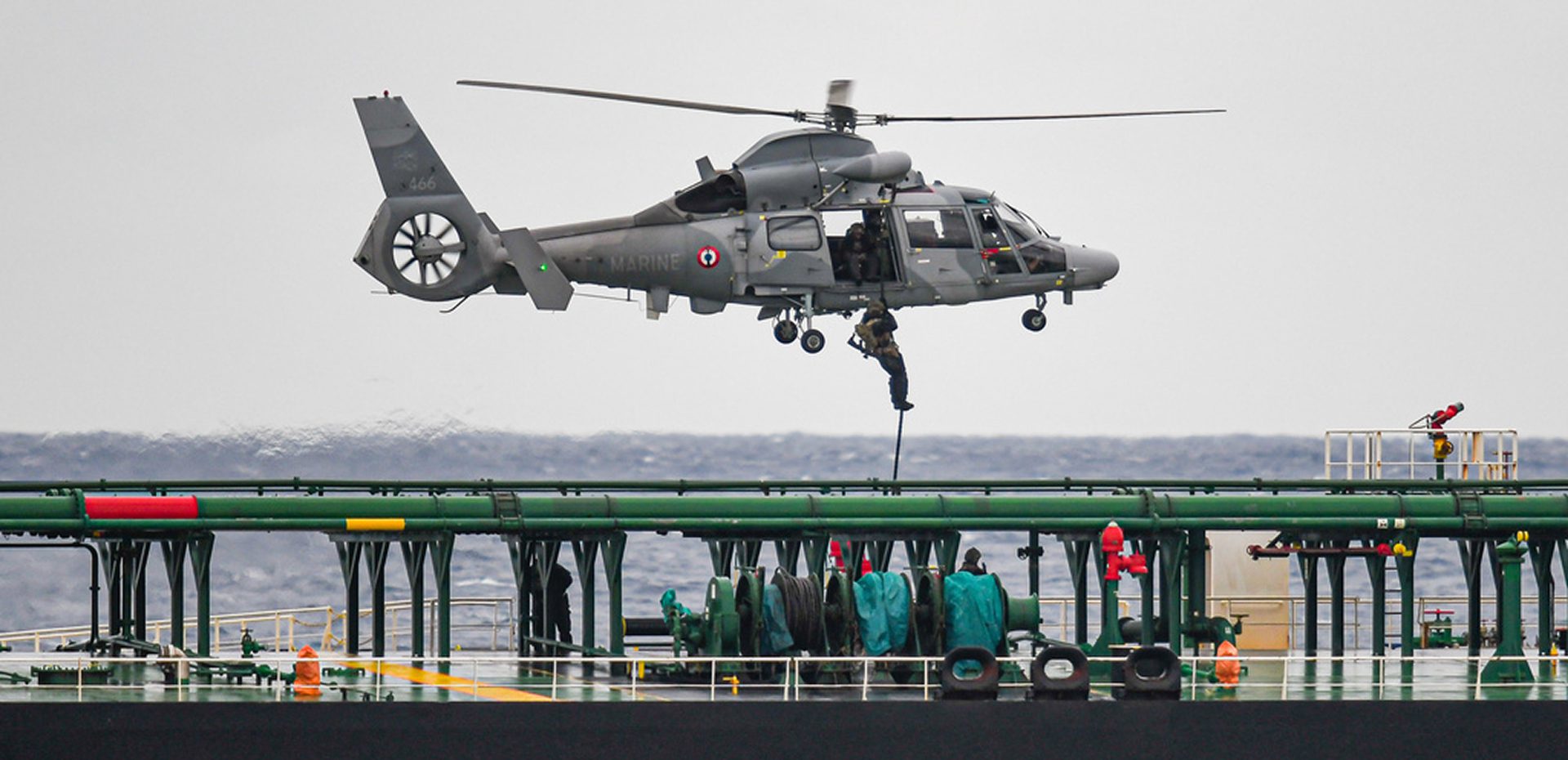
Against the background of detentions and inspections of tankers suspected of belonging to Russia’s ‘shadow fleet’ in the Mediterranean, Baltic, and North Seas, as well as discussions in the EU and the United Kingdom about expanding the legal grounds for stopping and confiscating these vessels, Moscow is signalling its readiness to employ naval forces to implement retaliatory measures against European shipping. This could lead to a direct maritime confrontation between Russia and NATO countries.
At the same time, Russia has begun restoring and expanding its military infrastructure in Karelia – approximately 160–175 km from the Finnish border – and in other areas. This is linked to the possible deployment of a new 44th Army Corps and the future stationing there of up to 15,000 personnel, as well as the expansion of air defence and radio-technical infrastructure.
In addition, a campaign in support of the “self-determination” of Narva – a border city in Estonia where, according to the latest census, around 87 per cent of residents are ethnic Russians – is spreading on social media. The narrative of reviving a ‘Narva People’s Republic’, ‘historical justice’, and ‘protection of the Russian-speaking population’ visually and stylistically reproduces the models used in campaigns for the ‘independence of people’s republics’ in Donbas. The anonymity of the campaign, its alignment with Moscow’s interest in destabilising NATO’s eastern flank, and its links to the pro-Russian media environment allow it to be interpreted as an initiative inspired or supported by pro-Russian networks – or as an information project that the Kremlin, at a minimum, does not obstruct.
Another line of information pressure is also intensifying, linked to border regions that Moscow considers vulnerable. In official rhetoric, Kaliningrad is increasingly singled out. It is described as a potential target of a Western ‘blockade strategy’ and restrictions on transit. This narrative is not new; it has been actively used since at least 2022. However, Moscow is now significantly amplifying it. Statements about possible attempts by NATO to ‘strangle’ the region are accompanied by warnings that any steps directed against Kaliningrad will be regarded as a direct challenge and could lead to military conflict. This fuels expectations of confrontation both domestically and on the alliance’s eastern flank.
Demonstrative escalation is becoming one of Moscow’s key levers of pressure on Ukraine’s European allies. The Kremlin seeks to create the impression of readiness for more forceful actions, including the creation of new flashpoints, although its actual capacity to do so remains limited.
At the same time, US actions in the Persian Gulf are intensifying intra-Western disagreements and opening a window of opportunity for Russia. Moscow is attempting to exploit these frictions and carefully testing to see where Washington is prepared to stand up for Europe – and where it is not.