The meaning of September’s State Duma elections
Questions by Ben Noble, responses by Nikolai Petrov.
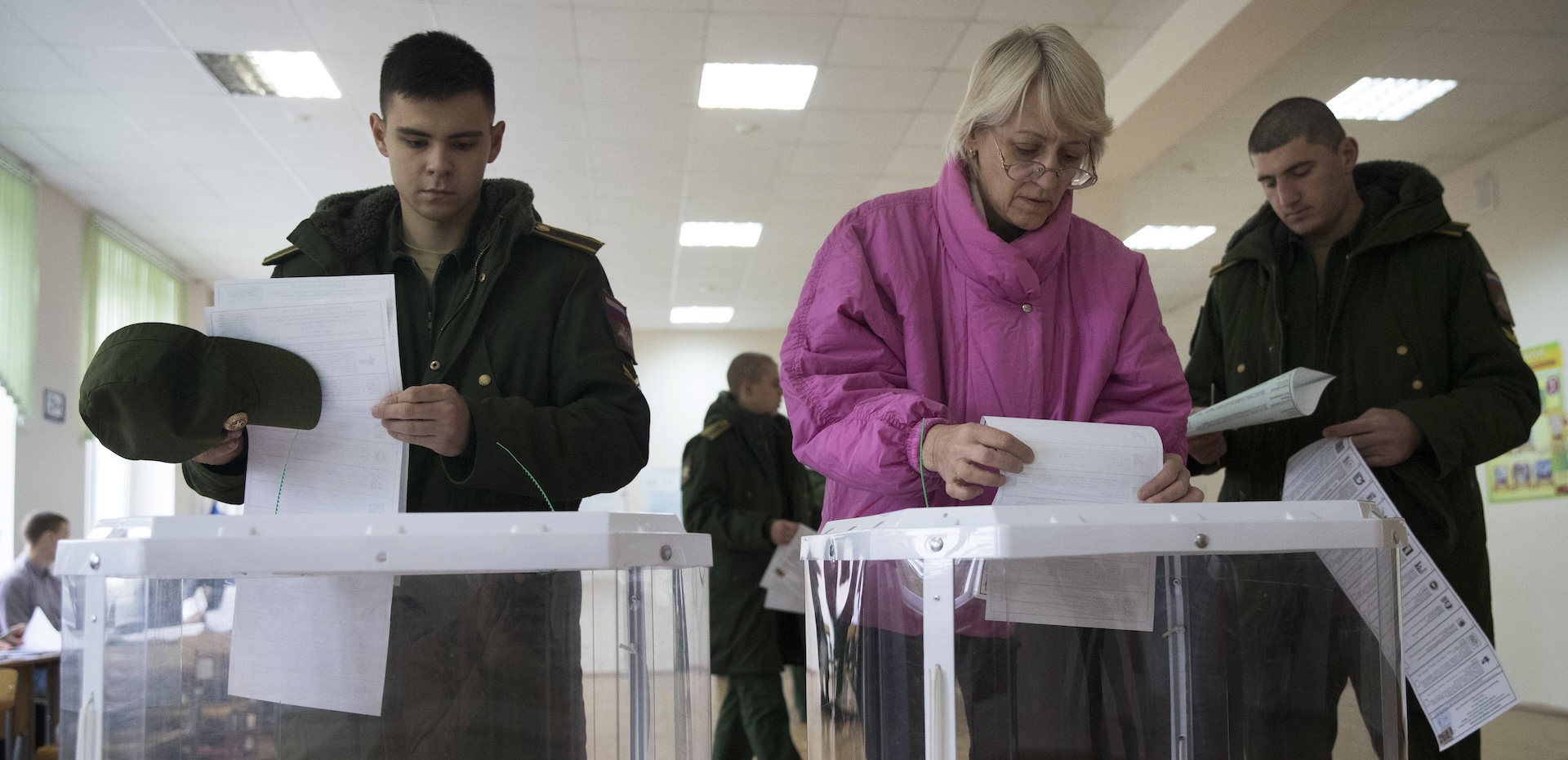
Elections for the State Duma will take place in September this year – Russia’s first national parliamentary elections since the 2022 full-scale invasion of Ukraine. The last Duma elections took place in September 2021, when United Russia retained its constitutional majority.
Why should we bother paying attention to these upcoming elections, when the overall outcome is not in question?
Even under an authoritarian system, elections can still serve a variety of purposes.
Because Russia’s parliament has limited independent authority, elections have relatively little direct impact on policymaking. Yet elections remain a form of political dialogue, even if severely constrained. The Kremlin cannot entirely ignore public opinion – including as expressed in elections – and, at times, adjusts its behaviour in response to it.
In addition, elections are important demonstrations of public loyalty, albeit largely ritualised.
It’s also worth bearing in mind that the State Duma elected in 2026 will sit until 2031, encompassing the 2030 presidential election. Should Russia undergo any significant political transformation during this period, the Duma is likely to play an important institutional role in managing and legitimising it.
What will the Kremlin’s primary goals be for this September's elections?
The Kremlin’s overriding objective in every recent election has been to minimise the attention which the public pays to the electoral process itself.
The 2014 annexation of Crimea was the moment when Vladimir Putin’s legitimacy shifted from being primarily electoral to increasingly resting on his role as a national leader above ordinary politics. From the Kremlin’s perspective, the ideal election is one that simply takes place without major public controversy or political surprises.
In a sense, the regime now competes only with itself. Each election establishes a benchmark that the next one must at least match. Any visible decline in support compared with the previous election could be interpreted as evidence of the regime’s weakening popularity.
The first stage of United Russia’s party congress, held on 28 June, offered an early glimpse of the Kremlin’s electoral strategy for September. Vladimir Putin addressed the congress, and the party unveiled its list of candidates.
The main surprise was the selection of the five candidates at the top of United Russia’s party list. It's worth noting that, as a rule, the name recognition of these top-of-list candidates is used to generate support for the party — but, after the vote, these individuals do not take up their parliamentary seats; instead, less well-known people take their place.
Contrary to widespread expectations, Dmitry Medvedev – the party’s formal leader, who has become increasingly active in party affairs in recent months – was not placed at the top of the list.
Instead, the leading position went to Foreign Minister Sergei Lavrov. At 76, Lavrov has long been the subject of speculation that he would like to retire because of his age and health, making him a better choice in Putin’s eyes to lead the party list than the younger and more ambitious Medvedev.
Second on the list is Moscow Mayor Sergei Sobyanin, a politician who has generally kept his distance from both the war and overt party campaigning. The remaining three candidates are comparatively young figures with limited national profiles.
The decision to sideline Medvedev is notable. While we cannot be certain about Putin’s motives, the choice is consistent with the Kremlin’s tendency to prevent the emergence of any prominent political figure who could develop an independent electoral profile.
Might developments relating to the war against Ukraine introduce uncertainties or competitive dynamics?
The war in Ukraine has already become the single most significant factor shaping the 2026 election campaign – something the Kremlin appears to have underestimated.
While officials were debating the campaign narrative and whether it should focus on victory, patriotism or the war itself, Ukraine succeeded in delivering two strategically significant blows that were felt across Russia – and that are likely to have long-lasting consequences which may become even more visible by the time of the elections.
The first is the fuel disruption caused by strikes on Russia’s oil refining capacity. The second is the severe impact on the summer holiday season, as repeated attacks on Crimea and the Black Sea coast have deterred people from visiting some of the country’s most important domestic tourist destinations, affecting millions of Russians.
Yet this does not necessarily translate into growing public discontent with the authorities.
On the contrary, as the war increasingly ceases to resemble the limited ‘special military operation’ portrayed by the Kremlin and becomes a conflict that directly affects ordinary Russians, it is more likely – at least in the short term – to reinforce the familiar ‘rally ’round the flag’ effect than to weaken public support for the government.
United Russia is expected to publish its updated ‘People’s Programme’ only at the end of August. Delaying its release allows the party to adapt its messaging to a rapidly changing political and military situation, while limiting the time available for substantive public debate over its policy commitments.
How are war veterans likely to perform at the polls as electoral candidates?
Despite the Kremlin’s portrayal of veterans of the war in Ukraine as the country’s ‘new elite’, they have proved to be less popular with both regional political elites and ordinary voters. This helps to explain why United Russia introduced explicit advantages for veterans during its 2026 primaries, such as by adding a 25 per cent bonus to their final vote totals.
Officially, war veterans account for around 10 per cent of United Russia’s candidates for the State Duma.
In practice, however, many of those presented as ‘veterans’ do not meet the usual definition of this term. A significant share are officials or regional legislators who completed relatively short periods of military service – typically three to six months – in rear-area units established specifically to facilitate such service before returning to their political careers.
This suggests that the Kremlin’s project of creating a new political elite from the war has, at least so far, relied more on bestowing military credentials on existing members of the governing class than on bringing large numbers of frontline combat veterans into national politics.