Too big to ignore: How Russian online marketplaces became too powerful to remain independent
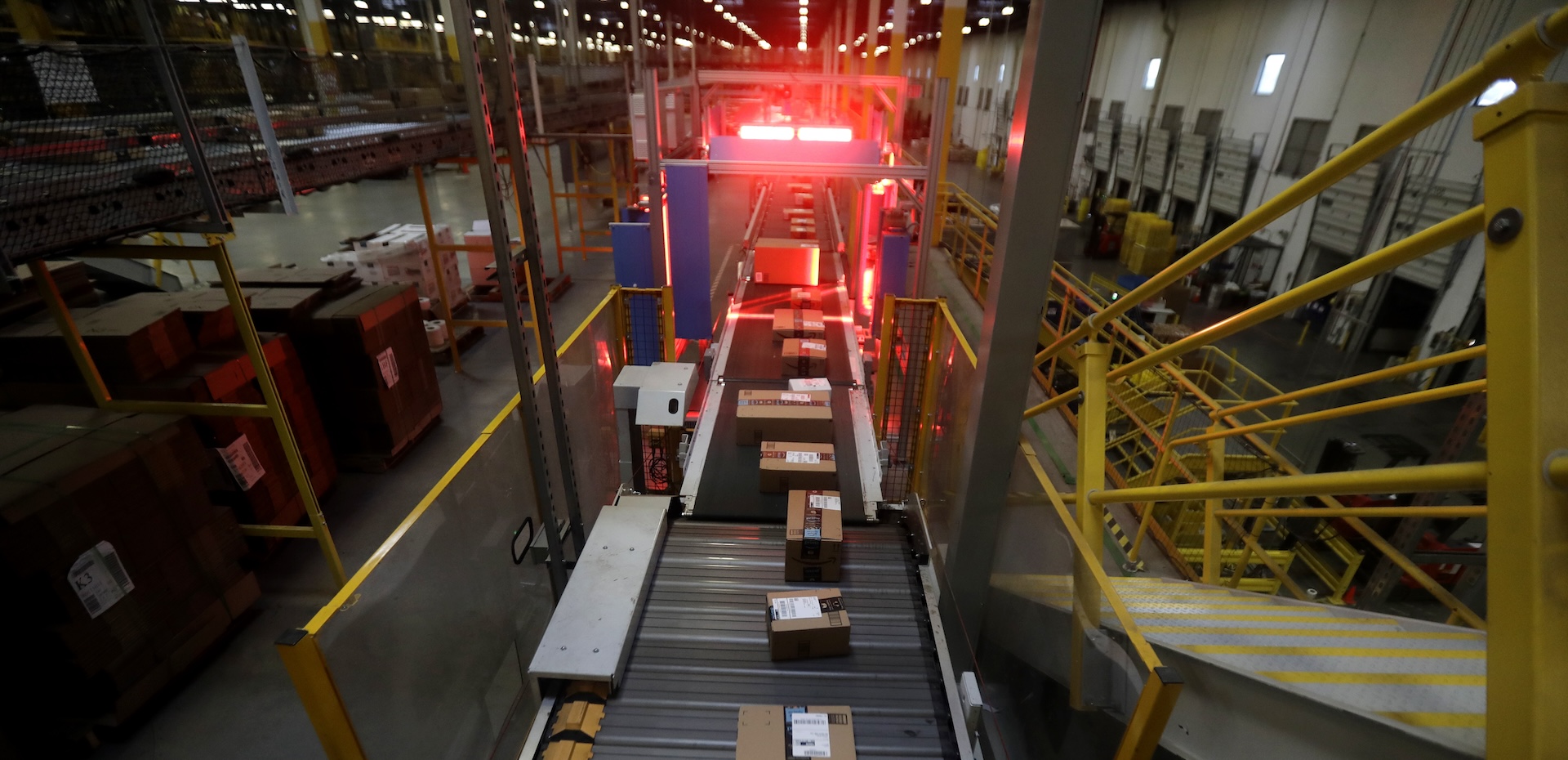
Over the past eight years, Russian online marketplaces have experienced remarkable growth and have become an important part of the Russian economy. Paradoxically, their development has been driven, in large part, by restrictions imposed during the Russia–Ukraine war. The leading players, Wildberries and Ozon, have flourished amid sanctions, imports from China, a narrow range of retail outlets, and the weakness of the conventional retail sector. As a result, they have become so influential that they have come into conflict with rival businesses and the banking sector, ultimately attracting the attention of the state.
This is the first article in a series devoted to the micro-level of the Russian economy, examining individual sectors, companies, regions, and markets. Focusing on these details will provide the necessary perspective for understanding the economic changes unfolding in Russia, which are not always apparent from macroeconomic sources.
A conflict with a predictable outcome
In November last year, a public dispute unfolded between Russia’s largest banks and online marketplaces. It began when Sberbank CEO German Gref accused the marketplaces of underpaying taxes by a total of 1.5 trillion roubles ($20 billion, or 4 per cent of the federal budget's annual revenue). Later, the heads of Russia's five largest banks appealed to the Central Bank, the government, the State Duma, the Federation Council, and the Presidential Administration, accusing online marketplaces of engaging in unfair competition.
The allegations centred on the marketplaces offering discounts when purchases were paid for using cards issued by affiliated banks. The banks which objected to this proposed the introduction of a single-price policy, regardless of the method of payment, and a ban on marketplaces using their own funds to reduce prices. In response, online marketplaces argued that their discount programmes were comparable to banks' cashback schemes, and that implementing the banks' proposals would lead to higher prices for consumers.
It is unclear how the negotiations between the state, the banks, and the online marketplaces unfolded, but the situation reached a resolution that was predictable in Russia – banks close to the state are gaining control over the marketplaces by becoming their minority (for now) shareholders. On 26 May, Russia's second-largest bank, VTB, and the country's largest online marketplace, Wildberries-Russ (RWB), agreed on the main terms of a strategic partnership. As a first step, VTB intends to acquire a minority stake in RWB’s digital financial assets. On 28 May, reports emerged that Russia's largest bank, Sberbank, was in talks to acquire a large shareholding (almost 32 per cent) in the country's second-largest online marketplace, Ozon. On 5 June 2026, at the St Petersburg International Economic Forum, Vladimir Chistyukhin, First Deputy Governor of the Bank of Russia, stated that partnership between banks and marketplaces was ‘predetermined’.
The reason for this ‘predetermination’ is straightforward: Russian online marketplaces have developed from fast-growing businesses into essential infrastructure for the consumer market. Over the past eight years, virtually the entire active consumer population has learned to use online marketplaces. Their combined user base is around 85 million people, or three-quarters of the country's adult population. As a result, the large state-owned banks came to see online marketplaces as serious competitors that could no longer be ignored. From the banks' perspective, however, ‘no longer ignoring them’ means seeking to gain control over them.
How Russian online marketplaces achieved such success
According to estimates by the Russian Association of Internet Trade Companies, the total volume of online sales in Russia increased by a factor of 5.5 between 2019 and 2025, with online sales accounting for almost 19 per cent of total retail sales. By comparison, according to the U.S. Census Bureau, the corresponding figure in the United States was 16.9 per cent in the first quarter of 2026. This comparison is already striking: a bigger country with lower incomes and less developed infrastructure nonetheless makes a higher share of retail sales online.
At first glance, Russia's vast territory, high logistics costs, comparatively low household incomes, and relatively low level of social trust should have hindered the development of online retail. Yet Russian businesses were able to overcome these disadvantages and build large universal marketplaces that came to dominate online commerce. Their share of Russian e-commerce increased from 23 per cent in 2019 to 64 per cent in 2024. According to estimates by EMARKETER, online marketplaces are expected to account for around 42 per cent of online sales in the United States in 2025. Even allowing for differences in methodology, this suggests that the role of online marketplaces is substantially greater in Russia than in the United States.
In addition to the fact that the market share of online retail is greater in Russia than in the United States, its level of concentration is also much higher. In 2024, the two largest players – Wildberries and Ozon – accounted for 77 per cent of all orders placed through online marketplaces and 53–57 per cent of all online retail sales. By comparison, according to Marketplace Pulse, the two dominant models in the United States – Amazon's centralised marketplace and Shopify's decentralised infrastructure – accounted for 49.7 per cent of the total online retail market in 2025 (35.7 per cent for Amazon and 14 per cent for Shopify).
The rapid expansion of online marketplaces was promoted by both the COVID-19 pandemic and Western sanctions. The pandemic provided a powerful boost: in 2020–2021, Russia's e-commerce market more than doubled in size, while the share of online marketplaces increased particularly sharply.
All of these factors, however, merely accelerated a process that was already under way: the growth of online marketplaces had begun in the 2010s. For example, Wildberries' turnover was around 55 times greater in 2019 than in 2012. Why, then, did the Russian economy prove to be so receptive to this business model?
The first reason was the weakness and uneven development of Russia's retail sector. In Moscow or St Petersburg, consumers can choose from dozens of shops, shopping centres, and specialised retail chains. In Russia's small and medium-sized towns, however, the choice of retail outlets is far more limited and, as a result, product ranges are narrower and prices are higher.
Even in Russia's largest cities, the availability of retail space is significantly lower than in the United States. According to Nikoliers, the national average is 216 square metres per 1,000 people; in Moscow, it is 532 square metres per 1,000 people, and in St Petersburg, 565 square metres per 1,000 people. In the United States, the floor area of shopping centres alone amounts to around 2,210 square metres per 1,000 people. The rapid expansion of Russian online marketplaces was therefore a market response to the shortage of retail outlets. It gave residents of the regions access to an exceptionally wide range of goods that had previously often been unavailable even in their regional capitals.
The second reason was Russian online marketplaces’ reliance on parcel collection points. They could not simply replicate Amazon's model of home delivery, which would have been too costly and complex under Russian conditions. Instead, a network of parcel collection points emerged – inexpensive, scalable, and convenient for consumers. These collection points evolved into a new form of everyday urban infrastructure, a cross between a shop, a post office, and a warehouse. Consumers do not have to wait for a courier, do not have to pay high delivery charges, and can either collect their orders close to home or return items that prove unsuitable.
The third reason was low household incomes. For less affluent consumers, the value of online marketplaces lies not only in their convenience, but also in the ability to search for the lowest price among dozens of sellers. This is particularly important when real incomes are growing slowly and consumers are forced to economise. As a result, in Russia, as in other countries with relatively low income levels, online marketplaces are used primarily not for convenience, but in order to maximise savings.
The fourth reason was sanctions and Russia's 'pivot to the East'. Russian online marketplaces became a major channel for low-cost Chinese goods. This was notable even before the war, but its significance increased after 2022, when Western brands left Russia or significantly reduced their presence in the country. Online marketplaces proved capable of adapting quickly by replacing familiar European products with Chinese alternatives, bringing small Russian and Chinese sellers onto their platforms, reconfiguring supply chains, and delivering these goods to consumers through their already established network of parcel collection points.
A pre-emptive strike
One of the main reasons why state-owned banks decided to go on the offensive against online marketplaces was their disruption of the conventional payment infrastructure. Banks established by the marketplaces began to concentrate consumer payments in their own hands and, as a result, to deprive traditional banks of acquiring fees (which are charged for handling electronic payments). According to estimates by the Bank of Russia, in 2025 the volume of payments processed by the marketplaces' subsidiary banks (e-commerce banks) more than doubled, reaching 9.8 trillion roubles, compared with 4.8 trillion roubles in 2024. E-commerce banks’ share in the online acquiring market increased from 25 per cent to 48 per cent, while their number of active customers grew from 22 million to 31 million. This alone is sufficient to explain Russian retail banks' aggressive stance towards online marketplaces.
Another reason was the threat not only to income from acquiring fees, but also to other traditional banking products. When online marketplaces control product selection, payments, returns, instalment plans, sellers, advertising, and data on consumer behaviour, they cease to be mere retail platforms. They gain direct access to consumer data, can analyse consumers' preferences and habits, and begin to control a significant part of the value chain between sellers and buyers. Ultimately, they may begin to compete with banks for consumer loyalty and may even offer to hold their customers’ bank deposits.
This was why the traditional banks felt threatened, leading them to launch their campaign against the online marketplaces. The continued expansion of online marketplaces poses a threat to the banks’ business model. Their appeal to the state for support was entirely understandable: they have no other means of containing the marketplaces' expansion.
The banks' arguments were carefully calibrated: allegations of tax avoidance at a time when budgetary pressures are intensifying with each passing month; the potential loss of the government’s ability to track the movement of money, which is currently ensured by the dominance of state-owned banks; and the risk that large private banks could emerge and challenge the established market leaders. In these circumstances, the Kremlin cannot fail to respond: the issue is no longer simply competition between two business models, but control over Russia’s financial system.