A declining power in denial: How Russian media see Europe’s leaders
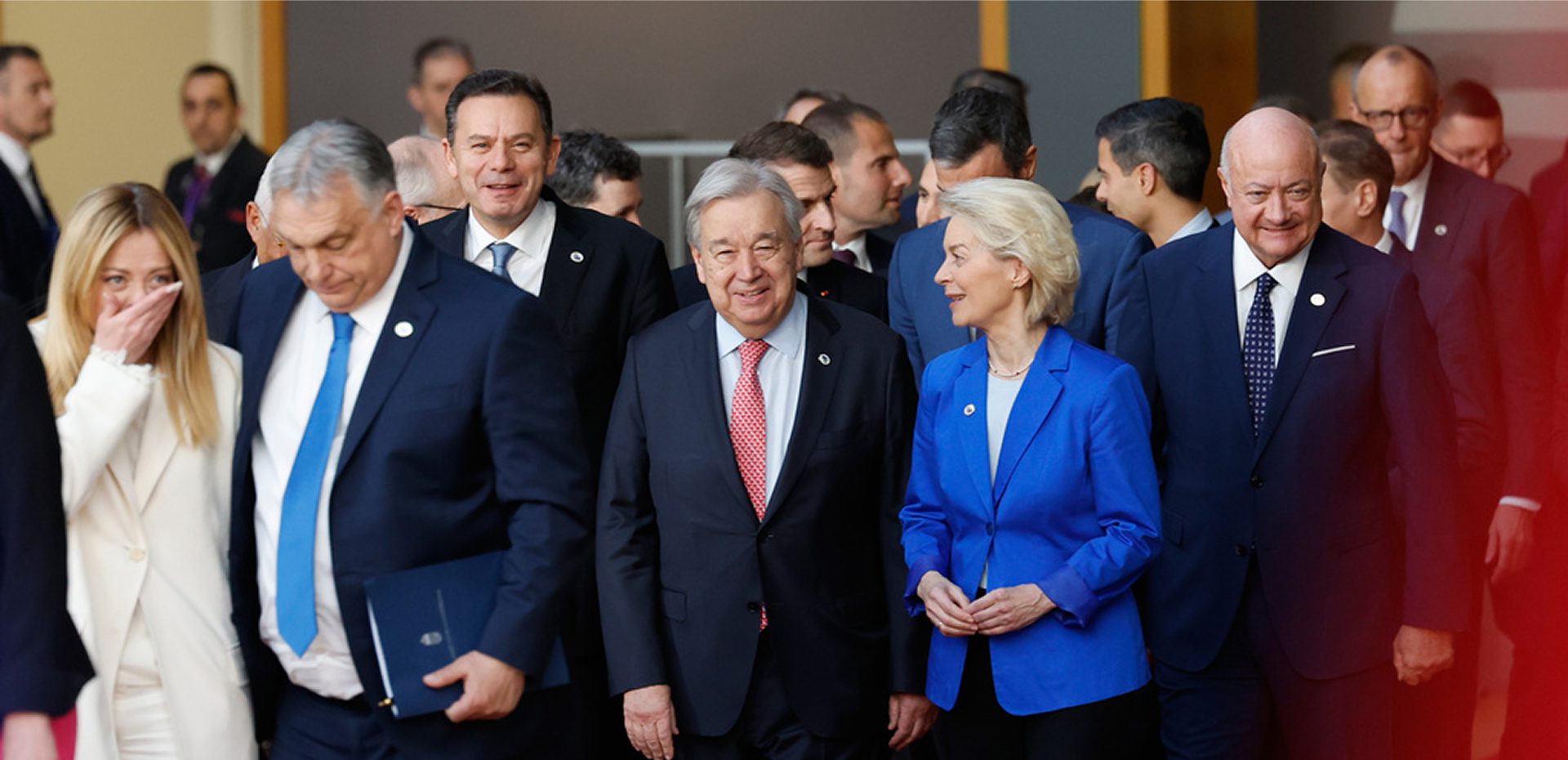
On 18 December 2025, European leaders argued through the night over whether to confiscate €210 billion in frozen Russian assets. By morning, a coalition of reluctant governments – Hungary, Slovakia, Italy, and others – had made the plan unworkable. Viktor Orbán declared the idea 'dead.' Robert Fico refused to finance Ukraine’s military needs. An EU diplomat told the Financial Times: 'Meloni was the killer.' The European Commission settled for a €90 billion loan – less than half the original ambition. Vladimir Putin had already called the freezing of Russian assets 'open robbery.' Kirill Dmitriev, head of Russia’s sovereign wealth fund, predicted that Moscow would get its frozen assets back and that the EU would have to foot Kyiv’s bill from its own pocket.
For Russian media, the summit confirmed a master narrative which they have been constructing for a while now: that Europe is a declining power in denial, led by weak individuals and held together by institutions that cannot agree among their own members.
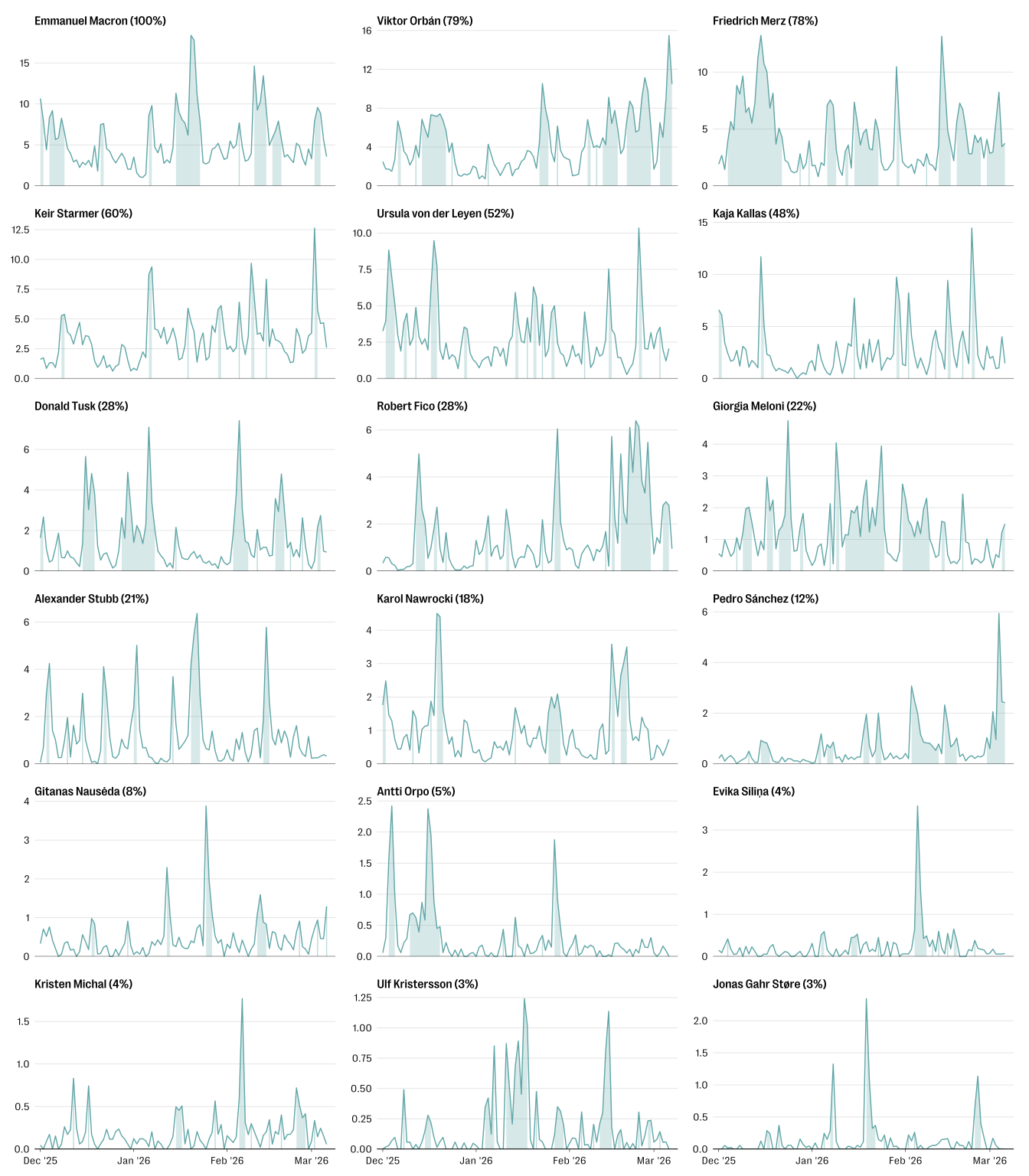
This narrative runs through the hundreds of thousands of news articles and pieces of commentary that the NEST Centre has monitored over the past three months (December 2025 to early March 2026). Using the same methodology applied in our earlier analyses of how Russian media cover Donald Trump and Xi Jinping, we tracked coverage of 18 European political leaders, from both Europe’s great powers and the Baltic and Nordic states (see the figure below).
A coherent editorial machine is revealed. The extent to which adversaries are covered rises and falls in line with the threat they pose to Russia’s war effort. Coverage of allies likewise reflects their propaganda utility. Both receive heavy coverage, but for opposite reasons.
Media presence of 18 European politicians in Russian-language media, December 2025 to March 2026
Who gets attention, and why
The ranking is strikingly uneven. France’s Emmanuel Macron sits at the top, followed by Hungary’s Viktor Orbán – ahead of Germany’s Friedrich Merz, Britain’s Keir Starmer, and both EU institutional leaders. Hungary has a fraction of Germany’s economic and military weight. Orbán’s prominence only makes sense in light of what Russian media actually say about these leaders.
Among adversaries, the ranking reflects how strategically significant Moscow considers each country: France receives the most coverage, followed by Germany, the UK, and Poland. Coverage of Orbán and Fico follows a different logic. Their countries’ economic and military power is modest, but their propaganda value is enormous. Russian media amplify their statements wholesale because words from inside the EU carry more authority than anything a Russian commentator could say. Slovakia’s prime minister receives almost as much coverage as Poland’s, despite leading a country with a fraction of Poland’s population and military significance.
Moscow’s allies
Russian media adopt Orbán’s and Fico’s words in their own commentary.
Orbán told a rally in Mohács that the EU’s plan to seize Russian assets was 'a declaration of war' that 'has never in history gone unanswered.' Fico told Slovak Radio that 'as soon as the war ends, every Western country will run there [i.e. restore relations with Russia] – you have never seen as much hypocrisy in your life.' The quotation circulated as an authoritative diagnosis from inside the system.
The Kremlin directly validates Orbán and Fico. Fico accused Ukraine of using oil supplies from the Druzhba pipeline as an instrument of political blackmail against Hungary. Kremlin spokesman Dmitry Peskov responded: 'Yes, absolutely, we fully agree with this.' When Zelensky threatened to 'give Orbán’s phone number to the Ukrainian Armed Forces', Peskov retorted that it was 'time to invoke Article 5 of the NATO Charter on collective defence.' Putin himself called Orbán in early March, praising 'the Hungarian leadership’s commitment to political-diplomatic methods.'
The two function as a unit. In nearly every surge of Fico coverage, his positions appear alongside Orbán’s, constructing a narrative of a growing 'pragmatic' Central European resistance to Brussels. They filed coordinated lawsuits against the EU’s Russian gas import ban. They fought the asset confiscation plan. They confronted Ukraine over the Druzhba oil pipeline – the standoff that generated the most coverage of both leaders.
The Druzhba standoff dominated coverage from late January through early March. Oil flows through the pipeline were disrupted after what Ukraine said was damage from a Russian strike. Orbán blamed 'those who blew up Nord Stream – that is, the Ukrainians.' Fico presented satellite imagery, which he said proved the reported damage did not prevent oil transit. Slovakia cut electricity and diesel exports to Ukraine in retaliation. Every escalation was covered as a decisive, proportional response.
Russian media present this pair as the embodiment of what Europe could be if it freed itself from Brussels. Their colourful language is covered with evident delight. Fico called the EU 'a massage parlour,' warned that Europe could become 'a museum for rich Chinese tourists,' and said of Zelensky: 'I don’t believe him, not even that he has a nose between his eyes.'
Europe’s heavyweights
Macron, Merz, and Starmer are the three leaders of adversary countries who receive the most coverage. The messaging in Russian coverage of them is even more emphatic than in the case of Orbán and Fico. Macron’s diplomatic ambitions are dismissed. Merz’s contradictions are exploited. Starmer is mocked.
Most of Macron’s coverage was driven by Ukraine diplomacy: hosting Zelensky and the January meeting of the 'Coalition of the Willing', and sending his adviser Emmanuel Bonne on a secret mission to Moscow. Each initiative was dismissed as posturing. Lavrov called it 'megaphone diplomacy, which never leads to anything good.' Political analyst Alexey Chadaev was blunter, saying that Macron was 'begging: ‘Please let us come to the table!’'
Macron’s single biggest moment of coverage came from Trump, who leaked a private message proposing a G7 meeting in Paris. Trump then threatened 200% tariffs on French wine and declared that 'Emmanuel won’t stick around for long.' The episode generated more Russian media attention than any of Macron’s own initiatives.
His speech on nuclear deterrence ('To be free, one must inspire fear') and France’s revelation that it had shot down Iranian drones ‘from the first hours of the conflict’ received more serious coverage. France’s nuclear arsenal is the one domain where the Russian media accord genuine importance to Macron.
Merz is useful in a different way. His value lies in contradictions that supply material for the 'declining West' narrative. In January, he called Russia 'a European country' and expressed hope for restored relations. Five weeks later, he told Die Rheinpfalz that dialogue with Putin is 'impossible.' He promised independence from America, then travelled to Washington. He was hawkish on China before his election, then 'timid' during his visit to Beijing. Lavrov framed the overarching agenda: 'Merz and his government openly link the ‘revival of Germany’ with the militarisation of the country and preparation for war.' Merz’s admission at the Munich Security Conference that '[t]he international order based on rights and rules… no longer exists' was treated as a vindication of Moscow’s worldview. Russian media track his domestic weakness closely. The fact that 58% of Germans support direct talks with Putin is regularly cited as evidence that the German people understand what their chancellor refuses to accept.
Starmer receives the crudest treatment. The assessment of the Daily Mail that he looked 'less like the leader of an influential nation and more like a commentator on events that had no bearing on him or our place in the world' was amplified with evident agreement. Russian media have cast Starmer in this light ever since.
Dmitriev targets Starmer with particular relish. On his state visit to China: 'Perhaps the mushrooms will enlighten them, help stop uncontrolled immigration, fight paedophile gangs, and stop the destruction of Western civilisation.'
The Epstein-Mandelson affair drew sustained coverage as evidence of British elite decay. Starmer admitted that he knew of Peter Mandelson’s Epstein connections before appointing him ambassador to the United States. His chief of staff and communications director resigned. Elena Ananieva of the Russian Academy of Sciences suggested that Labour had 'long planned to get rid of the unpopular cabinet head.'
The Iran crisis produced Starmer’s highest coverage spike. He hesitated over granting US forces access to British bases, then relented. Trump told The Sun: 'He’s no Winston Churchill.' The phrase became a defining label. Starmer’s hesitation confirmed the portrait Russian media had been building for months: a leader buffeted by events, presiding over a diminished post-Brexit Britain that cannot refuse American requests even when it wants to appear independent.
The frontline states
Poland and Finland occupy a different category: states whose proximity and hostility to Russia make them direct targets.
Russian media treat Poland as a rising military threat on Russia’s western flank. Tusk’s New Year pledge that 2026 would be 'a year of rapidly conquering the Baltic – our Polish Baltic' produced a rebuke from Zakharova ('sick fantasies') and a warning from Putin about defending Kaliningrad. His announcement that Poland could mine its border with Russia and Belarus 'within 48 hours' was framed as a provocation. His push for nuclear deterrence drew a threat from commentator Vladimir Kornilov: 'Russia will never allow Poland to have its own nuclear bomb!'
Russian media treat these statements as evidence of a coherent pattern of Polish militarisation: the plan to raise a 500,000-strong army, Baltic leadership ambitions, border mining, and nuclear aspirations. Poland’s withdrawal from the Ottawa Convention banning anti-personnel landmines was framed as an act of preparation for conflict.
Tusk also functions as an unwitting intelligence source. His disclosure that Washington opposes seizing frozen Russian assets because 'it’s hard to sit down with Putin and talk about compromise while taking his money' was reported without editorial comment – the quotation spoke for itself.
The historical dimension generates a separate, visceral layer of hostility. Poland’s preparation of a reparations lawsuit against Russia for 'Soviet domination' triggered coverage labelling Poland 'the hyena of Europe.' State Duma member Konstantin Zatulin called the claims 'senseless,' arguing that the 1939 Soviet campaign was a 'liberation campaign.'
President Nawrocki has sharpened the historical confrontation further. His speech at the 195th anniversary of the November Uprising, declaring that 'with Muscovites… there are only lies, the desire to take life, and the desire to destroy,' drew immediate condemnation from Duma deputies. On BBC Radio 4, he characterised all forms of Russia – tsarist, White, Bolshevik, and Putinist – as threats to Poland and Europe.
Russian media exploit every crack in the Warsaw-Kyiv relationship. Nawrocki’s gift to Zelensky of a two-volume set documenting the Volhynia Massacre, and his signing of the law ending special refugee assistance for Ukrainians, received warmer coverage than any other events connected to Poland.
Finland’s NATO accession clearly stung. President Stubb told the Washington Post that Russia’s DNA is 'expansion and imperialism' and declared at Davos that 'Ukraine will win this war.' At Munich, he argued that Putin has 'strategically already lost': 'He wanted to make Ukraine Russian. It became European. He wanted to prevent NATO expansion. He got Finland and Sweden [as members of NATO].'
Stubb declared Finnish-Russian relations had 'changed forever.' Medvedev responded with an unmistakable threat: 'I hope Russia never repeats the Bolsheviks’ mistake of 1917' – a reference to the decision to grant Finland independence. Duma Speaker Vyacheslav Volodin added: 'Nobody and nothing threatened Finland. The state developed thanks to Russian cheap natural resources.'
Medvedev, Zakharova, Volodin, and Dmitriev all responded to Stubb by name. For the president of a country with fewer than six million people, the level of senior engagement is extraordinary.
The EU’s own leaders
Von der Leyen and Kallas represent a different kind of target: the institutional machinery that administers sanctions and finances Ukraine. Federation Council Chair Valentina Matvienko set the tone: 'People like von der Leyen and Kallas are destroying world politics.'
Von der Leyen adopted Ukraine’s 'change or die' motto at Munich and proposed €800 billion in European defence spending. Russian media framed both comments as evidence of reckless militarisation. Hungary’s veto of the 20th sanctions package on 23 February – the eve of the invasion’s anniversary – was covered as proof that the sanctions architecture could be dismantled from within.
The attacks on Kallas are more personal. As a former Estonian prime minister, her hawkishness is framed as the product of her own Russophobia. Duma deputy Mikhail Sheremet called her 'a cobra escaped from a fakir’s bag.' Many Russian outlets gleefully amplified a French diplomat’s comment to The Times that Kallas 'epitomises the worst of European diplomacy: all moral certainty, with no sense of the realities on the ground'.
Kallas acknowledged in Oslo that the rules-based world order 'is an illusion. It has always been the law of the jungle.' Russian media welcomed this. A senior EU figure validating Moscow’s worldview was too useful to mock. Politico’s report that Kallas privately calls von der Leyen a 'dictator' was amplified as confirmation that the EU would eventually tear itself apart.
The Italian exception
Italy fits none of these categories cleanly. Moscow treats Meloni as a leader who might still come around.
She told Zelensky he may have to make 'painful concessions.' She refused to send Italian troops to Ukraine. Russian media covered these moments approvingly, presenting them as what Italian policy would look like without NATO and EU pressure.
Her coalition partner Matteo Salvini and his League party receive consistently warmer coverage, and are amplified as the voice of Italy’s true instincts. Her admission that 'public opinion is tired and it is necessary to find solutions to end the conflict quickly' circulated widely as confirmation of European war fatigue.
'What should we do? Attack McDonald’s?' she asked about Europe’s options regarding American tariffs. Russian media cover such lines with genuine amusement.
Senator Alexey Pushkov questioned whether Meloni’s call for EU-Russia dialogue was sincere, noting that 'in the EU, only Orbán and Fico have supported negotiations so far.' Her continued arms shipments to Kyiv justify the doubt. Russian media’s coverage of Meloni amounts to a standing bet that the institutional pressures keeping Italy in the Western camp will eventually weaken.
On the margins
The seven least-covered leaders appear only when events force them onto the agenda.
Spain’s Pedro Sánchez barely registered until two crises broke out. After the US military operation against Venezuela in early January, he was one of the first European leaders to condemn the intervention. Russian coverage depicted him approvingly as an opponent of American unilateralism alongside Moscow, Beijing, and Tehran. Two months later, during the Iran crisis, Spain refused to allow the US to use its air bases for strikes. Trump threatened to sever trade relations. Sánchez responded: 'Twenty-three years ago, another US administration dragged us into a war in the Middle East,' a war that 'in reality, seen in retrospect, produced the opposite [of the desired] effect.' His declaration – 'Spain will not be an accomplice in a war simply out of fear of retaliation' – circulated as proof that America’s own allies were turning against it.
Russian media treat the three Baltic leaders as a joke. Military expert Vasily Dandykin, told that Lithuania planned to contribute a warship, noted that its navy consists of one vessel: 'They try their hardest – ready to take off their last pair of underpants.' When Latvian Prime Minister Evika Siliņa called for an EU special envoy, Zakharova dismissed the proposal: 'It’s understandable: they’re tired of sitting under the table.'
Norwegian Prime Minister Jonas Gahr Støre received the least coverage. His most covered moment came from Trump’s Nobel Prize letter, in which the president declared that he no longer felt 'obligated to think exclusively about peace' because of Norway’s 'cowardly' refusal to give him the award. Støre earnestly explained that his government does not control the Nobel Committee. Finnish President Stubb later revealed that he had received an identical letter, also addressed 'Dear Jonas.'
What the coverage reveals
The coverage of 18 European leaders is shaped by two parallel dynamics: threat significance for adversaries, propaganda utility for allies. Both serve a single strategic objective: demonstrating that European unity is fragile and temporary.
Five patterns stand out.
1. The attention hierarchy is a map of Russian strategic priorities. France, Germany, the UK, and Poland are the countries Moscow considers most consequential among its adversaries. This ranking reflects military power, diplomatic activity, and involvement with the war in Ukraine.
2. Orbán and Fico function as editorial infrastructure. Their statements bypass the credibility gap that all Russian state commentary faces. Public European dissent is a direct input into Russian information operations.
3. What Europeans say in public is weaponised within hours. The Tusk-Nawrocki dysfunction, the Kallas-von der Leyen 'dictator' leak, Tusk’s disclosure of Washington’s negotiating position – all were amplified before the original stories had ‘cooled’. Discipline in public communication is a security concern.
4. The mockery of Baltic leaders is deliberate. These are states with Russian-speaking minorities and small militaries on Russia’s border. Ridiculing their ambitions serves to demoralise their populations and undermine the idea that NATO’s smallest frontline members can act independently.
5. Silence is also a tool. Leaders who neither threaten Russia nor break with the Western coalition receive almost no coverage. When they do surface, it is because they said or did something Moscow can use. Policymakers should recognise that their public statements are monitored for exploitable breaks.
Dmitriev’s December prediction – that Moscow would get its frozen assets back and Europe would foot the bill – came from an editorial machine that runs every day, calibrated to each leader’s vulnerabilities. It works patiently. It is designed to outlast European resolve.