A new phase of the war against Ukraine: How Putin may try to secure Donbas
Vladimir Putin wants to end the war this year, establish full control over the Donbas, and obtain international recognition of his territorial gains, according to insider sources cited by Bloomberg. Nevertheless, the situation on the battlefield suggests that these aims are unrealistic. In fact, Ukraine’s position is growing stronger, thanks to its technological advantage in drone warfare. This, in turn, has prompted numerous claims that Ukraine has turned the tide of the war and is even winning, which is also overly optimistic. The fact that neither side has given up hope of outright victory points to an inevitable escalation as both attempt to achieve a genuine breakthrough.
Speaking at a meeting of NATO foreign ministers in Sweden on 21 May, Ukraine’s Foreign Minister Andrii Sybiha stated that the conflict has reached a turning point: ‘Ukraine is holding the line, and Russia’s numerical superiority is no longer a decisive factor.’ The optimism expressed by Sybiha and by many analysts is largely linked to Ukraine’s more effective use of drones in recent months. Russian targets hundreds of kilometres from the border, including critical infrastructure facilities, are increasingly coming under attack. Drone strikes have already disrupted operations at almost all oil refineries in central Russia.
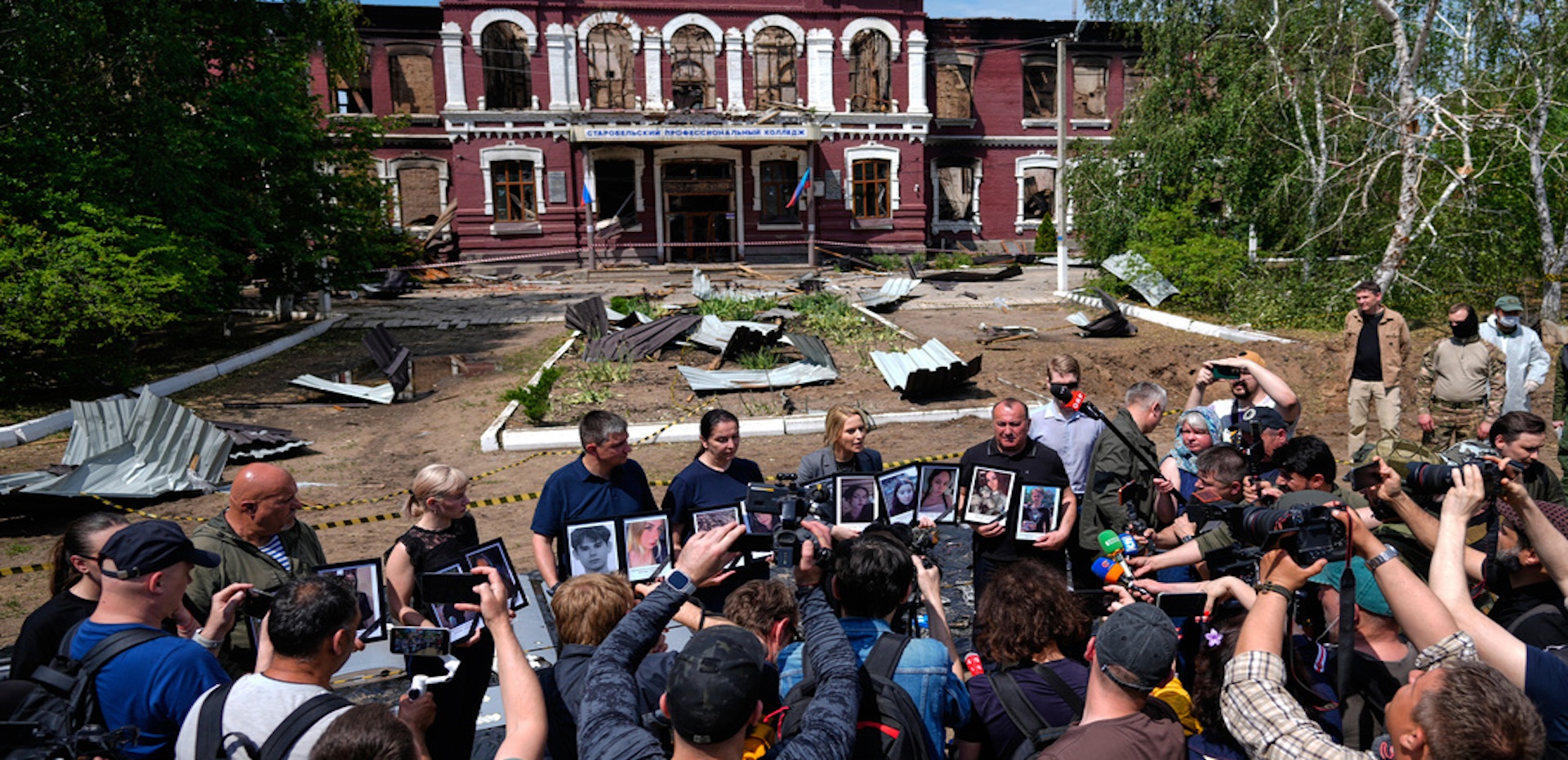
The latest round of Russian escalation came in response to drone attacks, although the formal pretext was a Ukrainian strike on a student dorm Starobilsk in Luhansk Region that reportedly killed 18 people. During the night of 24 May, Russia attacked Kyiv with dozens of ballistic missiles, Shahed drones, and cruise missiles. The attack seems to have been intended to intimidate: apartment buildings, shops, businesses, schools, and healthcare facilities were among the targets hit.
The next day, the Russian Ministry of Foreign Affairs issued a statement announcing that the Russian armed forces had begun carrying out ‘systematic strikes against enterprises of Ukraine’s defence-industrial complex in Kyiv’, including facilities involved in the design, production, programming, and operational preparation of drones. The Ministry also urged foreign nationals and diplomatic missions to leave Kyiv and advised residents not to approach military and government buildings. On the same day, Foreign Minister Sergei Lavrov personally conveyed this message to US Secretary of State Marco Rubio.
Over four years of war, Kyiv has repeatedly endured large-scale Russian air attacks. Despite the scale of these strikes and their increasing frequency, further escalation is not a given, as Russia lacks the resources to conduct such attacks on a regular basis. Future Russian strikes are therefore more likely to focus on targets of particular importance to the functioning of the state. Transport links and politically significant locations are especially vulnerable. The primary objective of such attacks is to exert psychological pressure on Ukraine.
A second possible avenue of Russian escalation is increased pressure on Europe. The Kremlin’s aim is for the European public to feel a growing sense of insecurity and, in turn, pressure their governments to reduce assistance to Ukraine and distance themselves from the conflict. The Baltic countries and their neighbours are the most likely targets. At the most recent meeting of the UN Security Council, Russia’s representative, Vasily Nebenzya, openly threatened Latvia with military action, claiming that drone attacks on Russia were being prepared on Latvian soil. At the same time, incidents involving drones entering Latvian airspace have become more frequent. On 29 May, a Russian drone struck an apartment building in Romania, triggering a diplomatic crisis and prompting the Romanian authorities to close the Russian consulate in Constanța.
Finally, a third avenue of escalation concerns the nuclear threat. In recent months, Russia has conducted large-scale unscheduled military exercises jointly with Belarus, during which nuclear munitions were reportedly issued to some units, while a number of officials have employed increasingly forceful rhetoric regarding the possible use of nuclear weapons. Russian analysts and propagandists have also actively discussed the possibility of nuclear strikes, including against Europe. On 21 May, Vasily Kashin, Director of the Centre for Comprehensive European and International Studies at the National Research University Higher School of Economics, published an article in which he stated:
‘The nuclear option, or conventional strikes against the EU, should be considered as a practical course of action in the event of a further sharp increase in strikes deep inside Russian territory using European weapons, the enemy’s refusal to negotiate an end to the war, or an escalation of his demands during negotiations – that is, as a defensive instrument. It is not a means of achieving a qualitative improvement in the results of the special military operation.’
Regardless of which form of escalation Russia chooses, the next phase of the war is likely to be marked by a further intensification of Russian attacks on civilian targets, and greater pressure on Europe. Against the backdrop of economic difficulties, declining approval ratings, and growing dissatisfaction among elites, Putin will seek a way out of the war that can be presented as a victory and used to reinforce the domestic political status quo. In this sense, escalation is a means both of strengthening Russia’s negotiating position and of overcoming the military stalemate, which appears increasingly unlikely to be broken without recourse to new tactics.