Trump at 80: Fading in the Russian mirror
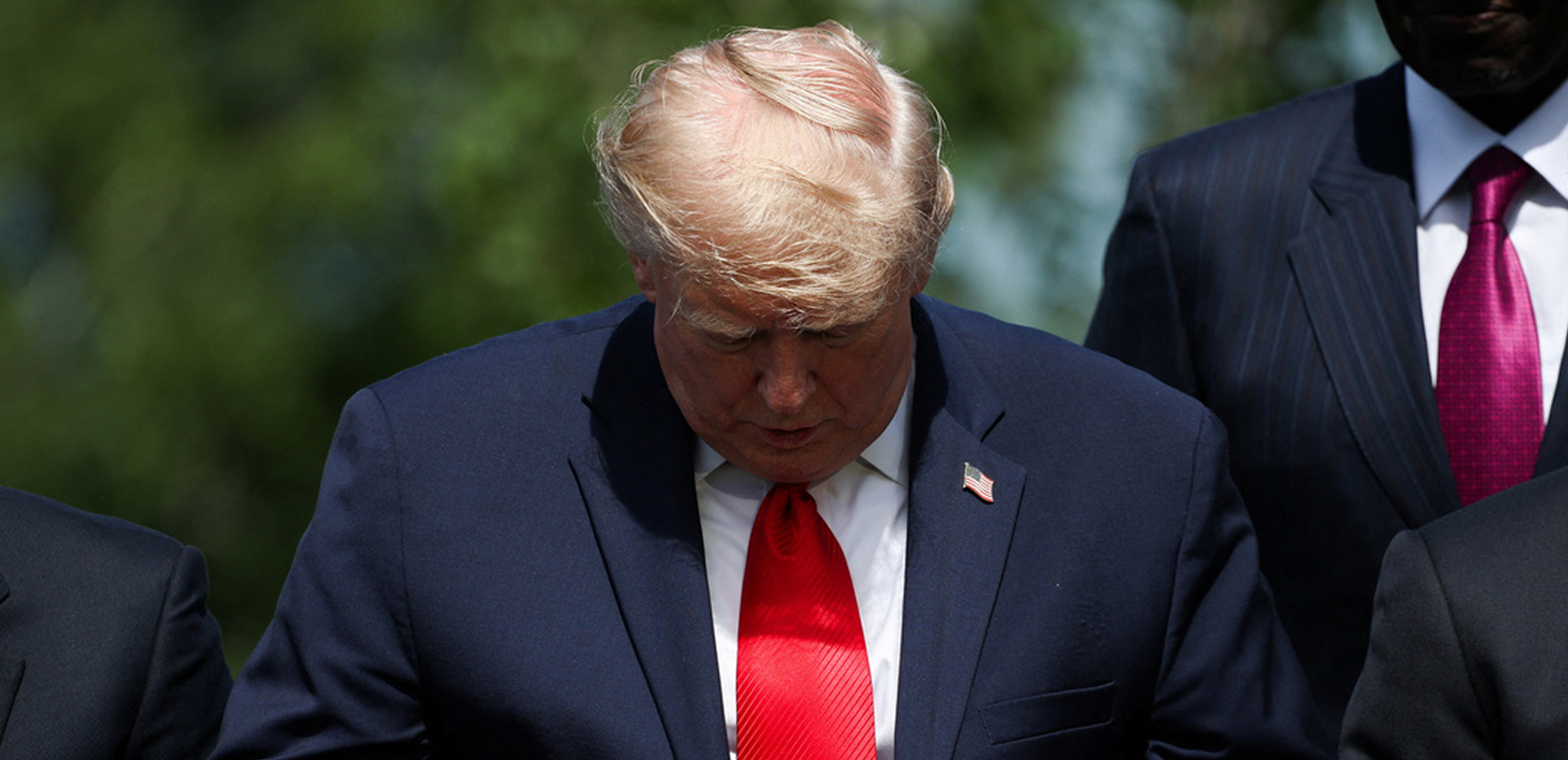
Donald Trump turned 80 on 14 June. He is beginning his 81st year as a deeply unpopular president: his net approval rating among US voters has sunk to minus 25, the lowest The Economist’s tracker has recorded for any president since it began in 2009.
The economy is the main reason for this. Three-quarters of Americans rate it as fair or poor, and petrol, which cost less than $3 a gallon before the Iran war, now runs to nearly $4.50 a gallon. More than half the country calls the war a mistake.
In Russia, the shift in perceptions of Trump is more subtle. There is simply less interest in him lately. The NEST Centre monitors how a broad range of Russian-language media, from official outlets to social media, cover political figures. Trump was a fixture throughout 2025, his coverage rising and falling in sharp bursts. One of the biggest surges came in August, when Putin met him in Anchorage. In recent months, however, coverage of him has fallen steadily, and now sits at its lowest sustained level since he took office (see figure below).
Trump’s media presence in Russian-language media, January 2025 – June 2026
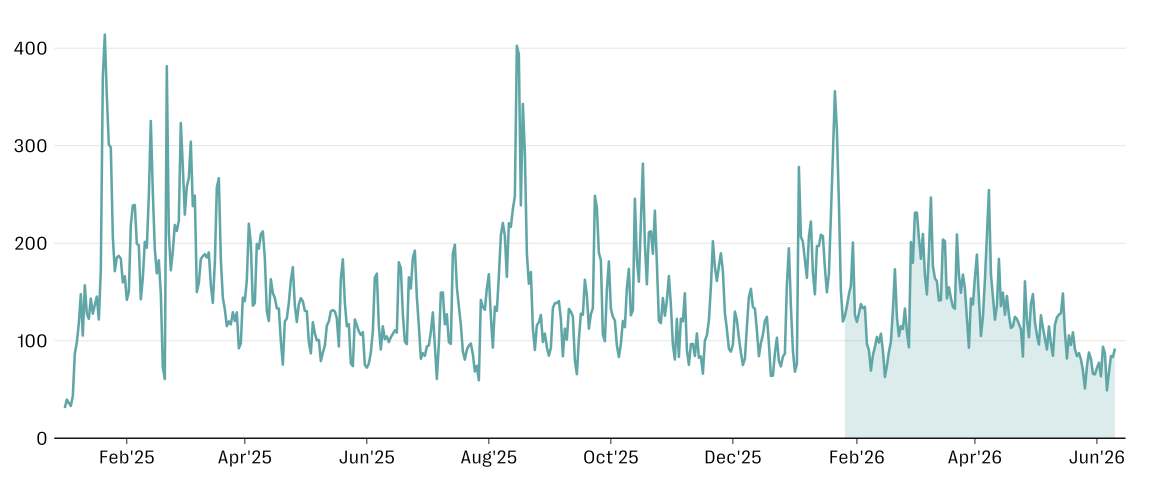
Source: NEST Centre
Trump’s standing with Moscow rested on a single promise: to end the war in Ukraine on terms Russia could accept. For a year after he took office, this prospect kept him near the centre of Russian coverage. As late as January 2026, his envoy Steve Witkoff said a deal was close.
However, the deal did not come. The talks stalled over control of territory in Donbas, and the momentum for negotiations drained away.
Then came the Iran conflict. The war began in late February 2026 and absorbed Trump for months, pulling his attention away from Ukraine. Russian commentators noted, with some unease, that Washington’s focus had turned to the Middle East.
The Kremlin had seen this pattern before. In 2025, a round of strikes on Iran and a cooling of US-Russia relations over Ukraine resulted in coverage of Trump becoming hostile, even as it remained intensive. This time, the problems ran deeper: the peace talks stopped altogether, the dealmaker whom Russia had once courted looked spent, and his interest in the Ukraine conflict weakened. A leader who can no longer deliver what Russia wants is less worthy of its attention.
The coverage which Trump still drew in 2026 focused on a few subjects, and its tone shifted with each.
The Iran war was the main topic. It dominated Trump’s coverage into the spring, casting him as a warmonger attacking one of Moscow’s allies.
The ridicule grew personal. On social media, Trump was dubbed ‘the American grandpa’. When he paused the strikes in March, Iran’s Revolutionary Guard posted an English-language video taunting him: ‘Hey Trump, you’re fired.’ In April, when he warned that ‘an entire civilisation will die tonight’, then announced a ceasefire within hours, Russian outlets played the climbdown for laughs.
But the Iran war also benefited Moscow. The fighting drove oil prices up, and in March, Trump eased US sanctions on Russian crude in order to keep the supply of oil flowing. The waiver handed Russia a windfall that US senators estimated at $150 million a day. This revenue helps to fund the war in Ukraine that Trump says he wants to end.
The thaw drew private money, too. In February, news broke that an investor close to the Trump family had signed a deal with Novatek, a major Russian gas producer, to tap gas reserves on Alaska’s North Slope. It was welcomed as the beginning of Russia’s return to doing business with the West.
Most warmly received of all was Trump’s renewed push for a settlement in Ukraine. The Russian press credited his leadership and reported on his diplomacy with approval. In January, Trump asked Putin to pause strikes on Kyiv to facilitate talks. Moscow still counts on him to end the war in Ukraine on its terms, which means that the tone of the Russian media’s coverage of this issue remains positive.
China drew a less enthusiastic kind of attention. In May, Trump visited Beijing and praised Xi Jinping. Russian media covered the trip with unease and open scorn. One columnist called his flattery of Xi ‘pathetic’, and a clip of him glancing into Xi’s notebook spread fast. The summit revived talk of a ‘G2’ of Washington and Beijing that would exclude Russia, and Trump’s offer to sell American oil to China in place of Russian oil threatened one of Moscow’s last dependable markets.
Trump turned 80 as a diminished figure in Russian eyes: less central, less respected, covered less. However, he has not been written off. The oil windfall still flows, and Moscow still hopes that he will return to the table and help to reach a settlement in Ukraine on Russia’s terms. Putin’s envoy Kirill Dmitriev keeps flying to the United States to keep communications open, and in June, he talked up the prospect of a ‘Putin-Trump tunnel’ under the Bering Strait linking Russia to Alaska. Moscow will continue to work hard to normalise relations with the US but will remain concerned about a possible ‘reset’ in US-China relations. A G2 world could leave minimal space for Russia’s great power ambitions.