In late August, another survey of Russian public opinion on economic issues was carried out on behalf of the NEST Centre. It found that more than a third of Russians openly support reducing military spending in order to increase funding for social programmes. Current assessments of the economic situation remain moderately negative. Inflationary pressure is slowly increasing following the rise in petrol prices, but Russians are not prepared to openly blame the government for this. At the same time, three-quarters of respondents believe that the war is worsening the state of the Russian economy.
More than half of Russians (53 per cent) describe the state of the Russian economy as ‘not great’, a share which has increased somewhat over the past two months as the proportion who assess it as ‘good’ has declined. Almost no respondents remain who are prepared to describe the state of the economy as ‘excellent’.
Forty-two per cent of Russians believe that the state of the economy has worsened over the past three months, while 16 per cent say that the deterioration has been significant. Compared with the June survey, assessments have improved somewhat: the percentages who believe that the situation has not changed or has improved slightly have each risen by 3 points, to 35 per cent and 12 per cent respectively. This optimism looks unusual against the backdrop of the petrol crisis. Most likely, these fluctuations are within the margin of error and do not signal a shift towards improved perceptions of the economy.
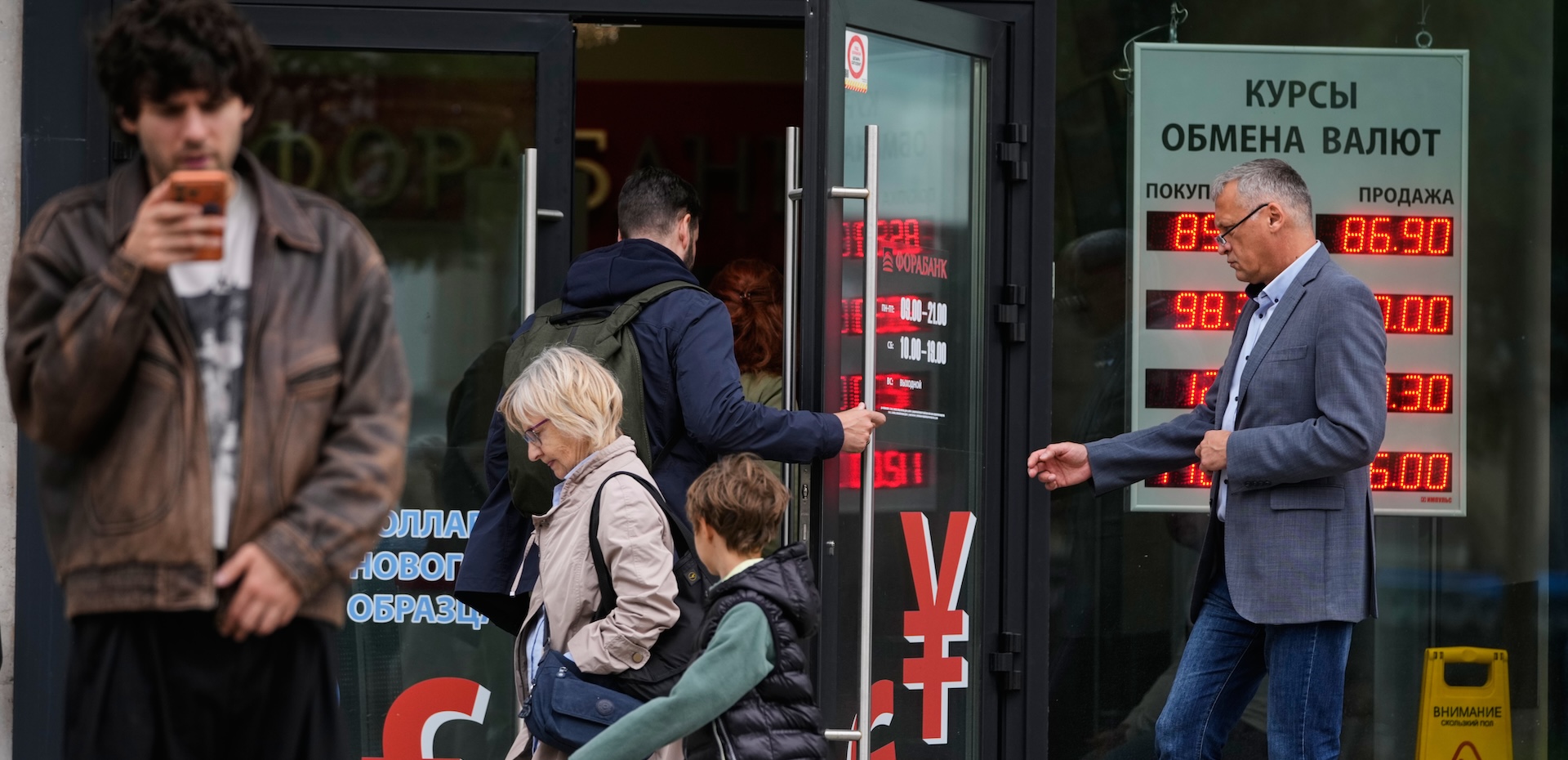
According to Rosstat, petrol prices in Russia rose by almost 20 per cent in the first eight months of 2026, compared with an overall increase in consumer prices of 4.7 per cent. Many experts believe that this will inevitably affect the rate of inflation, and it appears that Russians have begun to feel the impact. The share of respondents who say that the cost of living places a heavy financial burden on them has risen to 35 per cent, from 29 per cent in April. At the same time, the share who say that the cost of living is not a problem, including those who think this may change soon, has fallen to 35 per cent, from 42 per cent in April.
However, these shifts have not affected how Russians assess the government’s performance on economic issues. Almost half of respondents (47 per cent) still believe that its economic priorities are correct, while 35 per cent disagree. At the same time, only 15 per cent of respondents see positive results from the government’s policies, down from 19 per cent in April. The share of respondents who say that the government’s decisions have no effect on their families’ quality of life rose to 55 per cent in August, compared with 50 per cent in February and 49 per cent in both April and June. More than a third of Russians believe that the government creates new problems for them: 35 per cent in August, 37 per cent in June, and 33 per cent in April.
Three-quarters of Russians assess the impact of the ‘special military operation’ negatively (surveys conducted in Russia cannot use the word ‘war’). Forty-six per cent say that it has had a strongly negative impact on the economy. Only 12 per cent see a positive effect, and just 3 per cent describe this effect as strongly positive. These figures have changed little compared with the June survey, which is unsurprising: the government cannot point to any improvements in the economic situation, while Vladimir Putin is speaking increasingly often about ‘certain difficulties’ and unresolved problems.
The August survey included two questions which were close to the limits of what is ‘politically permissible’:
- In 2024–2025, federal budget spending under the ‘National Defence’ heading increased almost fourfold compared with the 2019–2021 level. Some consider this increase justified, while others believe that it would have been better to spend this money on healthcare, education, and pensions. Which of these views do you personally tend to agree with?
- If you were responsible for deciding how federal budget funds should be allocated, would you currently agree to reduce defence spending in order to increase spending on healthcare, education, and pensions?
Most likely, some respondents tried to give politically ‘correct’ answers to these questions. However, even taking this into account, the results are difficult to ignore. The share of Russians who consider the fourfold increase in military spending justified slightly exceeds the share who believe that it would be more appropriate to direct budget funds towards social programmes (48 per cent compared with 43 per cent). At the same time, firm supporters of increased military spending outnumber convinced supporters of greater funding for social programmes, by 27 per cent to 18 per cent.
The suggestion in the second question that respondents take responsibility for reallocating budget resources from the war to social programmes appears to have made them more cautious in their answers. More than half (52 per cent) believe that the war requires sacrifices and did not agree with the proposal to reduce military spending. This group was divided equally between ‘definitely not’ and ‘probably not’, at 26 per cent each. Just over a third of Russians (36 per cent) believe that military spending should be reduced in order to increase funding for social programmes.
It is well established from many surveys that residents of Moscow, older Russians (aged 55 and above), and pensioners tend to be more ‘hawkish’. What was unexpected was that a majority of young Russians (51 per cent of respondents aged 18–39), housewives (56 per cent), and respondents who are not in employment (49 per cent) consider the increase in military spending unjustified. Russian housewives are the most ‘anti-war’ group: 47 per cent are prepared to support cuts in military spending in order to increase funding for social programmes, while 29 per cent are opposed. Among young Russians aged 18–39, supporters and opponents of reducing military spending were almost evenly divided, at 45 per cent and 43 per cent respectively. The most consistent supporters of maintaining military spending were higher-income Russians, managers, and professionals: 55–57 per cent opposed cuts, while 28–34 per cent supported them.
Methodology
The nationwide survey was conducted through face-to-face interviews during the final ten days of August 2026 using a representative sample of Russia’s urban and rural population. The sample comprised 1,602 respondents aged 18 and over. The margin of error for a sample, at a 95 per cent confidence level, does not exceed:
- 3.4 per cent for indicators close to 50 per cent;
- 2.9 per cent for indicators close to 25 per cent / 75 per cent;
- 2.0 per cent for indicators close to 10 per cent / 90 per cent;
- 1.5 per cent for indicators close to 5 per cent / 95 per cent.