Over the years of Vladimir Putin’s rule, Russian culture has moved from relative freedom and diversity to the enshrinement of ‘traditional values’ in the Constitution and the effective creation of a state ideology. While in 2000 the cultural sphere remained competitive and relatively free, by 2025 it had been completely purged and subjected to a policy of archaicisation. Prison sentences for cultural figures, the flourishing of ideologically charged art, the disappearance of independent media, the confiscation of print runs, and the systematic censorship of books have all become the new norm. How did this trend emerge, and what are the short- and long-term prospects for cultural life in Russia after 2025?
SUMMARY
- Over the quarter century of Vladimir Putin’s rule, Russian culture has transformed from a vibrant and diverse environment into a homogeneous structure almost entirely subordinated to state ideology.
- What has happened can be described as archaicisation – a form of regression based on adherence to a cultural agenda that does not reflect the growing complexity of the world.
- Cultural figures are required to adhere to ‘traditional values’, and deviation from them can result in sanctions, including legal penalties. At the same time, ‘tradition’ does not mean a return to past practices – it is being constructed now.
- The archaicised cultural system that has emerged is already experiencing a crisis because of a shortage of personnel, which has in turn been caused by the persecution of dissenting cultural figures and cultural stagnation among those loyal to the regime. At some point, the system which the regime has created to control the cultural sphere will cease to function, and abandoning archaic practices may prove easier than maintaining them.
- A new generation will have to restore Russian culture after the crisis. It did not participate in the decisions that led to the policy of archaicisation and therefore bears no responsibility for it. At the same time, a cultural turn towards the West is unlikely – grievance and resentment will stand in its way. However, sooner or later, a new generation of cultural figures will challenge the established order.
From diversity to consolidation: The paradoxes of cultural transformation, 2000–2025
At the beginning of Putin’s rule, culture in Russia retained its diversity and capacity to develop in different directions. Anti-Westernism, militarism, and imperial nostalgia were already present at the time, but had not been established as an official ideology and did not suppress other currents. Three groups competed with one another and could operate independently or together: the creative intelligentsia, the bureaucracy, and politicians who were ready to use the cultural sphere to achieve their goals.
The bureaucracy, represented by the Ministry of Culture, supported a policy of international cooperation through participation in major biennales, while at the same time promoting Nikita Mikhalkov’s films with their reactionary message. Big business preferred to support projects that combined conservative ‘fidelity to one’s roots’ with a demonstrative universalism and openness. As a result, Russian cultural figures continued to participate in global cultural events on an equal footing until 2014, and in some cases until 2020.
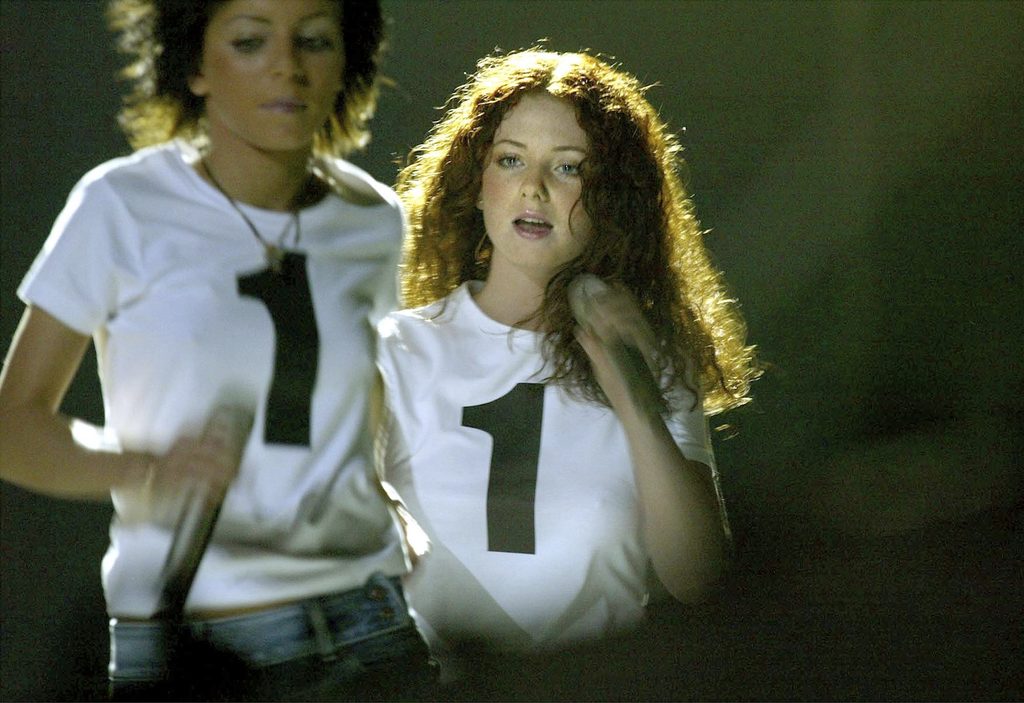
Songs by the group t.A.T.u. topped charts around the world, from South Korea to the United States. Major international exhibitions of Russian art were held, such as ‘Russia!’ at the Guggenheim Museum in New York in 2005. Having overcome the post-perestroika crisis, Russian theatre reached European stages. Fictional cinema did not become a global phenomenon, but individual films regularly won top awards at Cannes, Venice, and Berlin. Documentary cinema became highly competitive internationally. Infrastructure to support the film industry also developed: while in the early 2000s the number of cinemas in Russia was insufficient for films to recoup their production costs through theatrical distribution, by the 2010s this had changed.
Moscow and St Petersburg underwent a process of urban transformation with an obvious political message: younger generations (‘hipsters’) were offered an informal bargain whereby ‘we provide sophisticated leisure opportunities and modernise the urban environment, while you stay out of politics’. In Moscow, the Strelka Institute for urban development opened. The renovated Gorky Park became an experimental site for adapting new urban design trends. Urban cultural centres emerged, with Winzavod among the first, and private museums were established, including the Institute of Russian Realist Art, the Jewish Museum and Tolerance Centre, and the Garage Museum of Contemporary Art. In St Petersburg, New Holland, Sevkabel Port, and other cultural centres opened.
Modernisation also extended to the regions. The ‘Perm Cultural Revolution’ of 2008–2013, including the ‘Russian Povera’ exhibition and the ‘Live Perm’ and ‘White Nights in Perm’ festivals, demonstrated that projects of a European standard could also be implemented outside Moscow and St Petersburg. The experiment was financed by reducing expenditure on the construction of a federal highway. This not only reflected the ambitions of Governor Oleg Chirkunov, but was also a means of attracting investment.
A network of book festivals covered almost the entire country. The Krasnoyarsk Book Culture Fair (KRYAKK), supported by the billionaire Mikhail Prokhorov, set a standard that local events sought to match, both in smaller cities, such as Glazov and Berdsk, and in larger ones, such as Perm and Yekaterinburg.
The manifesto of the 2000s was the article ‘In Search of a Complex Person’ by sociologist Daniil Dondurei and theatre director Kirill Serebrennikov, published in the government newspaper ‘Rossiyskaya Gazeta’ in 2009. The authors declared that the purpose of culture was to foster a critically minded individual capable of taking responsibility for their choices and fully embracing the modernisation that then-President Dmitry Medvedev repeatedly advocated.
In 2021, another prominent theatre director, Konstantin Bogomolov, responded to Dondurei and Serebrennikov’s article with his own manifesto, ‘The Abduction of Europe 2.0’. Bogomolov, who had once spoken at a rally in support of Alexei Navalny, argued that there were no ‘complex’ or ‘simple’ people, but rather the nation as a whole and those who had become detached from it.
At the same time, a reactionary trend was also gaining strength. As early as the beginning of the 2000s, Vladislav Surkov, one of the Kremlin’s ideologues, began creating initiatives aimed at discrediting alternative culture and its leading figures. In 2002, the Surkov-backed movement ‘Walking Together’ staged a protest in Moscow’s Theatre Square: activists installed a mock toilet made of polystyrene and threw pamphlets containing quotations from Vladimir Sorokin’s novel ‘Blue Lard’ into it, after first pouring bleach over them. Another work by Sorokin, his libretto for composer Leonid Desyatnikov’s opera ‘The Children of Rosenthal’ (2005), was later also subjected to ostracism.
At the time, this appeared to be a postmodern game – even as Surkov was attacking Sorokin, he supported contemporary theatre, including Serebrennikov personally. In retrospect, however, these events fit into the state’s strategy of cultural archaicisation. Social historians understand archaicisation as a form of regression based on ‘following cultural programmes that do not correspond to the increased complexity of the world’ (Alexander Akhiezer’s definition).
Private organisations that funded contemporary culture were eliminated: the Soros Foundation (2003), Mikhail Khodorkovsky’s Open Russia (2005), and Dmitry Zimin’s Dynasty Foundation (2015). In 2012, the ‘foreign agents’ law was adopted, followed in 2015 by the law on ‘undesirable organisations’. These laws made it possible to ensure the predominance of loyal figures in the cultural sphere.
The turning point came after the annexation of Crimea in 2014: the focus of the state’s cultural policy shifted from ‘hipsters’ to the ‘deep people’ – a construct devised and described by Vladislav Surkov.
The design for Moscow’s Zaryadye Park (opened in 2017) was symbolically contrasted with the urban practices represented by Gorky Park. While the hipster park conveyed an image of post-imperial modernity, with the metropolis as a symbol of universality, Zaryadye embodied a different concept: a modernised past, an adapted form of the archaic, with elements of imperial identity. However, as the authorities’ rhetoric became more radical, the role of its architectural expression also changed: the system quickly moved on to a different project, the militarised Patriot Park. It became the embodiment of the new ideology: ultra-modern militarism combined with Orthodox Christianity.
Nevertheless, in the late 2010s and early 2020s, attempts to establish progressive institutions continued. Museum leaders – among them Marina Loshak and Zelfira Tregulova, directors of the Pushkin State Museum of Fine Arts and the State Tretyakov Gallery respectively – embraced a culture of involving audiences in the process of creating art. Leonid Mikhelson, head of the natural gas company Novatek, and his V–A–C Foundation opened the ultra-modern GES‑2 House of Culture in a decommissioned power station. In St Petersburg, the long-standing plan for the Joseph Brodsky ‘Room and a Half’ Museum was realised; the Perm Contemporary Art Biennale flourished.
The more tightly cultural institutions were subordinated to the state, the more diverse individual adaptation strategies became. Until 2022, archaicisation was a growing trend, but its outcome was not predetermined. Even up to 2025, isolated pockets of resistance, or at least silent sabotage, remained. The reverse is also true: the period was culturally diverse, but its ultimate outcome was unambiguous.
By the end of 2025, the archaicisation of Russian culture had been embedded in legislation, institutions, and political platforms. Decrees on the protection of ‘traditional values’ had been adopted, while the Constitution enshrined the ‘preservation of the memory of ancestors’.
After breaking with the pluralist trend in the mid-2010s, the state moved towards direct control of cultural policy, from support for cultural diversity to repression of it, and from repression to fundamentalist ideology.
The popularity of narratives about ‘Western influence’, ‘national roots’, and ‘spiritual foundations’ is also reflected in quantitative research. This is confirmed by a Levada Centre survey conducted in December 2025 specifically for this report.
Of the 1,610 respondents, 75 per cent agreed fully or partly that Russian culture had moved closer to its ‘national roots’ and 63 per cent that it had moved closer to its ‘spiritual foundations’. Seventy-two per cent agreed that the state should determine the direction in which art develops. Slightly fewer respondents supported the view that the role of art is to reproduce ‘traditional values’ (65 per cent), rather than to create new ones (23 per cent). Sixty-three per cent viewed ‘Western influence’ on Russian culture negatively.
The new old anthem: an ideological converter
In December 2000, nine months after Putin’s election victory, a new Russian national anthem was adopted, despite objections from the progressive public.
The anthem’s lyrics were ponderous and difficult to remember, but their quality did not matter at the time. Their purpose was to bring together the metaphors that had been taking shape in patriotic rhetoric and to codify the foundations of the emerging official ideology: Russian history is continuous, and the Soviet period should not be set against the imperial one, because the country where we lived in the past, live today, and will live tomorrow was created by God and bequeathed to us by our ancestors. The anthem emphasised the key images and ideological constructs of traditionalism.
Appealing to so-called ‘traditional values’ and to the ‘past’ as a means of strengthening political power is not unique to Russia. Ruling elites, together with the theorists they enlist, take a particular set of images and value orientations, declare them to be ‘primordial’, and then begin to sustain them artificially, punishing departures from them.
The pluralistic context in which the anthem was adopted softened its excessive rigidity; what sounds programmatic today was then perceived simply as artistic imagery. The anthem did not eliminate competition or the diversity of cultural experience, but it outlined the contours of a future ideology and codified official art. Its motifs and metaphors came to be actively used by politicians; speechwriters incorporated them into presidential addresses to the Federal Assembly, and they were used to illustrate arguments about the value-based nature of Russia’s cultural policy.
During Vladimir Medinsky’s ministerial tenure (2012–2020), his first deputy, Vladimir Aristarkhov, developed the Strategy for State Cultural Policy through 2030. The document set out for the first time a proposition that later appeared in presidential decrees issued in 2020 and 2022: culture must reproduce traditional spiritual and moral values, rooted in the continuity of the norms of Eastern Orthodox Christian civilisation and in the primacy of society over the individual. Those who fail to comply with this principle may be subject to ‘social sanctions’, which do not require, but allow for, the possibility of legal action.
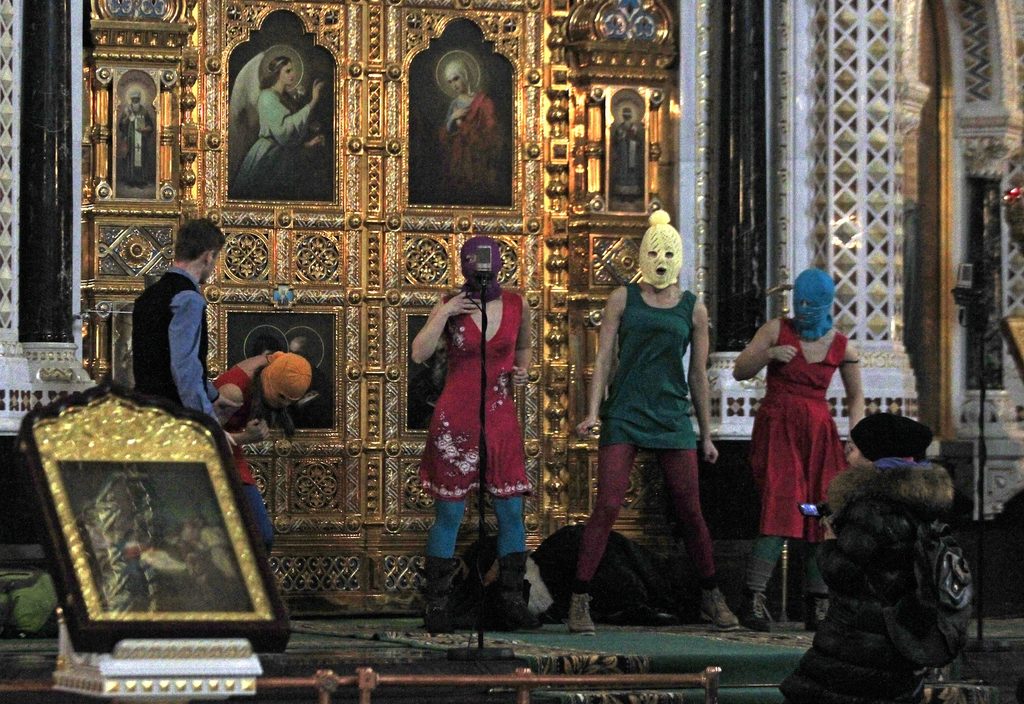
Work on the strategy began alongside the case against the punk group Pussy Riot, whose members staged the performance ‘Mother of God, Drive Putin Away’ in the Cathedral of Christ the Saviour in 2012. Among other things, the judgment against them referred to Canon 82 of the Quinisext Council in Trullo (seventh century), which prohibits women from entering the altar and the solea. The two-year sentences imposed on the group’s members were justified by the same ‘continuity of the norms and cultural images of Eastern Orthodox Christian civilisation’ that had first been declared in the national anthem.
Throughout the 2010s, the bureaucracy persistently reinforced the link between culture, values, and tradition. Culture was described as an integral element of national security.
Bans were imposed with increasing frequency, on the basis of ‘traditional values’ and the demands of religious communities. In 2015, for example, Timofey Kulyabin’s production of ‘Tannhäuser’ at the Novosibirsk Opera and Ballet Theatre was cancelled under pressure from the ‘Orthodox public’.
Official repression led to a sharp narrowing of the cultural field, culminating in the entrenchment of the principle of ‘historical continuity’ in the revised 2020 Constitution. ‘The Russian Federation, united by a thousand-year history, preserving the memory of the ancestors who passed on to us their ideals and belief in God, as well as continuity in the development of the Russian state, recognises the historically established unity of the state,’ declared the country’s fundamental law. Formally, the Constitution did not provide for a single state ideology, but in practice one had been adopted. Collective unity was underpinned by history, belief in God ‘in general’, and the cult of ancestors.
These formulations contain deliberate references to the past, but not the idea of a return to it. Russia, as depicted in the Constitution, is not repeating anything; it is building anew – on the basis of archaic models.
Technology in the service of the archaic: The Sochi Olympics, imperial traditions, and digital technology
In December 1999, shortly before Boris Yeltsin’s resignation, Vladimir Putin, then still prime minister, met representatives of Russia’s online culture, including Anton Nosik and Arkady Volozh. Participants in the meeting later recalled that Putin made an informal promise ‘not to touch the Runet for 10–15 years’, and kept it. However, hopes that digital technologies could serve as self-sufficient institutions of modernisation proved unfounded.
Digitalisation turned out to be readily compatible with conservatism, even without total control over the internet.
In 2005, the first book in the anonymous political commentary series ‘Project Russia’ was published. Copies were sent by government courier to state institutions, including the Presidential Administration, the FSB, the State Duma, the Ministry of Foreign Affairs, and other agencies. The book set out the goal of making Russia absolutely sovereign and achieving autarky. In the authors’ vision, culture was to serve this goal by using technological capabilities to promote conservative ideas. During the same period, the influential Archimandrite Tikhon (secular name Georgy Shevkunov), who is now described as Putin’s spiritual adviser, came to the conclusion that technologies are inseparable from ideologies.
After helping to bring about the reunification of the Moscow Patriarchate and the Russian Orthodox Church Outside Russia, Tikhon turned to resolving the contradictions between the émigré and domestic versions of Russian history. Since it was impossible to reconcile the White Russian and Soviet narratives, Shevkunov proposed a third way: to set both aside and put forward a new one.
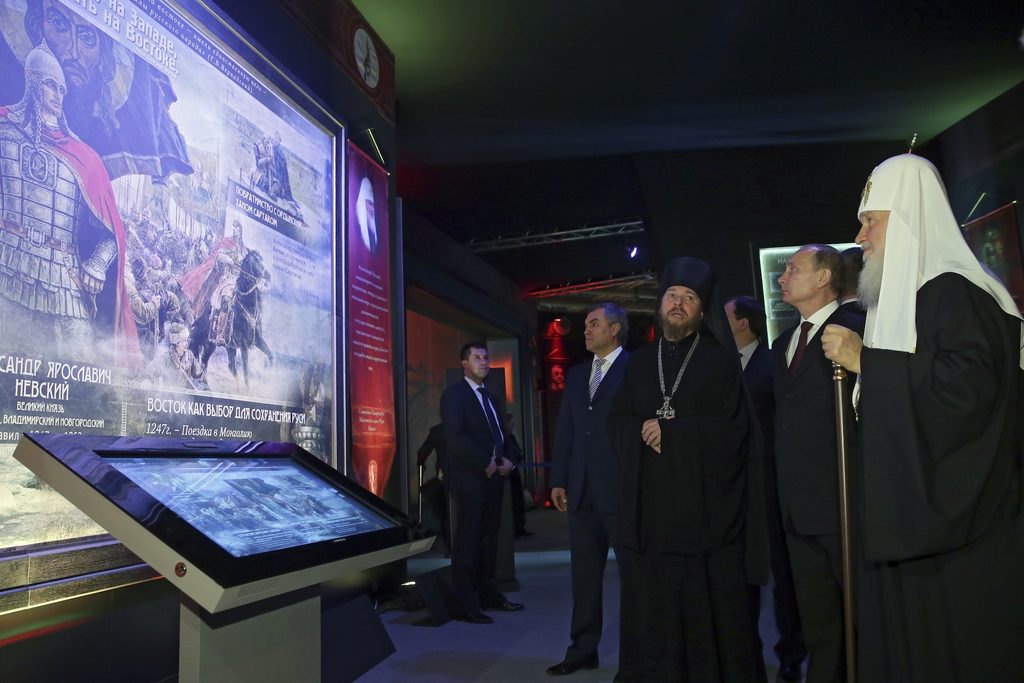
Within this paradigm, monarchism appeared as a common underlying force in tsarism, Stalinism, and the veneration of Putin alike. To promote this historical and ideological construct, Shevkunov launched a series of multimedia exhibitions at Moscow’s Manege, in which the latest digital technologies became a means of conveying the most archaic ideas about the past. Through contemporary design, touchscreens, and pop-up prompts, visitors were told that monarchy formed the basis of Russian spiritual culture, that autocracy was a natural form of government, and that the Decembrists were agents of the West. The project later expanded nationwide into the ‘Russia – My History’ network of museum-style complexes.
The 2014 Winter Olympics in Sochi were perhaps the largest-scale example in recent Russian history of the use of modern technologies to promote ultra-conservative content.
During the opening ceremony, Sochi’s Ice Palace was transformed into a continuous multimedia screen glorifying the Russian Empire. The metaphors, images, and narratives used in the visual presentation were selected by a team led by Konstantin Ernst, Director General of Channel One, drawing, among other sources, on opinion-poll data.
Viewers were shown an animated alphabet in which several recurring themes could be traced: the Russian language (Cyril and Methodius, Dostoevsky, Tolstoy, Chekhov, Pushkin…); the Russian sky (Zhukovsky, Tsiolkovsky, the Lunokhod lunar rover, Gagarin…); Russian nature (Lake Baikal); Russian art (Malevich, Chagall, Suprematism, Shchusev); Russian science (Mendeleev and others); and, finally, Russian technology abroad (Vladimir Zworykin, the creator of American television). These themes come together to form a portrait of a country that is part of world history, takes pride in its place within it, and derives its strength not from its army and navy, but from art, literature, and the intellect.
At the same time, Russia carefully worked around Olympic conventions that prohibit presenting a country’s history through war and politics. The sequence of alphabet cards included Catherine the Great, an unquestionably positive figure: an enlightened ruler who corresponded with the French Encyclopaedists, and a woman on the throne. Yet in Catherine’s shadow appeared Count Shuvalov and the military commander Suvorov, one of the chief agents of imperial policy. When the word ‘Empire’ and a portrait of Peter the Great appeared after Catherine’s card, they could be read as a continuation of a theme that had already been established.
In the ‘Sochi message’, Russia, with its thousand-year history, appears on the one hand humane, expansive, and open, and on the other as faithful to the imperial tradition. It is notable that soon after the Sochi Olympics came the so-called ‘accession’ (annexation) of Crimea, which the UN recognised as an unlawful violation of Ukraine’s territorial integrity.
The film industry under Putin: Managed trends and personal strategies
Changes in Russian cultural policy between 2000 and 2025 are particularly evident in cinema – the most influential and expensive of the arts. At the beginning of the Putin period, the film industry was ideologically, thematically, and stylistically pluralistic, but its infrastructure was underdeveloped. By the mid-2010s, thanks to state subsidies and favourable treatment, it had expanded its capabilities but narrowed its ideological and thematic diversity. In the 2020s, it faced harsh censorship and growing targeted repression.
In his 2025 book ‘Loveless’, producer Alexander Rodnyansky provides a detailed account of his experience making nine films on which he worked between 2005 and 2021. Through these recollections, he shows how seemingly incidental choices about themes, characters, and images can develop into a systematic statement. How did major producers of the period understand their cultural role: to reflect reality, to shape it, or to warn of future dangers? Could their individual efforts have prevented the cultural turn towards the archaic?
Rodnyansky’s debut project was Fyodor Bondarchuk’s blockbuster ‘9th Company’ (2005); it was the year’s highest-grossing film, combining patriotism with a Hollywood aesthetic, and was far removed from political contexts. The producer’s second major collaboration with Bondarchuk, ‘The Inhabited Island’ (2009), had a dystopian element inherited from its literary source, the Strugatsky brothers’ novel of the same name. However, the film’s social message was weakened by the excessive aestheticisation of its visual style and by an over-simplified screenplay. By contrast, Andrey Zvyagintsev’s films ‘Elena’ (2011), ‘Leviathan’ (2014), and especially ‘Loveless’ (2017), all produced by Rodnyansky, became both statements about contemporary reality and dystopian warnings.
In ‘Elena’, the warning was that the new culturally degraded masses were already poised to take control of reality and break the back of humanism. ‘Leviathan’, meanwhile, showed that the Church had become a cover for diabolical forces, while humanity itself was disappearing from the experience of life in provincial Russia. ‘Loveless’ (2017) brought these separate films together into an overarching narrative of war. Danger is gathering, aggression is prevailing, hatred is triumphant, and the contours of a future catastrophe are beginning to emerge.
In Rodnyansky and director Vladimir Bitokov’s film ‘Mama, I’m Home!’ (2021), the imagery of war and contemporary life converges: its protagonist is a Kabardian man who returns from Donbas. The protagonist of Kira Kovalenko’s ‘Unclenching the Fists’ (2021) finds herself under siege as she struggles for an autonomous existence within an archaic community in North Ossetia. Yet, as Rodnyansky himself argues – a view shared by film critics including Anton Dolin and Andrei Plakhov – it was precisely the everyday world of ‘Loveless’, far removed from ‘frontline’ motifs, that turned this group of films into a warning about the inevitability of war. Its clear and detailed depiction of everyday dehumanisation diagnosed a complete readiness for bloodshed.
Against the backdrop of growing official efforts to force Russian culture into archaic patterns, the independent producer Rodnyansky chose themes, scripts, and filmmakers that ran counter to the official line. He documented the dangers of that line and identified the radical threat it posed. The resources available to an individual producer were inevitably no match for those of the state, even taking into account the fact that Rodnyansky ran the Kinotavr film festival from 2004 to 2020. Yet they were sufficient for him to promote his own projects and support those of others – in other words, to pursue an independent cultural policy of his own.
Yuli Gusman, who headed the ‘Nika’ film awards associated with the intelligentsia, had a similar opportunity. So did director Nikita Mikhalkov, who chaired the Moscow International Film Festival; Oleg Dobrodeev, head of VGTRK; and Konstantin Ernst, head of Channel One and, at the same time, one of the leading producers of the period. Dobrodeev and Ernst informally oversaw the ‘Golden Eagle’ television and film awards and used this lever skilfully. While Rodnyansky moved towards conflict with the state’s cultural policy, and Gusman manoeuvred carefully, Ernst and Dobrodeev put this policy into practice.
Cultural policy was aimed at creating a managed monopoly, yet in practice even those who served it helped to sustain a competitive environment. Up to a certain point, they also continued to influence contemporary culture, preventing the mechanisms of archaicisation from operating at full force.
Konstantin Ernst himself produced and promoted an ideologically charged cycle of historical films about heroic servants of the State (‘Admiral Kolchak’, 2008), and later, with an eye to the Bolotnaya Square protests, commissioned a film about the confused, sincere, noble, and misguided Decembrists (‘Union of Salvation’, 2018). Valery Todorovsky, meanwhile, revisited the myth of the 1960s generation as romantics of freedom who had misread their moment: ‘We thought it was spring, but it was only a thaw’ (the television series ‘The Thaw’, 2013).
Producer Sergei Selyanov pursued a distinctive strategy during these years. He did not present himself as an opponent of the regime, nor did he command resources comparable to those of the film oligarchs Dobrodeev and Ernst, but the line running through his projects is clear. Using the profits from highly lucrative animation – including the cycle of feature-length films about the bogatyrs, among others – Selyanov invested in socially significant films. Alexei Balabanov’s masculine anti-militarist films of the 2000s, Lyubov Arkus’s best documentaries, and the major films of 2025, ‘Lermontov’ and ‘Hansel and Gretel’, all appear as a substantive alternative to the official mainstream. At the same time, Selyanov does not articulate his loyalty explicitly, but nevertheless demonstrates it.
Thus, throughout the 25 years of Putin’s rule, film producers retained some room to pursue their own creative strategies, and the greater the pressure from above became, the more varied those strategies grew. Today, open resistance is impossible, but the trend towards archaicisation cannot be said to have prevailed completely – alternative points of view still reach audiences, even if they are sometimes expressed indirectly.
Song as a reflection of demand and a repository of public sentiment
The popularity of particular themes and metaphors at different stages of the Putin era can be traced through popular music – the sphere of culture that responds most quickly to audience demand. This is especially true because the infrastructure of the music industry was fully established by the early 2000s.
The first private radio stations had already appeared by 1991. By 1998, projects that focused on Russian-language content – ‘Russkoye Radio’ and ‘Nashe Radio’ – had taken leading positions in the market. This was significant because Russian popular music’s attempts to enter the global cultural mainstream during the era of perestroika, associated with figures such as Boris Grebenshchikov, Alla Pugacheva, and Zhanna Aguzarova, had largely failed, apart from the short-lived international success of t.A.T.u. in the 2000s. ‘Nashe Radio’ played a particularly important role: its Director General, Mikhail Kozyrev, did not simply provide music content, but also acted as an ideologue and curator.
Television kept pace as well. In the second half of the 1990s, the youth channel TV‑6 aired several programmes devoted to presenting and discussing pop music, rock, and chanson. Muz-TV entered the market, and a Russian version of the global media giant MTV was launched, remaining on air in Russia until 2013. The local and the global interacted, while the domestic Russian perspective and the wider international context reinforced one another.
Charts from the early 2000s show that most popular songs at the time were neutral and sentimental in content. Simple emotions have always predominated in popular song lyrics, but during this period their dominance was disproportionately strong, especially against the backdrop of the politicisation of official musical culture following the adoption of the new national anthem. This was partly explained by market forces, the growing industrialisation of popular music, and the standardisation that came with it. Channel One launched the ‘Star Factory’ project, which trained performers for the needs of the production industry; repertoires also became more standardised and were increasingly subordinated to the demands of production efficiency. A deeper reason lay in the widespread public demand for a change in subject matter, from social and political themes to more personal ones.
In the 2000s pop music restored a social function to musical culture.
The groups ‘t.A.T.u.’ and ‘Strelki’, the singer Boris Moiseev, and the entertainment cabaret duo ‘Akademia’ challenged the gender traditionalism without which archaicisation is inconceivable. Their lyrics, perhaps without the authors intending it, acquired a countercultural meaning. ‘And who cares who needs whom in bed,’ runs a line in Moiseev and Strelki’s joint number ‘Sexual Revolution’.
Under the influence of the contexts created by pop music, the apolitical lyrics of the rock singer Zemfira also took on new meanings. Her stage persona was built around the primacy of the feminine over all ideologies. Traditional rock followed: in Splean’s 2003 hit ‘New People’, an erotic motif became the equivalent of a political declaration of protest: ‘People make new people’. There was still no explicitly political content, but the pacifist motifs and orientation towards progress were evident.
The most popular song lyrics of the early 2000s reflected both protest and loyalist tendencies. Diana Arbenina, with her feminist outlook, and her band ‘Night Snipers’ spoke about their time and themselves with complete directness, while the young rapper Detsl, an opponent of skinheads, took an anti-fascist stance. The Rostov rap group Kasta, who rose rapidly to prominence, were committed liberals; years later, they would write ‘Come Out for a Walk’, the defining song of the Belarusian protests. But the overall trend was towards anxieties about love rather than politics.
A second cluster of popular themes and lyrics in the early twenty-first century came from ageing rock singers of the 1990s. Rock had a smaller following than pop music, although it gradually expanded. While pop tended to be progressive, rock often flirted with conservatism in general and nationalism in particular. The band Alisa’s album ‘Solntsevorot’ (2000) featured a kolovrat (a symbol resembling a swastika) on its cover, prompting public accusations of fascism.
In 2002, Lyube released the album ‘Davai za…’, in which its familiar themes – patriotism, courage, and military service – were elevated to the level of an ideological concept: ‘Here’s to them, here’s to us, and to Siberia, and to the Caucasus… and to the airborne troops, and to the special forces.’ A toast to the Motherland also drew rhetorically on wartime songs: ‘We will stand for you to the end – Motherland!’
Singer Vika Tsyganova, who began in 1988 with the souvenir-style patriotism of ‘Russian vodka, black bread, and herring’, had by 2003 also become a representative of conservative pop, performing with the ‘Officers of Russia’ choir. At the same time, she collaborated with Mikhail Krug, a leading figure in criminal chanson – unconventional, but patriotic.
At the same time, despite the controversies surrounding Alisa, the conservative turn in popular music during these years was not tied to militarism. Even in Lyube’s songs, war appears as an inevitability rather than a goal, while their hit ‘Russians’ is emphatically peaceful. In this respect, cinema was more direct: in Alexei Balabanov’s film ‘War’ (2002), the protagonist’s terminally ill father tells him, ‘A man cannot do without war’, and the line sounds like a final testament.
Like exhibitions, cinema, and theatre, musical culture was becoming more and more diverse. It encompassed both gender progressivism and political conservatism, while genres and styles increasingly blended into one another. Different generations competed and interacted: t.A.T.u.’s song ‘Not Gonna Get Us’, stripped of its lesbian subtext, was performed by Sofia Rotaru and Alla Pugacheva.
Sergei Shnurov, leader of the Leningrad ‘gang’, mocked everything he saw in a cabaret-like manner; this became a form of urban scepticism, a substitute for a political position. While the rapper Timati and his group Banda promoted a bourgeois, glamorous ideal of a comfortable life, Shnurov deconstructed every cliché of popular music, both conventional and politicised. Particularly characteristic in this respect were his thoroughly ironic yet emphatically individualistic songs ‘Drink in St Petersburg’, ‘Louboutins’, and ‘Tits’, as well as his parody of Oleg Gazmanov’s Moscow anthem: ‘Moscow, burned to the ground… how much are your golden domes?’
The turning point, as in the cultural sphere more broadly, came after the annexation of Crimea. In 2015, Oleg Gazmanov, accompanied by the FSB choir, performed the song ‘Forward, Russia!’, which made a passing reference to war: ‘In the crucible of victory today, as in times past, the steel of the Motherland is being tempered once again … And if enemy crows descend upon us, my Fatherland will meet them once more.’ In 2015, the group Alisa began performing regularly in the ‘LPR’ and ‘DPR’. Singer Yulia Chicherina and writer Zakhar Prilepin, along with his rap groups, have also given concerts there.
Prilepin, author of the protest novella ‘Sankya’, began as an opponent of the regime but found a point of reconciliation with the authorities in the anti-Ukrainian movement. His albums have also featured the prominent rapper Husky (‘Panel Block’, ‘Poem about the Motherland’), even as Husky continued to denounce the president in songs such as ‘7 October’.
A degree of diversity persisted during this period. On one side were Timati (‘GTO’, ‘My Best Friend Is President Putin’) and Grigory Leps, who became prominent pro-Putin pop musicians; on the other was the rise of battle rap (Oxxxymiron) and viral internet culture. In 2015, Oxxxymiron released the album ‘Gorgorod’ – a dystopia that can be read as a political statement about contemporary Russia.
The satirical bard Semyon Slepakov moved from loyalist mockery of the bureaucracy and extremely cautious attempts to joke about Putin (‘Song of a Russian Official’, ‘President of Russia’, 2014) towards a more accusatory tone (‘Song about Oil’, 2016), and eventually to outright ridicule (‘Sit Down and Don’t Fuck Around’, 2024). In 2018, the band Pornofilmy refused to take part in the Nashestvie festival because of its militarism.
The audience itself began to be drawn into the confrontation between official and alternative culture. In 2019, Timati and Guf’s video ‘Moscow’ set a record for dislikes; at the same time, in 2021, the song ‘Donbas Is with Us’, recorded by performers from the Donetsk Regional Music and Drama Theatre, received 30 million views – an exceptionally high figure for a regional project.
The overall trend was shifting ever more clearly towards the archaic, with its simple ethic, formulated long ago by the group Lyube: ‘War is war.’ The Rostov rapper Basta became increasingly moderate and patriotic – in a series of monologues about his mother, in ‘Sansara’, and in a performance with the Army and Navy Ensemble – and the more conservative he became, the higher he rose in the ratings. By contrast, the more openly his fellow Rostov artists from Kasta protested, the lower they fell in the charts. This was partly a question of demand, although pressure from the regime also had an effect.
After 24 February 2022, the music scene finally split into two camps, now divided not only by subject matter but also by ideology and borders.
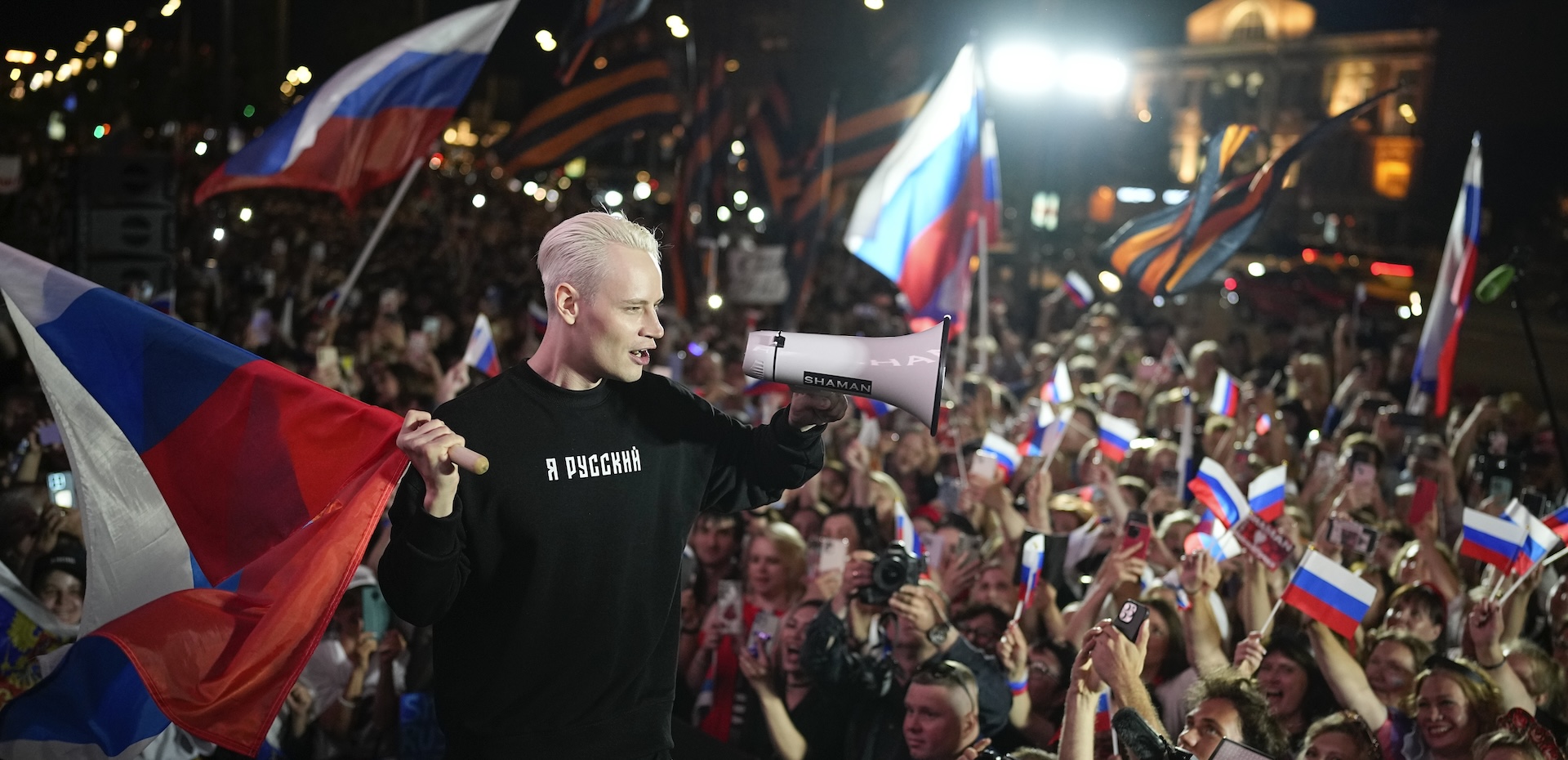
The ‘patriotic’ camp remained inside Russia (Shaman, Tatyana Kurtukova, Chicherina, Leps, and Lyube), while the protest camp largely went into exile (Oxxxymiron, Noize MC, and Monetochka). The state began to intervene more actively in cultural life. The Presidential Administration restructured its Directorate for Public Projects and, according to musicians, Sergei Novikov, a member of Sergei Kiriyenko’s team who took charge of it, personally met with performers to offer them a choice between working in the ‘new territories’ (i.e. occupied Ukraine), or an unofficial ban on performing.
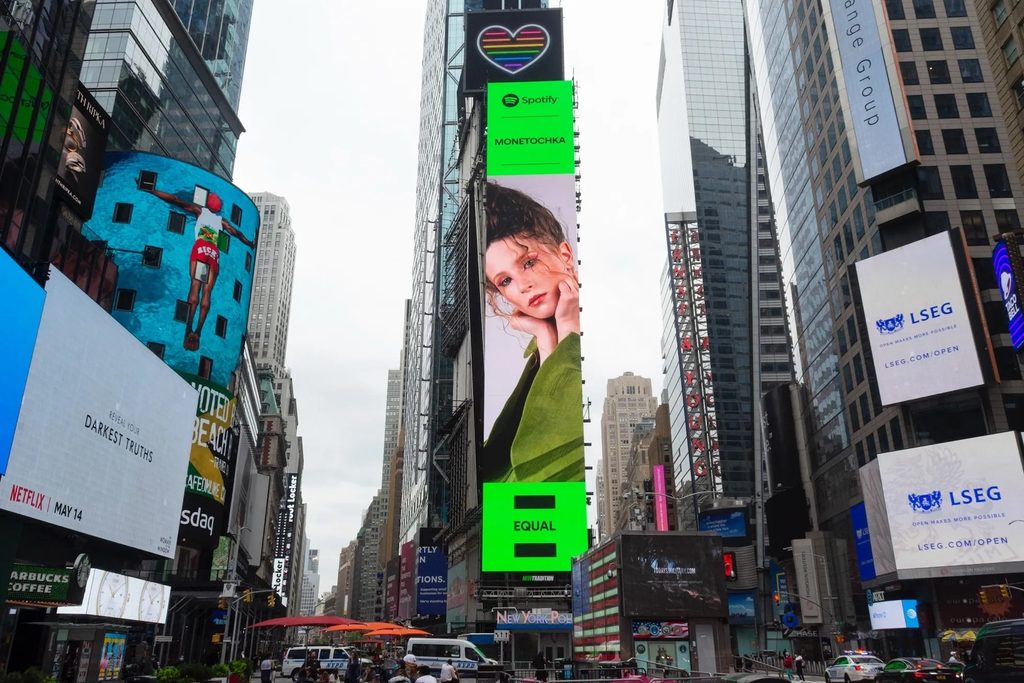
The repression which first unfolded through the ‘foreign agents’ law, and later through criminal cases targeting members of the artistic community, now followed a different principle: ‘active loyalty or exclusion from professional life’. By 2025, the system had succeeded in creating a homogeneous, archaicised cultural model and in linking it to the officially approved ideological framework. Even so, cultural life did not fit entirely within the boundaries of the dominant trend.
The crisis of governance and a disengaged generation
By 2026, the state had effectively become dominant in Russia’s cultural sphere; in some areas, the industry was entirely dependent on it. Nor was there any sign that this would change: the number of people being stripped of their rights or leaving the country continued to grow, while more institutions were being dismantled. At the same time, the effectiveness of the state’s cultural policy was already declining. Cultural institutions suffered from a shortage of personnel: the directors of the largest museums were being replaced one after another, while a relatively small number of individuals were appointed to an ever-growing number of positions.
At some point, the system will probably run up against an insurmountable crisis of governance. The structures built to control the cultural sphere will cease to function, while replacing them will itself create a host of problems that cannot be resolved. As a result, abandoning the policy of archaicisation may ultimately prove easier than trying to preserve it.
In the near future, a disengaged generation is set to enter cultural life – an intermediate cohort comprising younger members of Generation Z (born between the mid-1990s and early 2010s) and older members of Generation Alpha (born after 2010). Because of their age, they neither took part in making and implementing the decisions of the Putin era, nor had the chance to resist them. They feel no guilt for what has happened, but nor do they feel solidarity with the heroes of the dissident movement. This is not a ‘betrayal of noble ideals’, or even cynicism, but a consequence of practical experience.
In some ways, they can be compared to the journalists who worked in Soviet international propaganda broadcasting in the early 1980s – some of them children of the nomenklatura – who moved into perestroika-era television in 1987, became the faces of the programme ‘Vzglyad’, created the Kommersant media group, and so on.
When, and if, the time comes to revitalise Russian culture or rebuild it from scratch, there will inevitably be a search for young, pragmatic intermediaries with ambitions to become independent figures.
On the other hand, there will most likely be no cultural turn towards the West. A long-term narrative will probably take shape: ‘we were forced to be bad’. This implies continued archaicisation and the preservation of the dictatorship of ‘traditional values’, but Russian culture will face a paradox. To preserve traditional values, it is necessary to wage war. To wage war, it is necessary to preserve traditional values. And to wage war while preserving those values, new generations will have to be elevated to key positions – generations that will initially pledge loyalty to the regime but will sooner or later turn against the established order.
As the novelist and critic Yuri Tynyanov showed, cultural inheritance skips a generation: grandchildren inherit from their grandparents rather than children from their parents. But once they have taken up that inheritance, the grandchildren are free of the inhibitions that burden the children and act as they see fit.