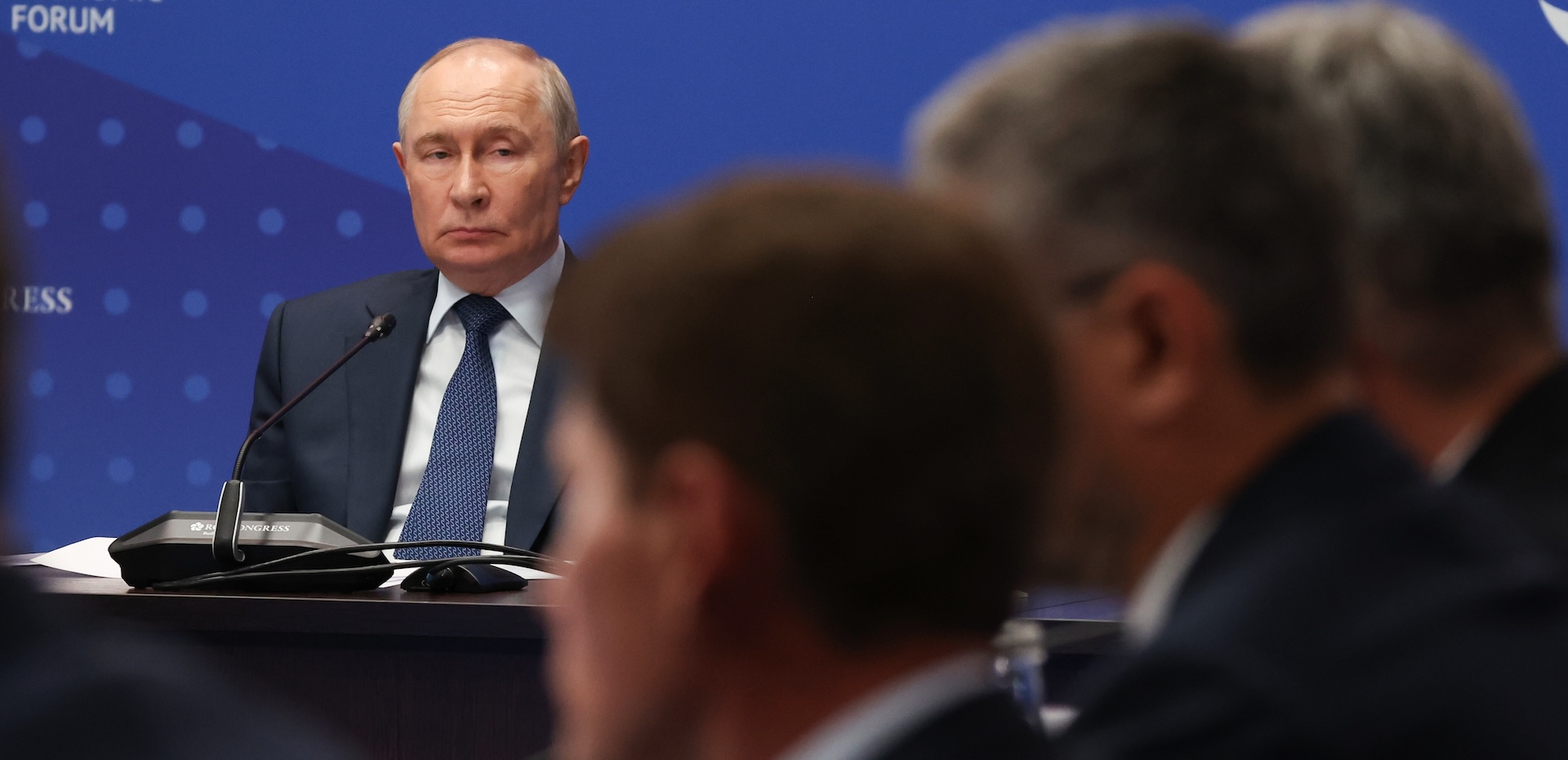
Rather than looking for a single successor, Putin is building a system in which he distributes responsibility for key areas among a group of figures he trusts. This arrangement allows him gradually to delegate more and more functions to them, while preventing an excessive concentration of resources in any one set of hands and preserving the president’s role as the ultimate arbiter. Monitoring 13 such ‘viceroys’ shows how the balance within this system is changing and which figures are gradually coming to the fore.
What we monitor and why
Over the past quarter of a century, Putin’s regime has repeatedly adapted to new political conditions. As the fifth year of the war against Ukraine draws to a close, the system is undergoing another transformation, possibly its most significant one yet. Its purpose is to prepare the regime for the next stage of its existence by reducing its dependence on Vladimir Putin’s day-to-day involvement in governing the country, while ensuring generational renewal at the top of the political system.
This is not, however, about preparing the regime for Putin’s departure or searching for a successor. Rather, a functional redistribution of power is taking place: direct management of individual policy areas is gradually being transferred to a group of trusted figures, while Putin himself retains responsibility for strategic decisions, control over key issues, and the role of ultimate arbiter.
At the same time, the system is undergoing generational renewal. A significant proportion of the people Putin has relied on over the past decades belong to his generation and are gradually approaching the end of their political careers. Putin is replacing them with younger officials whose political agency and position within the regime depend largely on the president’s personal trust. As a result, a kind of council of ‘lieutenants’, or ‘viceroys’, is forming around Putin – people to whom responsibility for managing individual institutions or entire areas of state policy is delegated.
Their formal positions do not always indicate the true extent of their powers. One person may be responsible for several areas at once, while the range of resources (administrative, security, financial, political, and media) actually available to them largely determines their influence.
This project tracks the transformation of the regime through changes in the position of the people at the forefront of it. We identify a group of figures who act as Putin’s personal representatives in key areas of governance and regularly assess changes in the resources available to them. The simultaneous strengthening or weakening of particular figures or the groups to which they belong reveals how the transformation is unfolding, while abrupt or unsystematic changes may indicate emerging problems and potential crises.
Putin’s viceroys
The monitoring covers 13 of Putin’s ‘lieutenants’ – figures to whom he has delegated significant functions in key areas of state governance.
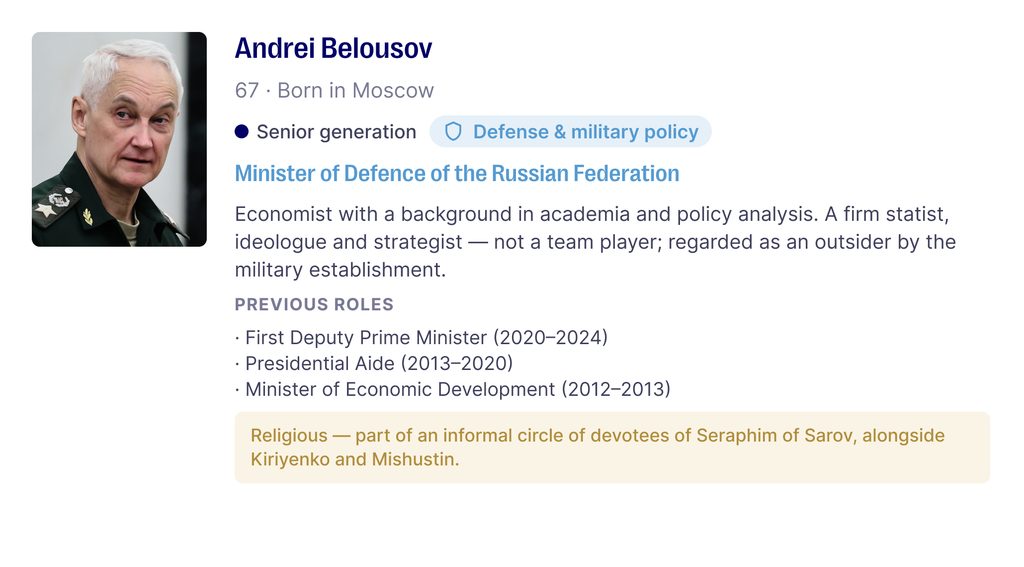
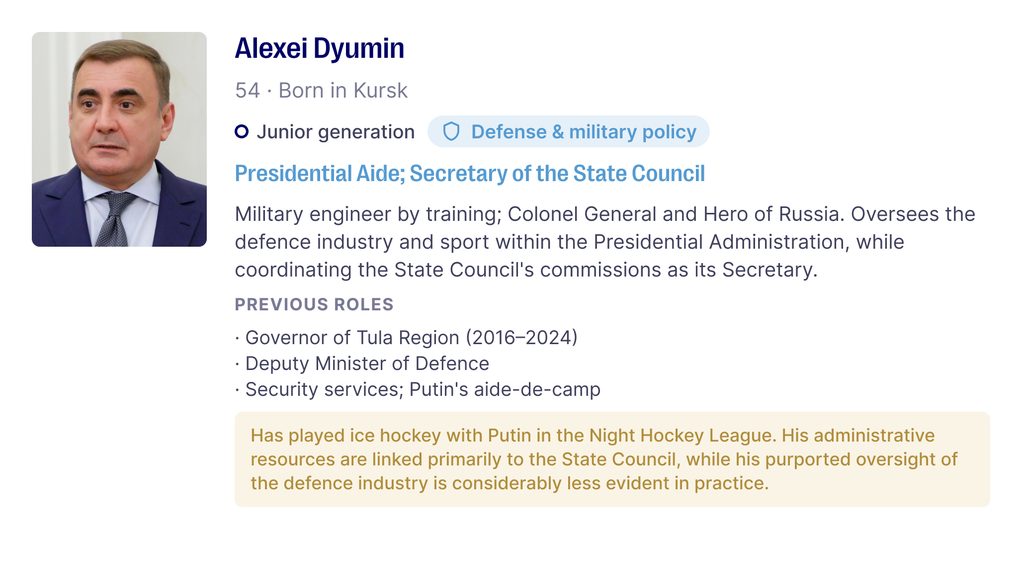
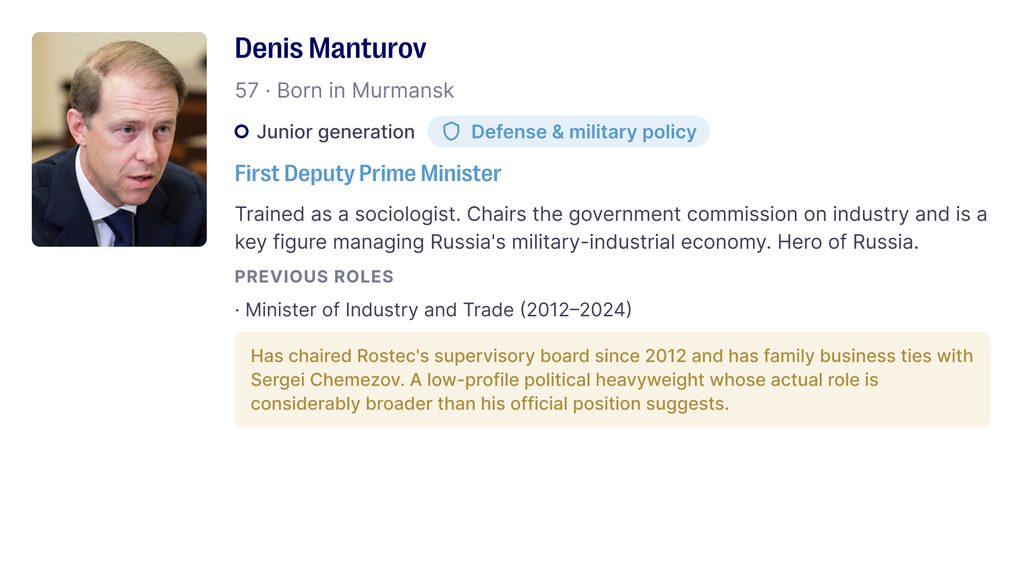
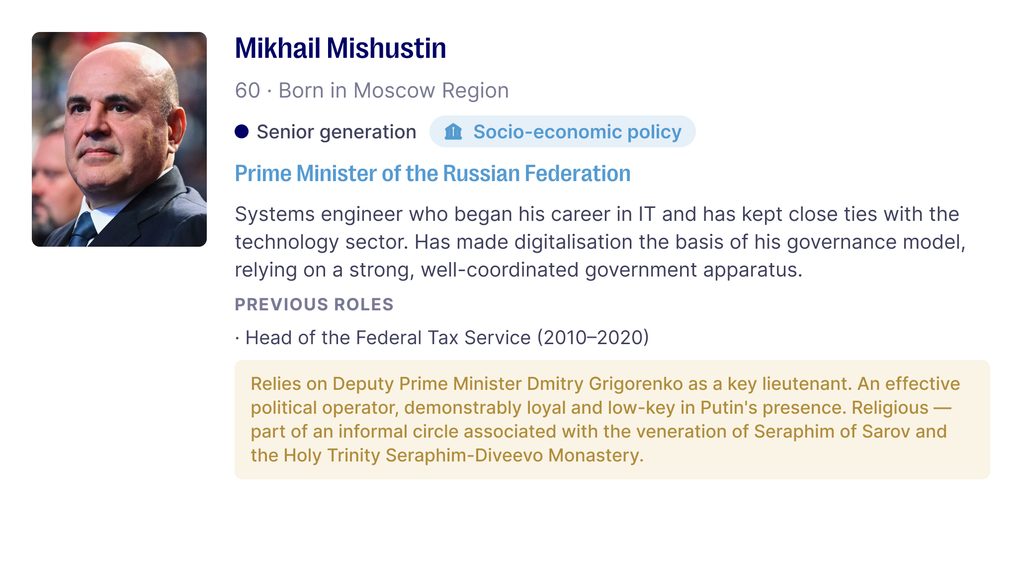
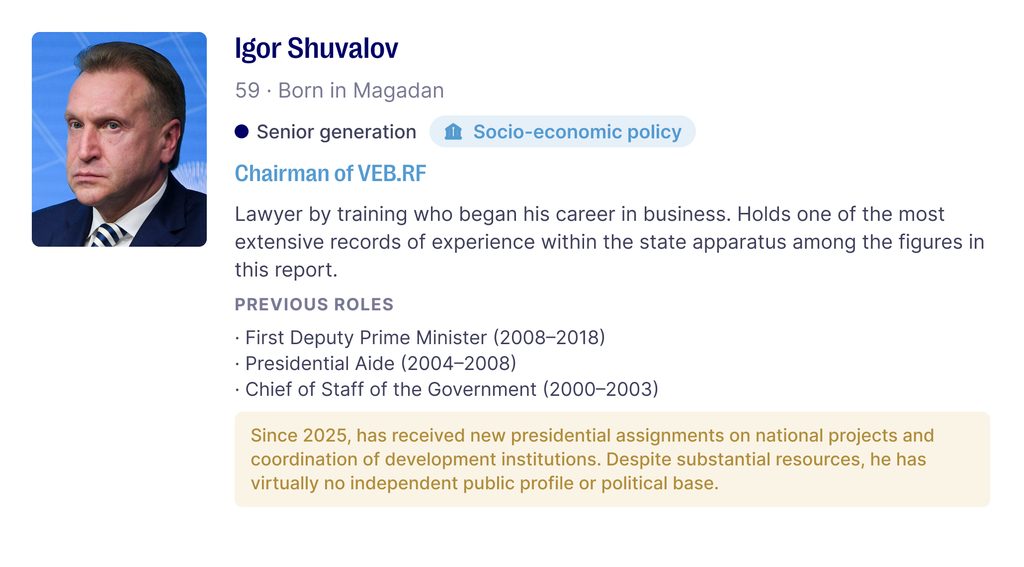
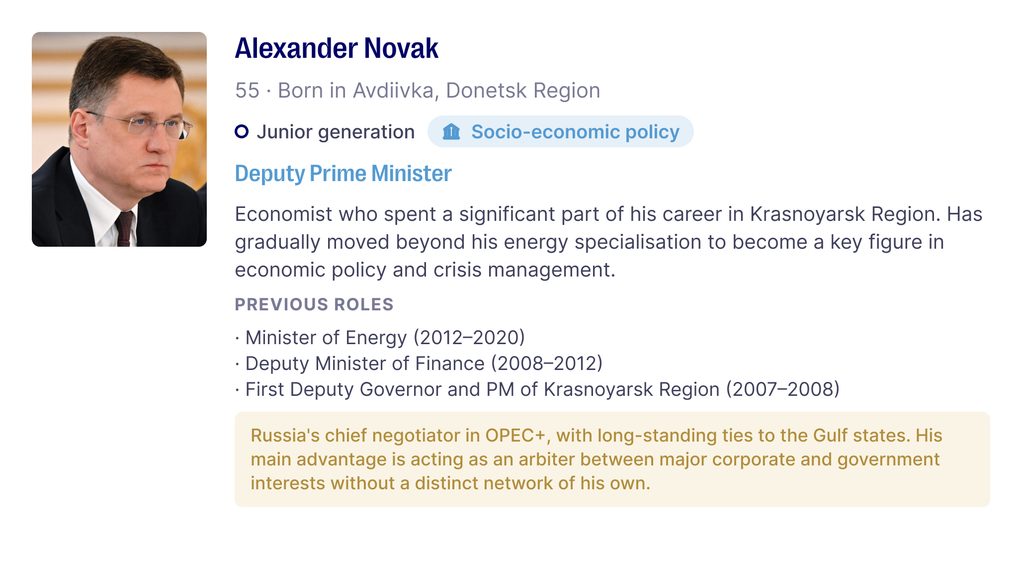
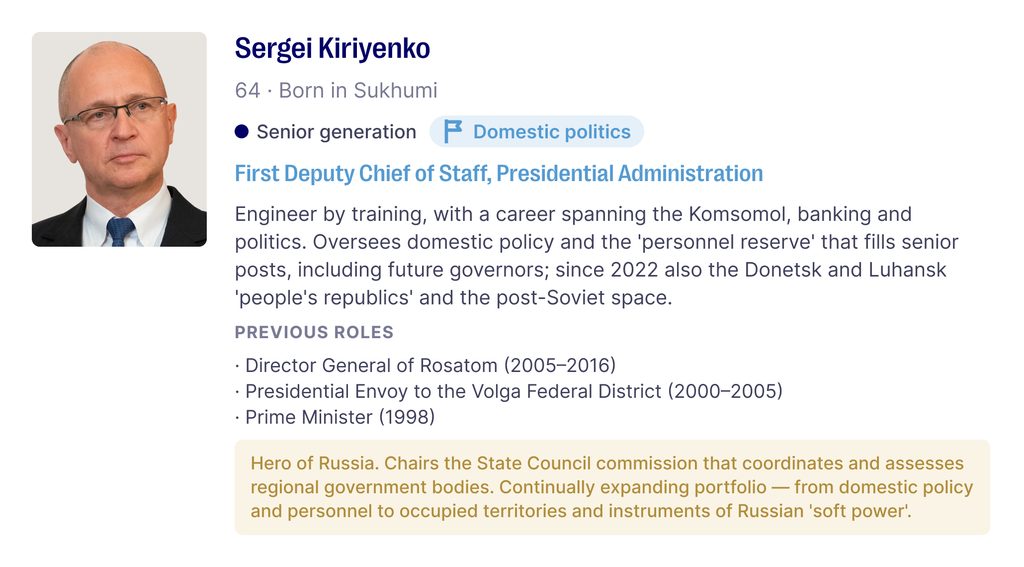
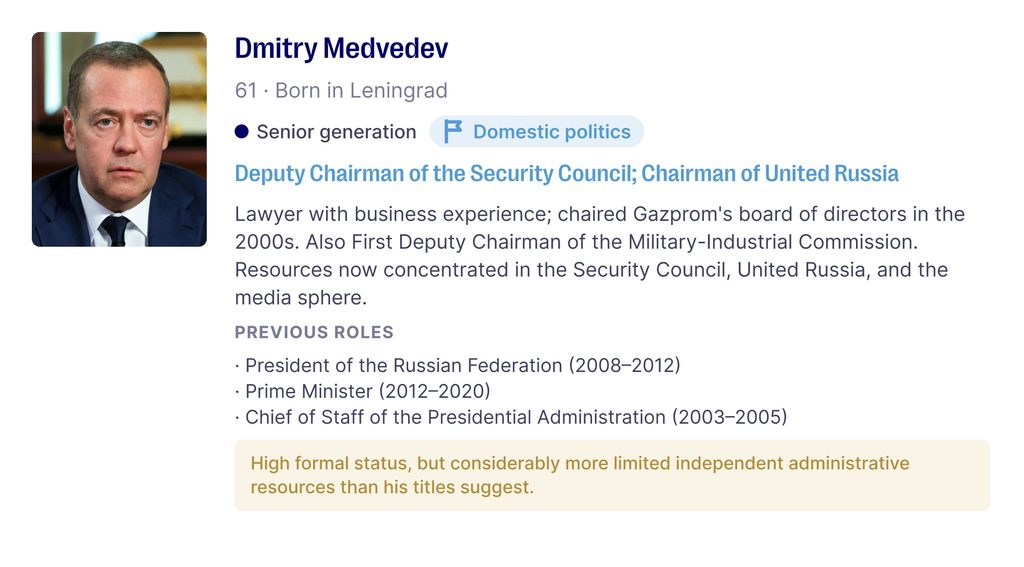
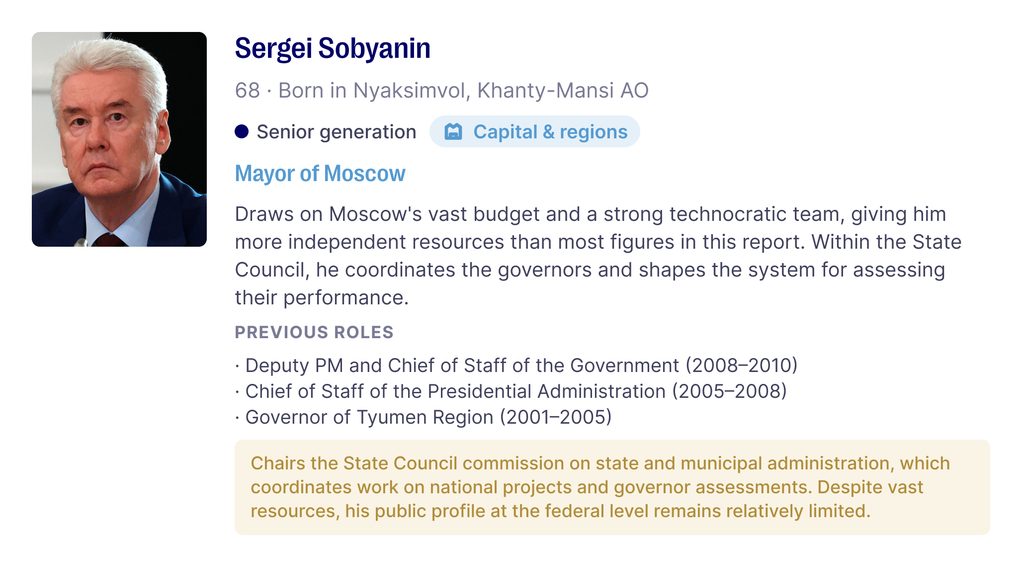
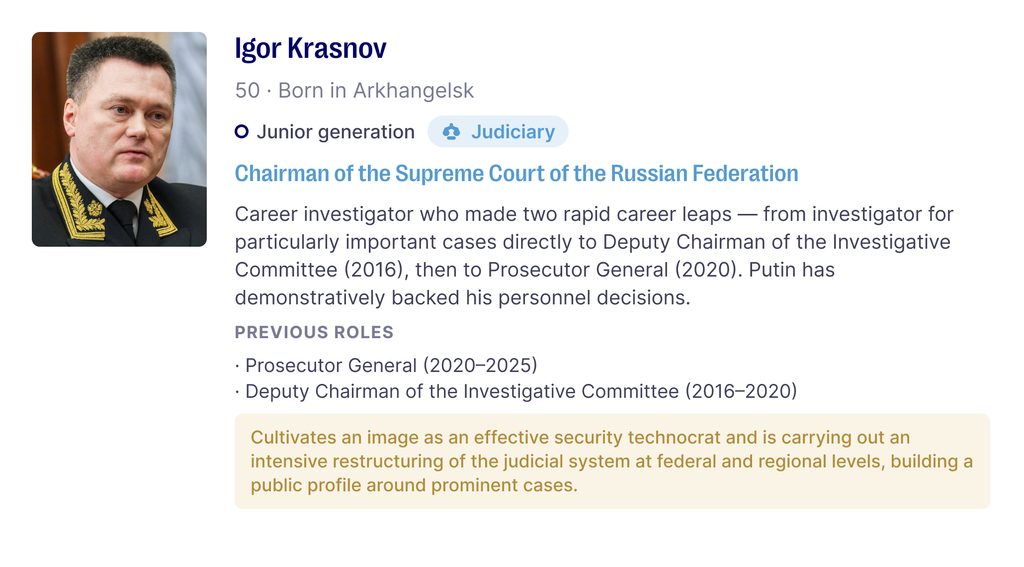
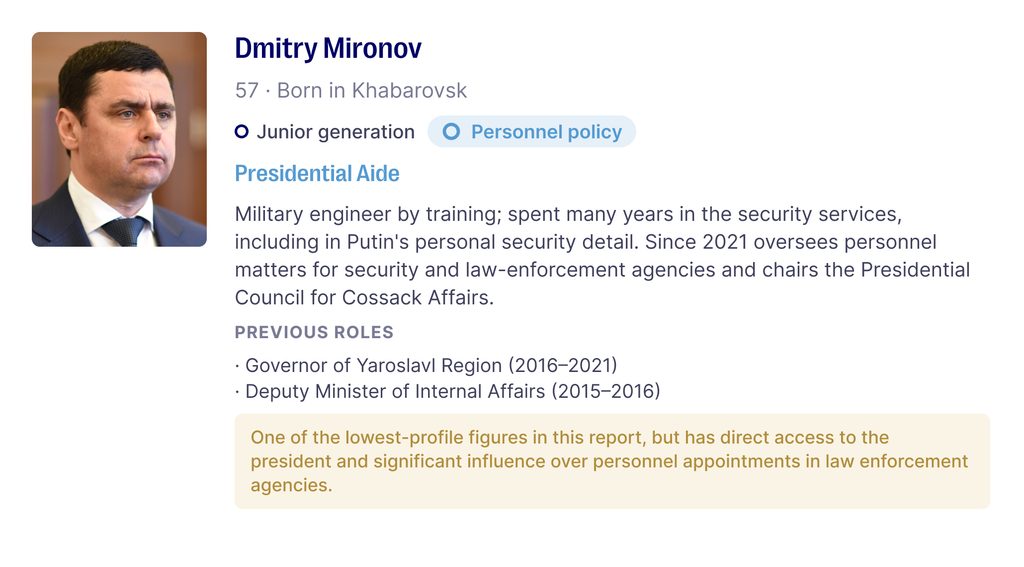
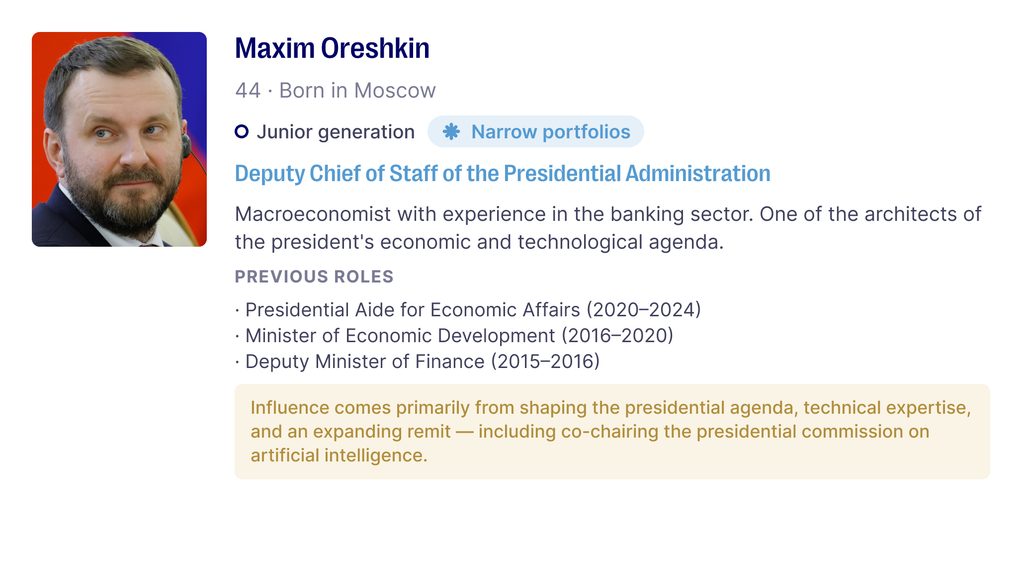
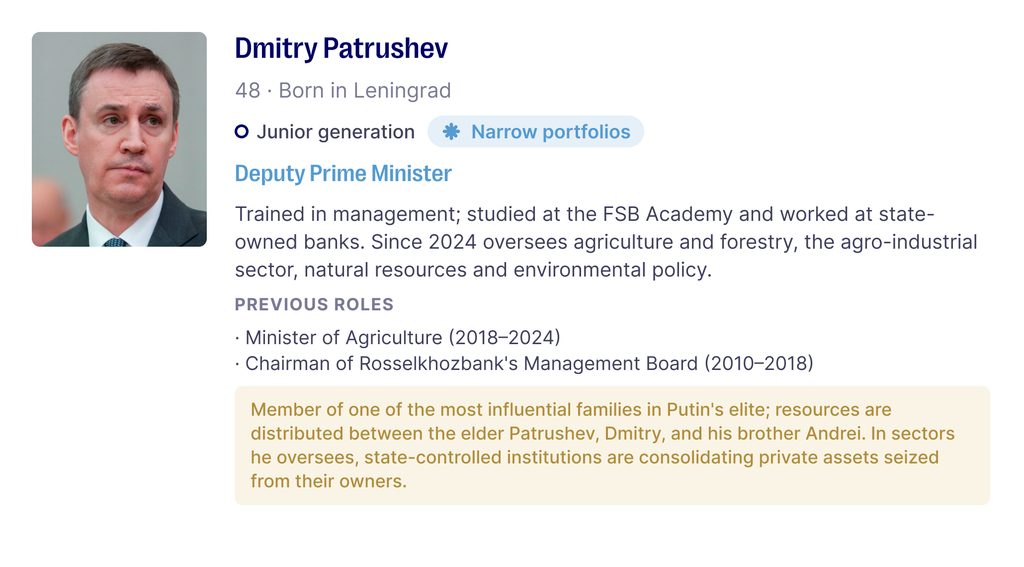
The ‘viceroys’ include representatives of both the older and younger generations. The former have been on the political scene for 20–30 years. The latter have emerged from Putin’s circle of aides, bodyguards, and trusted officials, carrying out various assignments for him and gradually increasing their public profile. The career prospects of both groups depend on how the regime’s transformation develops.
Methodology
We assess the potential of the ‘viceroys’ across six dimensions. These are proximity to Putin and resources of five kinds: administrative, security, financial, political, and media. What matters is not only how much they have of each individual resource, but also the extent to which they combine all of them, as well as changes over time.
- Proximity to the leader plays a crucial role in personalist regimes, and Putin’s regime is no exception. This refers primarily to how much Putin trusts a particular figure.
- Administrative resources refer to the ability to resolve problems using bureaucratic levers. This is an important indicator determined not by formal position or status, but by authority, including informal authority, and by the presence of officials who depend on the figure in question.
- Security resources refer to access to the security establishment, which in Putin’s system is insulated from other resources, particularly political ones (none of the ‘lieutenants’ monitored comes directly from the security agencies, except for Belousov). Most of the presumed ‘viceroys’ can draw on security resources, except Oreshkin and Novak.
- Financial resources refer to control over major corporate financial flows and ties with influential businesses.
- Political resources refer to the ability to use political institutions and mechanisms for one’s own purposes, as well as to having a network of clients. A person with substantial political resources is not necessarily a public figure – and vice versa.
- Media resources refer not so much to a figure’s public recognition and popularity as to their ability to use the media to advance their agenda.
In tracking political dynamics, we record events and processes that may affect the resource base of the figures under consideration. On this basis, the authors assess each of the six resources quarterly on a ten-point scale, ranging from complete absence to maximum concentration. The overall score is the sum of the scores for all six resources, plus their median value as a bonus for a balanced resource base. Depending on the trajectory of the regime’s transformation and the place each ‘viceroy’ occupies within it, an individual resource may be more important to a particular player’s career than the overall score.
In Russia’s current political system, concentrating several important resources in one set of hands is effectively forbidden: it would make the holder too independent, which the Kremlin regards as a threat and seeks to prevent. The exceptions are several political heavyweights, predominantly from the older generation, who have accumulated a substantial resource base over time.
We use assessments of each figure’s resource base at the beginning of 2026 as the monitoring baseline. The overall scores were: Mishustin – 46; Sobyanin – 45; Kiriyenko – 43; Shuvalov – 31.5; Belousov – 29; Dyumin – 27.5; Manturov – 25.5; Patrushev – 24.5; Mironov – 22.5; Oreshkin – 20; Krasnov and Novak – 19; and Medvedev – 16.
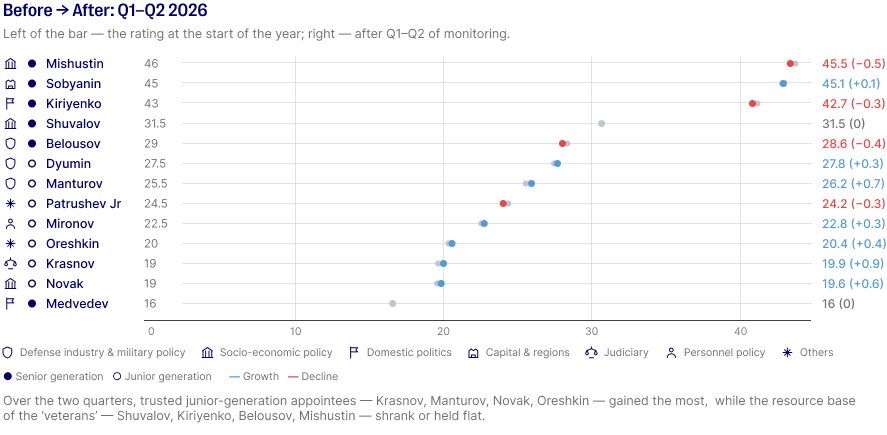
Over the two quarters, trusted junior-generation appointees – Krasnov, Manturov, Novak, Oreshkin – gained the most, while the resource base of the ‘veterans’ – Shuvalov, Kiriyenko, Belousov, Mishustin – shrank or held flat.
Dynamics: Q1 2026
In the first quarter, which marked the start of the monitoring, changes in the positions of most ‘viceroys’ were relatively limited. Only a few figures showed a noticeable strengthening, while Mishustin experienced the most significant decline. At the same time, two important themes that would shape subsequent developments had already emerged in the first few months: the start of the State Duma election campaign and a redistribution of influence within the economic policy team.
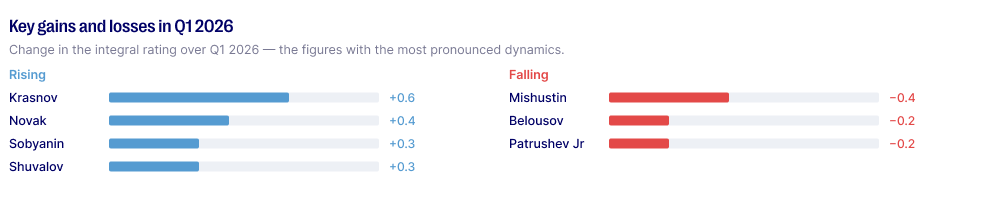
Krasnov (+0.6) showed the most noticeable strengthening, as he continued to reshape the Supreme Court’s leadership and the judicial system as a whole. He had already installed his own appointee as head of the Judicial Department in December 2025. In January 2026, he gave an extensive interview to Kommersant on reforming the judicial system, and on 19 February he delivered the main report at the annual meeting of judges, which Putin opened.
Other beneficiaries of the quarter included Novak (+0.4), Shuvalov (+0.3), and Sobyanin (+0.3). Novak strengthened his position as a crisis manager and economic spokesman: he reported to Putin on gasification, addressed the Federation Council’s Committee on Economic Policy about the overall state of the economy and plans for structural changes, spoke at the Security Council on the protection of critical infrastructure, and took part in talks between eight OPEC+ countries on oil production. Shuvalov strengthened his position through the expansion of VEB.RF’s role in implementing and monitoring national projects, as well as receiving an instruction to work with the Ministry of Economic Development to create a unified federal system to support and facilitate Russian and foreign investment projects. Sobyanin also strengthened his position at the federal level: in February, Putin appointed him to the Military-Industrial Commission, and in March, the mayor and the president jointly launched the construction of a new building in the National Centre Russia in Moscow.
Positive dynamics were also recorded for Oreshkin (+0.3), who strengthened his administrative and political position after being appointed co-chair of the National Headquarters for the Development of Artificial Intelligence and partly took over the relevant policy agenda from the government. Dyumin (+0.2) and Mironov (+0.2) made modest gains: the former through administrative work via the State Council and its commissions, including the coordination of proposals following its December meeting; the latter through his influence over personnel appointments, including the appointment of his close associate Andrei Kurnosenko as First Deputy Minister of Internal Affairs.
Medvedev (+0.2) somewhat strengthened his media presence through his active involvement in United Russia’s election preparations and the growing importance of the party agenda. Manturov (+0.1) also strengthened his position slightly. At the start of the quarter, his position weakened somewhat after mild criticism from Putin over the space programme, but he later recovered: around the time of his 57th birthday, Manturov was awarded the title of Hero of Russia.
The main loser of the quarter was Mishustin (-0.4). Despite his traditionally strong presentation of the government’s annual report to the State Duma, his position weakened on several fronts. Mishustin received neither a public birthday message from Putin nor a state award on his 60th birthday, and he was absent from the March meeting of the Security Council on the protection of critical infrastructure.
At the same time, the strategic coordination of artificial intelligence development was moved to the presidential level: a presidential commission responsible for this issue was established in February. A further sign of Mishustin’s declining status was pressure on figures associated with Russia’s IT ecosystem. In March, the Prosecutor General’s Office secured a court ruling designating Alexander Galitsky’s Almaz Capital as an extremist organisation. Galitsky had been linked to Mishustin through technology projects for many years.
Patrushev (-0.2) also lost ground, as scandals involving the mass slaughter of livestock affected his position. This issue was particularly damaging for him because it affected two areas for which he is responsible: agriculture and the Siberian Federal District, which he oversees.
For Belousov (-0.2), the positive effect of his image as the organiser of a ‘people’s defence industry’ and of relative successes on the battlefield gradually faded. The military agenda became less advantageous as the Russian Armed Forces encountered setbacks, while his attempt to establish an independent political position on the representation of war veterans in the next State Duma brought him no significant advantage.
Kiriyenko (0) showed the most mixed dynamics. His administrative and political resources grew amid preparations for the State Duma election campaign, the work of major organising committees, and the restructuring of the Kremlin’s foreign policy apparatus for relations with the countries of the former Soviet Union. At the same time, Kiriyenko’s position weakened because of problems with internet access and the MAX messaging app, detentions of officials associated with him, and a scandal in Siberia. As a result, gains in some areas were accompanied by losses in others.
Dynamics: Q2 2026
In the second quarter, the ‘viceroys’ increased their administrative resources faster than any other resource type, taking on new high-status positions in addition to their main roles. The ‘younger generation’ achieved political gains that were broadly evenly shared among them. This group also increased its media weight, mainly because Medvedev and Krasnov became more active in the public sphere.
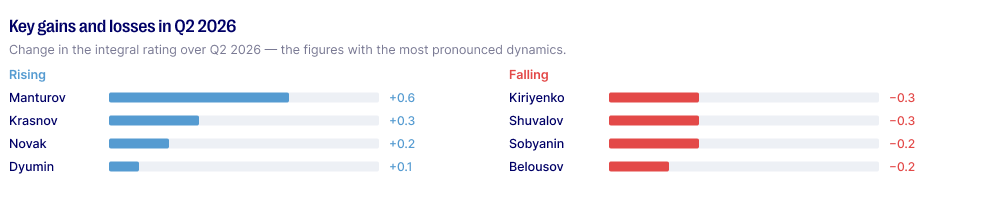
The second quarter saw a decline in the resources of the ‘veterans’ with the strongest resource bases – Sobyanin, Shuvalov, Kiriyenko, Belousov, and Mishustin – alongside rapid gains by Putin’s trusted appointees: Manturov, Krasnov, Novak, and Oreshkin.
The main beneficiary was Manturov (+0.6), who strengthened his political and media resources and his proximity to Putin. He gave an extensive interview ahead of the St Petersburg International Economic Forum and demonstrated the achievements of Russia’s civil aviation industry.
Krasnov (+0.3) also strengthened his position. He continued reshuffling senior positions in the Supreme Court and published a policy article in RBC on the Russian judicial system.
Novak (+0.2) gained ‘weight’ through his public role as head of the government task force on petroleum products amid the country’s fuel crisis. At the same time, his administrative and political resources increased. Oreshkin (+0.1) also increased his media resources through provocative statements. In the conflict between banks and online marketplaces, Oreshkin sided with the latter and emerged in a stronger position.
Dyumin (+0.1) and Mironov (+0.1) also made modest gains. The former benefited from his involvement in the State Council and from public appearances, while the latter gained from lobbying for the appointments of General Alexander Shuvaev as Governor of Belgorod Region and Andrei Kurnosenko as First Deputy Minister of Internal Affairs.
Shuvalov (-0.3) and Kiriyenko (-0.3) saw the largest declines in the ranking. Shuvalov’s close associates were arrested: Mikhail Poluboyarinov and Artem Dovlatov, both former deputy chairmen of VEB.RF, which Shuvalov heads, were suspected of abuse of office. Kiriyenko lost ground following the appointment of Igor Chaika as head of Rossotrudnichestvo and scandals surrounding VK, the company headed by his son Vladimir.
The ratings of Sobyanin (-0.2), Belousov (-0.2), Medvedev (-0.2), Patrushev (-0.1), and Mishustin (-0.1) declined somewhat less. The Mayor of Moscow faced an increase in Ukrainian drone attacks, including what was at the time the largest attack of the year, as well as personnel changes among those around him that were not entirely under his control, including the departure of Moscow’s chief architect, Sergei Kuznetsov.
Amid setbacks on the battlefield, Belousov reduced his public activity. His administrative influence was also affected by the replacement of Oleg Savelyev, head of the Defence Ministry’s administrative apparatus, who had worked with him at the Ministry of Economic Development, by Colonel General Vitaly Shulik, a former Deputy Minister of Internal Affairs.
Medvedev was not included on the election list of his own United Russia party. Patrushev, who had not fully recovered from the failures in the agricultural sector under his supervision at the beginning of the year, faced new problems, this time in environmental policy: former Deputy Minister of Natural Resources and Environment Denis Butsayev left Russia and was arrested in absentia in a fraud case.
Mishustin’s decline continued amid purges at the Ministry of Digital Development and the Ministry of Natural Resources and Environment. In June, at the Prime Minister’s initiative, the State Duma adopted amendments to the Budget Code under an expedited procedure, allowing the government to increase public spending rapidly and borrow on the domestic market beyond the limits set by the main budget law. On the one hand, these amendments give the government greater freedom to adjust the budget; on the other, they leave the government to bear the consequences if influential Putin-linked oligarchs press for additional spending.
The logic behind these shifts may be interpreted in two ways. One possibility is that each individual’s resources grow at a diminishing rate as they approach their maximum level, after which they begin to fluctuate. Alternatively, the shifts may reflect a functional weakening of the older generation of senior officials, who are gradually being replaced by younger figures.
Key trends in the transformation of the regime
After six months of monitoring, several main trends can be identified:
- The position of the ‘successors’ remains dynamic, and changes are often made in a demonstrative manner. State awards provide a particularly telling example: during the monitoring period, Manturov and Sobyanin received the title of Hero of Russia, while Mishustin received no award on his 60th birthday. At the same time, the group’s composition remains stable: over eight months, no one has left, and no new figures have joined.
- The clearest trend is the gradual strengthening of younger figures alongside the weakening of some heavyweights from the older generation. During the first six months of the year, Mishustin (-0.5), Belousov (-0.4), Kiriyenko (-0.3), and Patrushev (-0.3) saw the largest declines in their positions. At the same time, Krasnov (+0.9), Manturov (+0.7), and Novak (+0.6) grew considerably stronger. This dynamic can partly be explained by a low-base effect: newer figures started with fewer resources and therefore have greater scope to expand them, while representatives of the older generation continue to lead in overall resource base.
- Changes occur primarily through the expansion or reduction of functions rather than changes in formal positions. Kiriyenko, Manturov, Novak, Oreshkin, and Shuvalov mainly saw their functions expand, while Belousov’s and Mishustin’s were gradually reduced without any change in their formal status. Changes in the roles of Dyumin and Mironov are more difficult to assess because of their limited public profiles. Dyumin operates primarily through the State Council, while the defence industry overseer role attributed to him remains far less visible.
- The group’s resource structure is also changing. Taken together, political and financial resources, as well as proximity to Putin, are increasing, while administrative and media resources are being redistributed among the figures monitored. Security resources, by contrast, are declining. The overall volume of resources available to the ‘successors’ is therefore gradually increasing. However, security resources remain largely outside this system and serve primarily to control its participants.
- Repression and pressure on associates of those monitored remain mechanisms of control. During the period under review, Mishustin, Shuvalov, Kiriyenko, and Patrushev faced criminal cases and pressure from the security agencies against figures associated with them. Krasnov, by contrast, plays a different role: personnel changes in the judicial system under his leadership have increased his control over the judiciary.