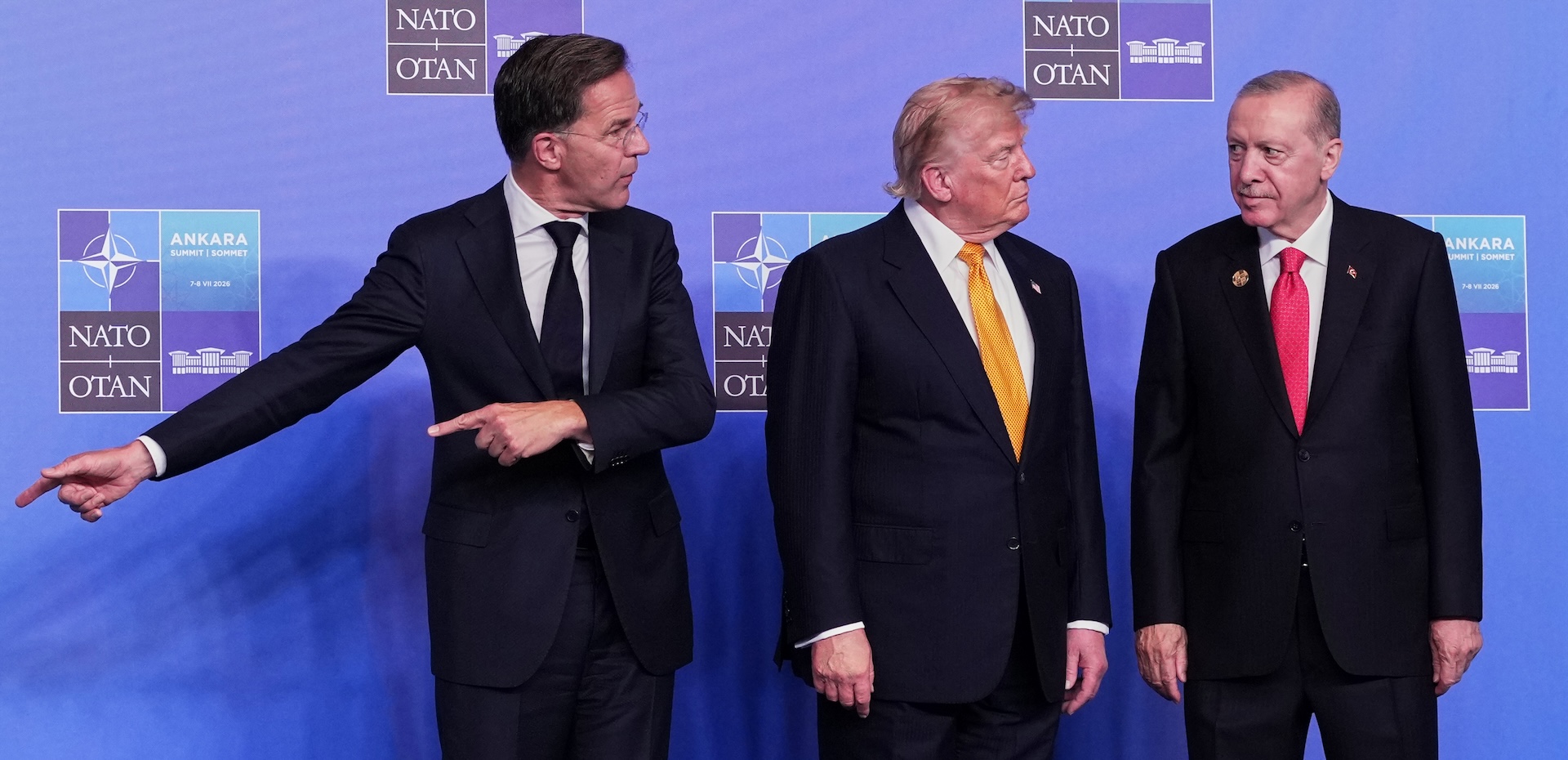
In the aftermath of the NATO summit in Ankara, relations between Turkey and its Western allies seem to have improved. However, given the depth of the economic ties between Russia and Turkey, the Kremlin is not concerned that Turkey will fundamentally realign its foreign policy. Persistent tensions between Turkey and the West on a range of issues mean there is little prospect that President Erdoğan will turn his back on Russia.
The recent NATO summit in Ankara has contributed to a marked improvement in Turkey’s relations with its Western allies.
Some of these ties have been strained in recent years. Turkey’s purchase of Russian S‑400 air defence systems led to the imposition of US sanctions and Turkey’s removal from the F‑35 fighter jet programme. Ankara’s horse-trading over Sweden’s accession to NATO also caused considerable frustration in the Alliance’s capitals.
However, President Erdoğan has not fundamentally changed his stance toward Russia, which remains a critically important partner for Turkey as an energy supplier. In 2024, it accounted for close to 50% of Turkey’s oil imports and just over 40% of its gas imports. Russia also supplies around 40% of Turkey’s diesel consumption.
Other trade links, particularly in construction, are also valuable for Turkish companies, while tourism from Russia is an important revenue source. In 2025, close to seven million Russians visited Turkey.
The Kremlin sees Turkey’s economic dependence on Russia as a major barrier to a genuine reorientation towards the West. As a result, Moscow tends to interpret Ankara’s closer engagement with Western countries as a series of tactical, transactional moves rather than a fundamental geopolitical pivot.
Ankara’s efforts to improve its relations with its Western partners are driven by economic requirements that Moscow cannot satisfy. Turkey is urgently seeking new investment from established trade partners such as Germany, the Netherlands, and the US. Ahead of presidential and parliamentary elections scheduled for 2028, Erdoğan needs to stabilise Turkey’s currency and increase economic growth.
Moscow recognises that Turkey’s decision to seek readmission to the F‑35 project, at the cost of abandoning its investment in the S‑400 system, reflects its economic needs and does not represent an ideological shift away from Russia.
Turkey continues to serve as a valuable diplomatic intermediary for Russia. After the overthrow of Bashar al-Assad in December 2024, Turkey mediated between Moscow and the new authorities in Damascus. Conscious of its own limited military resources in the region, Russia has avoided challenging Turkish interventions in Syria, maintaining a coordinated arrangement that benefits both countries.
For example, in late 2025, Turkey facilitated the return of Russian military personnel to southern Syria, specifically to areas largely populated by the Druze. In early 2026, Russia helped to disband the Kurdish Syrian Democratic Forces and integrate them into the Syrian army.
Counter-terrorism is another focus for bilateral security cooperation. Both countries face threats from Middle Eastern militants and regard ISIS as a serious danger. However, their views do not always coincide. For example, they disagree about the PKK (Kurdistan Workers’ Party) and the YPG (People’s Defence Units), Kurdish factions based respectively in Turkey and Syria. Turkey considers them to be one and the same terrorist organisation, while Russia does not classify either as such.
There is also a well-developed framework for mutual legal assistance. Both sides extradite suspected criminals wanted by the other, although this has involved more Russian than Turkish citizens.
Erdoğan continues to position Turkey as a neutral venue for talks between Russia and Ukraine. He can point to the track record of the Istanbul negotiations in 2022, the establishment of the Black Sea Grain Initiative later the same year (although it lapsed in July 2023), and three rounds of talks between Russia and Ukraine in 2025. In 2024, Turkey hosted the largest prisoner exchange between Russia and Western countries since the end of the Cold War.
Manoeuvring between NATO and Russia benefits Erdoğan in domestic politics. A recent poll indicated that 59% of Turks have an unfavourable view of NATO. These attitudes reflect the widespread belief that NATO countries apply double standards to Turkish security concerns, such as by failing to support Turkey in its efforts to defeat the Kurdish YPG.
The Kremlin understands the value of this anti-Western sentiment and avoids straining bilateral relations despite obvious irritants. It has kept quiet about Ankara’s growing role as a defence supplier to Europe and Ukraine, and has declined to confront Turkey over its expanded influence in the Caucasus, notably in Azerbaijan. Turkey’s efforts to cement its influence in Central Asia, via means including enhanced transport links, defence-industrial cooperation, educational ties, and other forms of soft power, have also not aroused Moscow’s wrath.
The Kremlin clearly feels that Ankara is still sufficiently aligned with Russia’s interests.