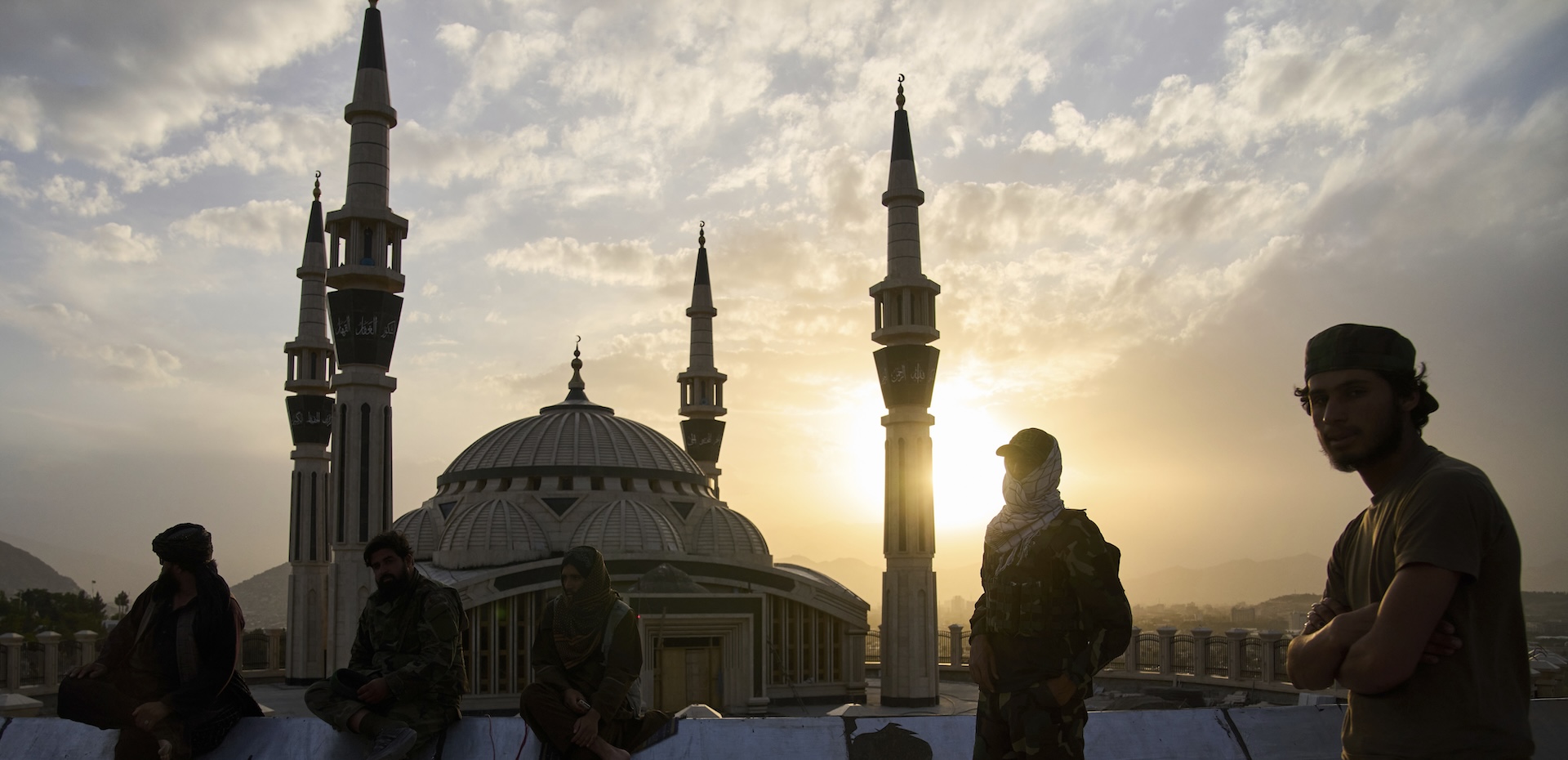
Since the Taliban’s return to power in 2021, Afghanistan has remained largely on the periphery of the world’s attention, though its domestic situation is critical. The country is beset by a crippling economic crisis, enduring terrorist threats, border skirmishes, and an impending schism within the ruling Taliban regime. Following the departure of the US and its allies, other geopolitical players are actively seeking to fill the resulting international power vacuum. Consequently, the Taliban’s primary economic partners today are Iran, China, and certain Central Asian countries. Russia also seeks to maintain a foothold in Afghanistan; however, it lacks the capacity to offer much beyond limited military aid in the form of equipment repair and training. Russia is providing these services in an attempt to take on a coordinating role in the fight against international terrorism in Afghanistan and Central Asia. However, given the Taliban regime’s deep caution regarding engagement with other countries on security issues, Russian aid does not guarantee reciprocal efforts by the Taliban to combat terrorist groups.
The illusion of safety
Over the five years since the Taliban returned to power in Afghanistan, the international community – especially Western nations, led by the United States following its painful withdrawal – has largely preferred to ignore the country. Despite the Taliban’s claims of a complete victory over terrorism, numerous armed groups, including the Islamic State – Khorasan Province (IS‑K) and Al-Qaeda, continue to operate within the country. The January 2022 report of the UN Secretary-General on the threat posed by ISIL (Da’esh) to international peace and security notes that since the Taliban’s return to power, terrorist groups in Afghanistan have enjoyed greater freedom than at any other time in recent history. The Taliban’s relationships with these various factions differ fundamentally. While IS‑K is a bitter enemy of the de facto authorities in Kabul, Al-Qaeda remains an ally.
In May 2026, the Secretary of the Security Council of the Russian Federation, Sergei Shoigu, asserted that between 18,000 and 23,000 militants, comprising over 20 different factions, are currently operating in Afghanistan.
Although Taliban leaders deny the presence of any terrorist groups in the country, threats to regional security continue to emanate from Afghanistan. Among other factors, IS‑K – which, according to UN Security Council experts, may be 2,000 strong – is actively trying to recruit new militants in Central Asian countries. Furthermore, the group possesses modern tactical equipment, including unmanned aerial vehicles and night vision devices.
Russia’s priorities in Afghanistan
Russia became one of the first countries to experience the severity of the terrorist threat from Afghanistan due to the attack at Crocus City Hall in the Moscow suburbs in March 2024, which claimed the lives of 145 people. This bloody attack, which was perpetrated by IS‑K militants, served as yet another reminder that the newly established regime in Kabul is failing to cope with domestic security threats and lacks the capacity to contain terrorist organisations.
In April 2025, Russia removed the Taliban from its list of terrorist organisations, and in July of the same year, it became the first country in the world to recognise the government of the Islamic Emirate of Afghanistan formed by the Taliban. The Kremlin hopes that recognising the Taliban regime in Afghanistan will enable Russia to play an active role in regional security, effectively filling the vacuum left by the withdrawal of the Americans and their allies.
Notably, Moscow established close contacts with the Taliban prior to their entry into Kabul in August 2021. From 2017 onward, under the auspices of the Moscow Format on Afghanistan, Russia fostered direct dialogue between the internationally recognised Afghan government and moderate Taliban factions. Through this mechanism, the Kremlin aimed to play a role in the stabilisation of Afghanistan. It was partly as a result of these contacts that the Russian Ambassador to Kabul, Dmitry Zhirnov, became the first foreign envoy to meet with the Taliban leadership after the Taliban took power.
As Taliban spokesman Zabihullah Mujahid told NEST Centre, Moscow’s recognition is of paramount importance to Kabul ‘because it sets an example that regional and Western countries may follow’. ‘Moscow gained influence, security, and economic opportunities, while Kabul obtained international legitimacy and diplomatic support’, noted an Afghan diplomat with many years of experience of working in Moscow.
In May 2026, Russia and the Taliban signed a military-technical cooperation agreement. This document marked a transition toward closer interaction between Moscow and Kabul, serving as the next step in the development of bilateral relations in recent years. It provides the Kremlin with the opportunity for closer engagement on issues such as counter-terrorism and cross-border security.
A source in the Afghan Ministry of Defence confirmed that Moscow plans to provide assistance to Kabul ‘primarily in the repair of aviation assets and specific types of weaponry, the motor vehicle fleet, and armoured vehicles’. Furthermore, according to the source, the document outlines ‘the implementation of training and educational activities aimed at enhancing the combat readiness of the Afghan army’. This should allow the Taliban to partially restore the combat potential of the Afghan security forces without large-scale deliveries of new weaponry. Given the current Afghan regime’s deep caution regarding any foreign engagement concerning security and counter-terrorism, providing such services on a mutually beneficial basis constitutes Moscow’s sole opportunity to establish a dialogue with the Taliban regarding these highly sensitive issues. Nevertheless, this does not guarantee reciprocal efforts by the Taliban to combat terrorist groups.
In effect, Moscow is the sole outside power which has a military-technical cooperation agreement with the Taliban government and is able to further expand ties in this area. At present, this marks the limit of what both the Kremlin and the Taliban are willing to accept.
Afghanistan’s international partnerships
According to the latest report by the National Statistics and Information Authority (NSIA) of Afghanistan for the year 1403 of the Afghan calendar (2024–2025 in the Gregorian calendar), Kabul’s primary foreign trade partners are Iran (with trade worth $3.2 billion per year), Pakistan ($2.4 billion), and China ($1.6 billion). Russia occupies only the ninth position with trade worth $340 million.
At the same time, according to the latest World Bank report, as of July 2026, Russia is the seventh-largest supplier of imports to Afghanistan with a share of 5.6%, trailing Iran (31.7%), China (12.9%), the UAE (11.1%), Uzbekistan (9.4%), Kazakhstan (8.3%), and Turkmenistan (6.1%).
Russia primarily supplies Afghanistan with petroleum products, liquefied natural gas, food commodities (including sunflower oil and wheat flour), and industrial goods. Russian food products can be found on the shelves of Afghan shops. However, unlike China or Iran, Moscow is not implementing any large-scale economic projects within Afghanistan and is not investing in the country. Thus, a division of spheres of influence is occurring among various outside powers.
While China and Iran are investing heavily in Afghanistan’s infrastructure, Moscow is focusing primarily on security matters. Essentially, this constitutes an unspoken consensus among regional stakeholders regarding Afghanistan. Each of them pursues the domain most relevant to its strategic priorities, striving to avoid encroaching upon the interests of others.
Both Tehran and Beijing, which for years viewed Afghanistan as a security threat due to the heavy fighting and terrorist attacks which took place during the US-led intervention, now see an opportunity in the return of the Taliban and the withdrawal of Western powers. Since they do not prioritise issues like human rights in Afghanistan, Iran and China see no obstacles to developing economic ties with the authorities in Kabul. Unlike Western nations, which demand that the Taliban first repeal repressive laws and form a more inclusive government, Beijing and Tehran impose no preconditions on the regime.
Overall, the Taliban regime’s foreign policy adopts a uniform approach toward any foreign partner. ‘It makes no difference to us whether it is the US or Russia; we are open to cooperation with all’, Taliban spokesman Zabihullah Mujahid told NEST Centre. Nevertheless, the Taliban are extremely defensive regarding foreign political influence in Afghanistan; therefore, the Russian presence, much like that of any other country, will inevitably remain highly limited.
Russia maintains an interest in transit projects, particularly the concept of a gas pipeline and trade corridors passing through Afghanistan to Pakistan and India, which would give Afghanistan a role within a broader framework of economic initiatives. However, without significant investment from the Russian side, the realisation of such initiatives will prove impossible.
The Kremlin’s cautious approach to long-term projects within Afghanistan is driven, in part, by uncertainty regarding the stability of the Taliban regime. Due to its history in Afghanistan, including its military presence from 1979 to 1989, Moscow takes a sceptical view of the future stability and political durability of a country that has changed its name seven times over the past half-century.
The fractured Taliban
One of the key reasons for Russia’s cautious approach is Afghanistan’s rapidly deteriorating economic situation. Monthly per capita income has fallen to approximately $100. The unemployment rate stands at 75%, over 90% of the population lives below the poverty line, and more than 70% of Afghans rely on humanitarian aid, which has been drastically reduced.
The situation is further compounded by the forced return of over 4.5 million Afghan citizens from neighbouring countries since October 2023, which has expanded the country’s population by roughly 10%. The economic and humanitarian crisis has become one of the key drivers of radicalisation, pushing some young people to join terrorist groups.
Recent armed clashes between Afghanistan and Pakistan have also changed the political and security dynamics. Islamabad attributes domestic terror attacks to the Tehreek-i-Taliban Pakistan (TTP) group and holds the Afghan Taliban responsible. Kabul insists it is unaffiliated with these militants. Another primary driver of Afghan-Pakistani friction is the unresolved border issue. The present border, the so-called Durand Line, was drawn in the late nineteenth century at Britain’s insistence. In effect, it partitioned the territory traditionally populated by Pashtuns. No Afghan government has ever recognised it as an official international border with Pakistan since the latter gained independence in 1947. The Taliban government, whose members are mostly Pashtuns, is no exception. The spread of radicalisation in the border regions of Afghanistan and Pakistan has led to militants from the Tehreek-i-Taliban Pakistan (TTP) group joining IS‑K. These latest developments inevitably concern Moscow, as the TTP pursues strictly localised objectives, whereas IS‑K is part of the global Islamic State network, which poses a threat to Russia as well.
The primary challenges facing the Taliban regime stem not from external threats, but rather from the exacerbation of internal contradictions. The Taliban themselves are not a monolithic entity; rather, they are fragmented into several factions that can be broadly categorised into the Kandahar-based headquarters of the Supreme Leader, Hibatullah Akhundzada, and the central government in Kabul.
The latter frequently expresses dissatisfaction with the Supreme Leader’s directives and openly disregards them, as demonstrated by their non-compliance with the internet ban in the autumn of 2025 and the smartphone prohibition introduced in June 2026.
Nevertheless, Taliban officials attempt to conceal internal frictions and keep them out of the public eye. A turning point could come with the death of the Supreme Leader, which would trigger a reshuffling of spheres of influence and a renewed power struggle. For now, however, a fragile yet persistent equilibrium remains between Kabul and Kandahar.
Nonetheless, as the Taliban regime fails to mitigate the acute economic and humanitarian crisis, while the West neglects the situation, Afghanistan will inevitably suffer from a deteriorating security environment and a heightened terrorist threat. Over time, this threat could spread far beyond Afghanistan, impacting regions outside Central Asia and the Middle East, as did Al-Qaeda while it was based in Afghanistan in the late 1990s and early 2000s.