For several weeks, the conflict in the Middle East has largely displaced the Russia–Ukraine war from the political agenda. The negotiations have been put on hold, and both Russia and Ukraine have continued military operations.
However, after two more months of fighting, the situation on the front line remains largely unchanged. Both sides have achieved tactical gains, but at the strategic level, they remain in a stalemate. The likelihood of a military breakthrough is declining, and a resumption of negotiations can be expected in the coming weeks, even though both parties are publicly signalling their readiness to continue the war.
Russia is officially continuing a sustained offensive across multiple axes, but the pace of its advance has slowed significantly. In March, Russian forces captured around 23 square kilometres – the lowest figure since 2023. Ukraine, for its part, has partially regained the initiative and recaptured around 50 square kilometres of territory, mainly in the Zaporizhzhia Region. However, these changes come at a high cost to both sides and do not alter the overall picture.
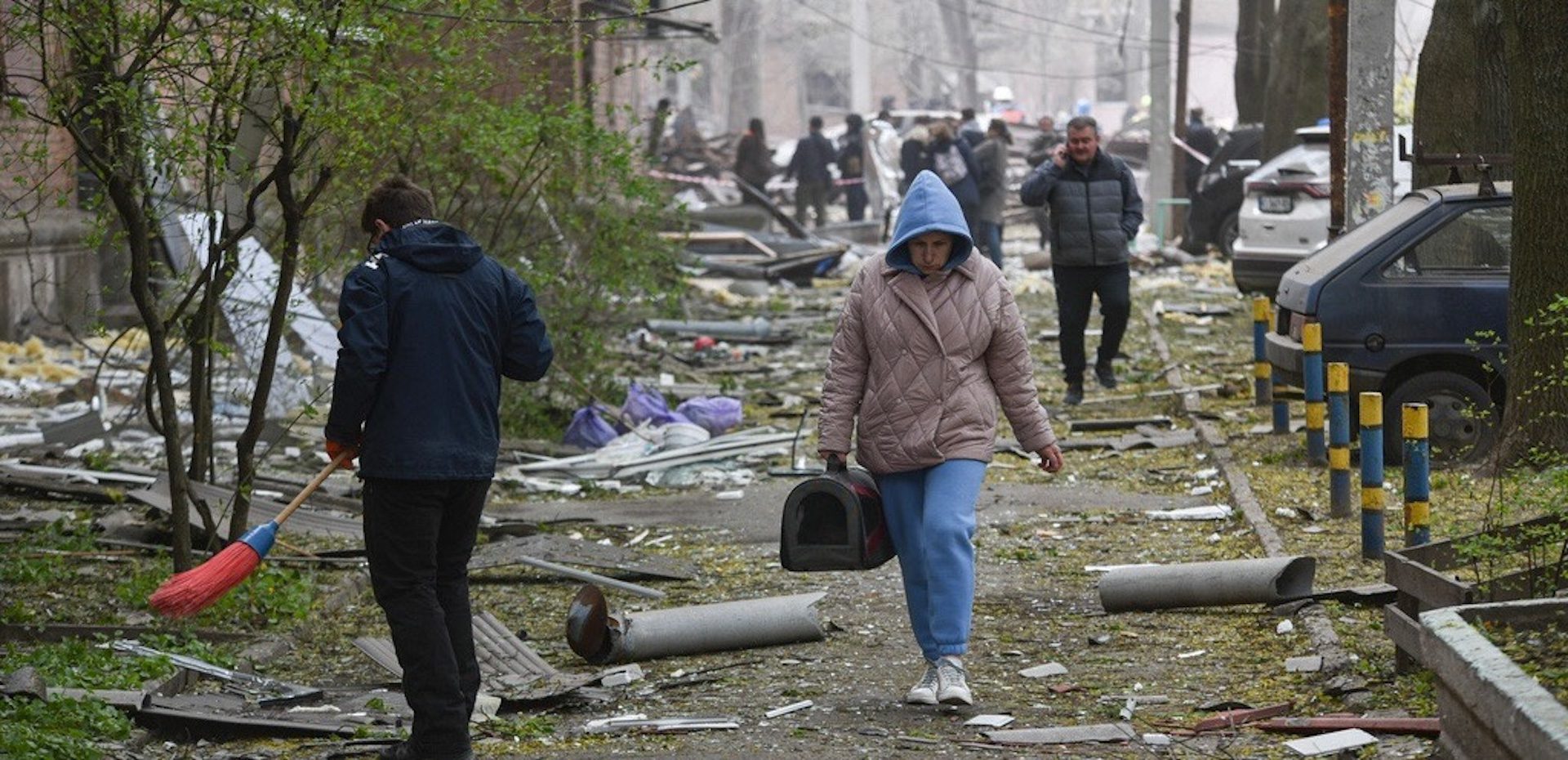
Against this background, the two sides are intensifying their long-range strikes into their opponent’s territory. Russia has stepped up drone and missile attacks on Ukrainian cities. Ukraine, in turn, is concentrating on strikes against Russia’s oil infrastructure – refineries and oil terminals – in an attempt to reduce Moscow’s revenues from energy exports.
This strategy has a limited effect. Russian missile strikes do not have a significant impact on Ukraine’s ability to resist the invasion. Ukrainian attacks have led to a one-third reduction in the average daily volume of Russian oil and oil product shipments from Russian ports, and to a cumulative shortfall in exports of around 30 million barrels (4.2 million tonnes) between 25 March and 11 April. However, rising global prices due to the situation in the Strait of Hormuz have allowed Russia to offset the decline in physical export volumes.
The Druzhba oil pipeline has become a matter of geopolitical struggle. Over the past three months, Ukraine has used the section of the southern branch under its control as a lever over Hungary and Slovakia, which have often slowed EU assistance to Ukraine. Moscow, in turn, has decided to use the northern branch to exert pressure on Germany: from 1 May, Russia will halt the transit of Kazakh oil there, seeking to influence one of the largest suppliers of arms to Ukraine. Deliveries of Kazakh oil along this route were expected to amount to 2.5 million tonnes per year, and Russia has promised to compensate Kazakhstan with export capacity elsewhere. As on the battlefield, confrontation in the energy sphere is not yielding significant gains for either side.
The EU continues to search for ways to limit Russia’s ability to sustain the war, and has adopted its twentieth package of sanctions comprising multiple elements. A key innovation is an attempt to apply pressure on third countries that help Moscow to circumvent sanctions. The first such country is Kyrgyzstan, to which exports of computer numerical control machine tools and telecommunication equipment are now prohibited. However, the limited scale of these measures – total EU exports of dual-use goods to Kyrgyzstan last year were under $770 million – is more than offset by US actions. A week earlier, Washington extended the authorisation for transactions involving Russian oil loaded onto tankers before 17 April until mid-May.
The military stalemate is increasingly reflected in public opinion in both countries. At the beginning of 2026, 65 per cent of Ukrainians were prepared to fight for as long as necessary. However, daily shelling and attacks on energy infrastructure have led to a decline in this figure, to 54 per cent as of early March 2026.
In Russia, meanwhile, Vladimir Putin’s approval rating has recorded its sharpest drop in four years. At the same time, public discontent with domestic restrictions, such as internet shutdowns and the blocking of messaging services, as well as with the deteriorating economic situation, is growing. So far, this discontent is expressed mainly on social media. The rhetoric of pro-war bloggers is also changing: they are becoming more inclined to publicly question the rationale for continuing the war in the absence of visible results.
Issues to watch
- Restrictions on mobile internet and the blocking of digital services remain among the most sensitive domestic issues in Russia. The seriousness of the situation is reflected in Putin’s first public comments on the matter, in which he effectively endorsed the FSB’s position that internet access can be sacrificed in the name of security. This deepens the conflict between the security services and the civilian administration, for which internet restrictions pose additional risks on the eve of parliamentary elections. In the coming weeks, close attention should be paid to whether rising public discontent leads to a partial revision of these restrictions or, conversely, whether the security services consolidate control over the digital space.
- Russia is trying to become a mediator on Iran. Since the start of the conflict in the Persian Gulf, Moscow has offered itself as a mediator and a potential technical guarantor of a possible nuclear deal, but this initiative has received no response from either side. The visit of Iran’s foreign minister to Moscow today may change this situation. For the Kremlin, this creates an opportunity to re-enter the negotiating process and to demonstrate its diplomatic influence.
- The likelihood of a revision of the federal budget is increasing. This week, the Ministry of Economic Development is expected to complete work on an updated forecast for the current year, which will form the basis for a decision on whether changes to federal budget parameters are required. The Governor of the Bank of Russia, Elvira Nabiullina, has stated that there is a high probability that budget expenditures will be financed through an expansion of the deficit.