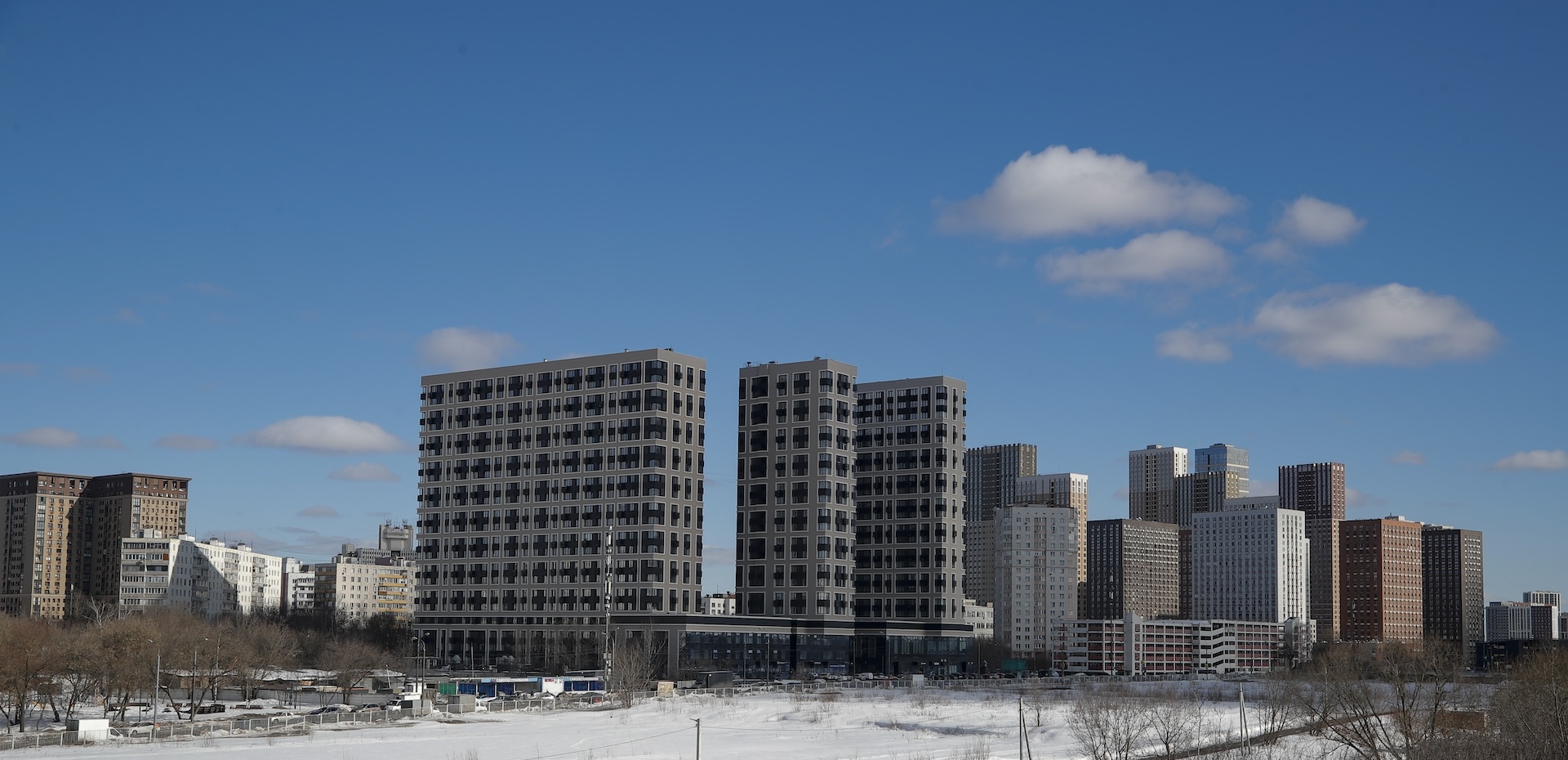
Preferential mortgage programmes have been in place in Russia since 2018. They have contributed to the expansion of housing construction, becoming an integral part of the sector’s economic model. However, state subsidies made mortgage credit, rather than housing itself, more affordable. Between 2019 and 2026, average prices for new flats in Russia more than tripled, while average per capita monetary incomes roughly doubled. The substantial burden that housing programmes place on the federal budget appears to have become an important factor in political decision-making. In mid-2024, the government phased out the mass preferential mortgage programme. In autumn 2026, it changed the rules of the family mortgage programme, significantly restricting access to it. The authorities intend to transform the family mortgage programme from an economic support measure into an instrument of demographic policy designed to encourage the birth of second and subsequent children. However, the new terms may prove unaffordable for many families.
The emergence of Russian housing market
After the collapse of the Soviet Union, Russia lacked clear financial mechanisms for housing construction and market-based property valuation that were accessible to the general public. Most housing in the Soviet Union was built by the state and allocated to citizens free of charge for indefinite use.1 It could not legally be sold. The free privatisation of state-owned housing in the early 1990s laid the foundation for the development of the secondary housing market and the gradual emergence of market prices. However, financial instability and the absence of the necessary legislation made the development of a mass mortgage lending system impossible.
The transition to a market economy in the early 1990s unleashed private initiative. The pace of housing construction by individuals began to grow rapidly. In 2000, Russian citizens built twice as much housing on their own as had been built in this way in the Soviet Union in 1990. On the other hand, the pace of large-scale apartment block construction fell sharply, reaching only 49 per cent of its 1990 level by 2000. It was not until 2014 that the total floor area of new housing built using industrial construction methods exceeded the Soviet-era peak recorded in 1987.
Housing construction gradually became one of the main drivers of the Russian economy. The value of housing completed each year increased from approximately 1.8 per cent of GDP in 2000 to 4.6 per cent in 2020 and 6.1 per cent in 2023. For the government, sustaining housing construction meant preserving not only the sector itself, but also employment and demand for metal, construction and finishing materials, and furniture. Mortgage lending began to develop in Russia in the mid-2000s and became an important area of business for major banks.
How the housing sector became dependent on subsidies
In late 2014 and early 2015, Russia experienced a financial crisis triggered by falling oil prices and the introduction of the first major Western sanctions related to the military conflict in eastern Ukraine, where the Kremlin had decided to initiate a separatist movement. In early 2015, after the Bank of Russia raised its key interest rate to 17 per cent, both the number and total value of mortgage loans issued fell by half, threatening to cause a major downturn in construction.
To counter this, in early 2015 the government announced a programme of budget subsidies for mortgage interest rates, setting a fixed maximum rate for borrowers. The programme was initially intended to last one year, but was later extended for another year. Mortgage subsidies were seen as a temporary and relatively inexpensive anti-crisis measure. By spring 2017, Russia’s financial situation had stabilised, inflation had fallen sharply, and the Bank of Russia’s key interest rate and mortgage lending rates had declined accordingly, making mortgages affordable without subsidies. The need for budget support for mortgage lending had disappeared.2
Three years later, a new crisis emerged, this time linked to the global pandemic. The Russian authorities, like many other governments, faced the threat of a sharp economic downturn, and launched a new mortgage subsidy programme offering loans at 6.5 per cent to a broad range of buyers for the purchase of newly built housing. The market mortgage rate at the time was approximately 10 per cent, and the programme appeared to be an anti-crisis measure capable of supporting demand without excessively distorting the market.
The programme was initially scheduled to run until November 2020. However, the economic recovery was slow, and mortgage support was extended first until mid-2021 and then until mid-2022. In February 2022, Russia launched its full-scale war against Ukraine, triggering a major wave of Western sanctions and an economic downturn. Withdrawing support under these circumstances would have made little sense. The programme was extended until the end of 2022 and then until mid-2024. Preferential mortgages had become not a temporary measure, but an integral part of the economics of new housing construction.
Developers received a steady flow of customers, which generated new projects. Construction companies received new orders. In 2022, Russia’s GDP contracted by 1.4 per cent, but the construction sector grew by 6.7 per cent. It was one of the few major sectors that continued to grow amid the overall economic downturn. The volume of new housing completed increased by almost 11 per cent, reaching 102.7 million square metres, a record at the time. For the government, this was evidence that subsidising demand worked. Vladimir Putin explicitly linked record levels of housing construction to mortgage lending and promised to continue supporting it. In 2023, the Russian economy returned to growth, supported by a rapid increase in military spending. GDP grew by 4.1 per cent, while the construction sector grew even faster, by 7 per cent. The volume of new housing completed reached a new high, exceeding 110 million square metres.
In mid-2023, as inflation in Russia, driven by military spending, accelerated towards 10 per cent annually, the Bank of Russia began gradually raising its key interest rate, pushing up the cost of mortgage loans. However, banks continued to issue mortgages and earn risk-free income, as the government regularly compensated them for the difference in interest rates. The share of preferential mortgage loans in the total value of new mortgage lending, which had remained at around 30 per cent in 2020–2021, rose to 45–50 per cent after the start of the war and exceeded 75 per cent by the end of 2023.
Yet even these figures do not reflect the full picture. Between early 2018, when Russia launched the family mortgage programme, and mid-2024, when the general preferential mortgage programme was terminated, the total value of preferential mortgage loans issued amounted to RUB 11.8 trillion, while the total increase in outstanding household mortgage debt over the same period was RUB 14.5 trillion – more than 81 per cent.
Loans instead of flats
International experience has long shown that support for homebuyers needs to be combined with measures to increase housing supply: providing land and infrastructure, speeding up planning and approval procedures, and building affordable housing. Without such measures, budget subsidies are capitalised into property prices when housing supply is limited. This happened, for example, with the UK’s Help to Buy scheme. The same mechanism was also one of the causes of the US mortgage crisis, which developed into the global financial crisis of 2007–2009. Russia was no exception.
The Russian authorities devoted enormous efforts to supporting construction, but failed to increase the affordability of housing. Preferential mortgage programmes made credit more affordable, not flats. As a result, a substantial share of the benefits of cheap credit was reflected in higher property prices. By mid-2026, average prices for new flats in Russia had more than tripled, rising by 243 per cent compared with the end of 2019, while average per capita monetary incomes had increased by only 106 per cent, according to Rosstat. At the end of 2019, a monthly mortgage payment amounted to 112 per cent of average monthly per capita income.3 By mid-2024, this figure had risen to almost 190 per cent.
The government’s position was shaped by Deputy Prime Minister Marat Khusnullin, who was responsible for the construction sector. He pushed to maintain large-scale support for demand and was able to present the president with a clear result: record levels of housing completions. At the same time, he warned that ending preferential mortgage lending would deal a severe blow to the sector and lead to mass unemployment.
The Bank of Russia assessed the consequences of this policy differently, warning that large-scale mortgage subsidies, combined with limited housing supply, were driving up property prices and forcing interest rates to remain high for longer for all other borrowers. However, as long as record levels of housing completions remained the president’s main measure of success, these arguments did not lead to a change of policy.
The acceleration of inflation that began in the second half of 2023 prompted the president to take the Bank of Russia’s position more seriously. The government began tightening the preferential mortgage programme’s terms, but this did not dampen demand, as market interest rates were rising rapidly. When price growth accelerated to 15 per cent annually in spring 2024, it became clear that the Bank of Russia’s forecasts were rapidly materialising. On 1 July 2024, the preferential mortgage programme came to an end.
The mortgage market cooled sharply, but only briefly, as state support remained in place. Household demand shifted to the preferential family mortgage programme, which accounted for around 60 per cent of the total value of mortgage loans issued in the fourth quarter of 2024 and approximately 75 per cent in the first quarter of 2025.
Between mid-2024 and 1 August 2026, the total value of mortgage loans issued under the family mortgage programme exceeded RUB 6.6 trillion, while total outstanding household mortgage debt increased by RUB 2.75 trillion. This apparent paradox was largely explained by a rule that remained in force until February 2026, under which each spouse could obtain a preferential family mortgage for the same property.
If one spouse obtained a preferential mortgage, the other would temporarily take out a mortgage at the market interest rate from the same bank while arranging their own preferential loan. The market-rate mortgage would then be repaid after a short period using the funds obtained through the family mortgage programme. This arrangement was exceptionally profitable for banks, allowing them to lock in a high ‘market’ interest rate and guarantee themselves budget subsidies. As a result, loans issued at preferential interest rates now account for almost 82 per cent of total outstanding household mortgage debt in Russia.
A change of course
The termination of the mass preferential mortgage programme sharply slowed the pace of large-scale housing construction. The momentum of projects already under way and the continuation of budget support programmes, primarily the family mortgage programme, helped to limit the decline in housing completions, which even increased slightly in 2026.
After reaching a peak in the first half of 2023, when 21.7 million square metres of housing were built in Russia using industrial construction methods,4 the volume fell to 15.5 million square metres in the first half of 2024 and declined further to 14.9 million square metres in the first half of 2025. In the first half of 2026, this figure increased by almost 9 per cent to 16.2 million square metres.
The main reason for this increase was the widespread use of instalment payment schemes for flat purchases. Against the backdrop of high interest rates, developers began to take on the role of banks, allowing buyers to pay for new housing over two to three years. These arrangements increased flat prices by 10–20 per cent, but buyers expected to be able to obtain cheaper mortgage loans during that period. In early 2025, such transactions accounted for more than 40 per cent of sales, but the popularity of this financing arrangement began to decline towards the end of the year.
The Russian authorities faced a choice. On the one hand, preferential mortgage lending was a powerful mechanism for supporting a significant part of the Russian economy. Reducing the scale of budget support amid rapidly slowing economic growth could push the economy from stagnation into recession. On the other hand, budget expenditure on the programme was rising rapidly. While spending on compensation to banks for the difference in interest rates amounted to RUB 568 billion in 2021–2023, it rose to RUB 1.95 trillion in 2024 and almost RUB 2.8 trillion in 2025,5 approaching the level of expenditure on servicing domestic government debt. Given that the average term of these loans is around 25 years, it can be stated with confidence that the programme will continue to place pressure on public finances for many years to come.
Under pressure from the Ministry of Finance, Vladimir Putin acknowledged the need to change the terms of the family mortgage programme as early as December 2025. The government responded even before a formal presidential instruction was issued. From 1 February 2026, the rule allowing each spouse to obtain a preferential mortgage was abolished. This triggered a sharp increase in mortgage lending in January, with the total value of loans issued reaching 2.4 times the average January level for 2023–2025. Over the following six months (February–July), the volume of preferential mortgage lending fell by almost 20 per cent compared with the 2023–2025 level.
The changes announced in late September are expected to significantly reduce demand for family mortgages. Previously, the interest rate for borrowers was 6 per cent, and the government subsidised loans for up to 30 years. Under the new terms, the rate has increased to 10 per cent across most of the country and 12 per cent in metropolitan areas for the majority of borrowers (families with one child), while the subsidy period has been reduced to 15 years.
At the same time, the maximum loan amount has been increased to RUB 18 million in metropolitan areas and RUB 10 million in the rest of the country. When the programme was first introduced, these limits were RUB 12 million and RUB 6 million, respectively. In 2018, these amounts, including a 20 per cent deposit, were sufficient to purchase a new-build flat with a total floor area of 127 square metres (91 square metres in metropolitan areas). By autumn 2026, they were sufficient to purchase only 34 square metres (31 square metres in metropolitan areas). Following the increase in loan limits, borrowers will be able to purchase flats of 47 square metres in metropolitan areas and 57 square metres elsewhere.
The government makes no secret of its intention to stop using the family mortgage programme as a measure to support housing construction and turn it into an instrument of demographic policy designed to encourage the birth of second and subsequent children. To this end, the mortgage interest rate will be reduced to 8 per cent upon the birth of a second child and to 6 per cent upon the birth of a third child (10 per cent and 8 per cent, respectively, in metropolitan areas).
On the one hand, the government’s arguments are difficult to dispute: the probability of Russian families with one child having a second is declining rapidly and is now among the lowest in Europe. Almost a quarter of Russian families postpone the decision to have a second child because of cramped housing conditions. On the other hand, tighter lending conditions could reduce the volume of family mortgage lending by 20–25 per cent, while an interest rate of 12 per cent could prove unaffordable for many Russian families.
The results of the government’s new approach remain to be seen. For now, it can be said that the government has failed to adequately assess the long-term consequences of its earlier decision to expand preferential mortgage programmes.
Endnotes
- The downside was that housing allocation was controlled by the state, and waiting times could extend to several decades. ↩︎
- In 2018–2019, the government launched the family mortgage and Far Eastern mortgage programmes, but both were extremely limited in scale and narrowly targeted. ↩︎
- Calculated using the following parameters: a flat with a floor area of 100 square metres; the average price per square metre in Russia (according to Rosstat data); a mortgage term of 25 years; an interest rate of 8 per cent; and a 20 per cent deposit. ↩︎
- Flats in apartment buildings. ↩︎
- According to the Accounts Chamber of the Russian Federation. ↩︎