The Russian government has submitted a draft federal budget for 2027 to the State Duma. Although the published documents do not contain enough information for a full assessment of the state of public finances, what has been disclosed is sufficient to draw an unambiguous conclusion: the federal budget is already significantly imbalanced, and its position could become genuinely alarming next year. Spending on the war and public debt servicing will continue to increase at the expense of non-military sectors. This is leading to constant bargaining over the budget, during which the Ministry of Finance will attempt to contain overall spending growth.
Financing the deficit is becoming increasingly difficult
During the war, the Russian authorities have actively increased the tax burden, both by raising traditional taxes and by introducing temporary and, at times, unusual levies. These included a three-month surcharge on the mineral extraction tax for gas in autumn 2022, a windfall tax introduced in 2024, and duties on exporters’ gains from the depreciation of the rouble, which were in force from October 2023 until the end of December 2024. Taxes rose particularly sharply in 2025 and 2026, when the rates of VAT, corporate profit tax, and personal income tax were increased.
However, this did not lead to an increase in the federal budget’s total revenue: the entire increase in the tax burden only barely offset the decline in oil and gas revenues. The latter depend on two parameters: production volumes, which have fallen over the past three years, and the export price of Russian oil in roubles, which declined sharply in 2025 and has since remained broadly unchanged.
Budget expenditure this year will be around RUB 4.5 trillion higher than the amount originally set by law, exceeding our expectations of RUB 3–4 trillion of excess spending. However, RUB 1 trillion of this consists of 2025 expenditure that was not financed in time, as well as money drawn from hidden government reserves.1 As a result, the annual budget deficit will increase by ‘only’ RUB 3.56 trillion – almost doubling to 3.2 per cent of GDP, compared with the planned 1.6 per cent.
However, the real problem lies not in the size of the deficit, but in how to finance it. The Bank of Russia’s shift from a steady reduction in the key interest rate to keeping it unchanged at 14 per cent has changed the situation in the debt market. Since mid-summer, the Ministry of Finance has effectively lost the ability to place bonds in the volumes required to finance the deficit without the indirect involvement of the Bank of Russia. As a result, the entire additional deficit in 2026 will ultimately be covered from accumulated fiscal reserves held at the Treasury’s disposal. But this means that banks will lose around RUB 3.5 trillion in government deposits at a time when the inflow of private deposits has already dried up over the past several months.
War remains the priority
Judging by the current draft budget, the government intends to make a decisive return to fiscal discipline in 2027. The Ministry of Economic Development forecasts a 1 per cent increase in oil production and a 10 per cent decline in the rouble price of exported oil, taking into account the cut-off price of $50 per barrel.2 In that case, a moderate increase in the tax burden will not be enough to offset the fall in oil and gas revenues.3
Budget revenues will decline from 17.7 per cent of GDP in 2026 to 17.4 per cent in 2027. Expenditure, however, is expected to be cut much more sharply, from 20.9 per cent to 19.6 per cent of GDP. As a result, the deficit is expected to fall to 2.2 per cent of GDP.
The government has stated that the fiscal rule (the use of oil and gas revenue to replenish the National Wealth Fund) will apply in 2027, with an oil cut-off price of $50 per barrel. Since the oil price assumed in the budget forecast is $53 per barrel, the Ministry of Finance has budgeted for a transfer of RUB 345 billion to the National Wealth Fund by the end of the year, thereby showing that the fiscal rule is functioning.
However, as is often the case, Russia’s fiscal rule operates only in those respects that suit the Ministry of Finance. The Budget Code provides not only for restrictions on the use of revenue, but also for limits on expenditure. The Ministry of Finance has proposed abandoning the latter by increasing expenditure by RUB 1.5 trillion above the level permitted under the fiscal rule.
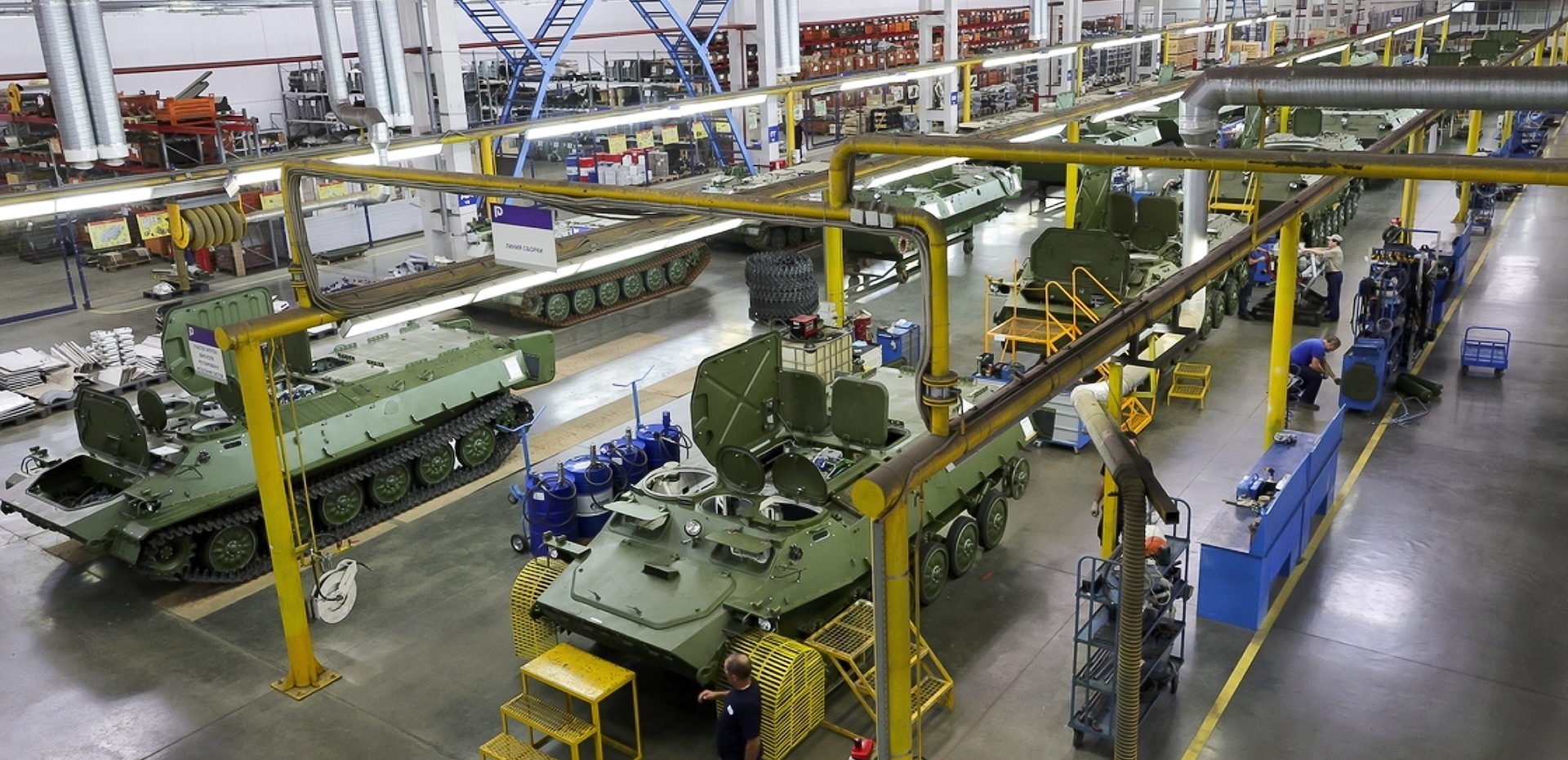
In nominal terms, federal budget expenditure is set to increase by just 0.44 per cent next year. Spending on military needs will rise by approximately RUB 1.7–1.8 trillion compared with 2026,4 reaching 6.9 per cent of GDP, or around RUB 17.2 trillion. Expenditure on servicing public debt will increase by a further RUB 1.1 trillion, to 1.6 per cent of GDP, or RUB 4.57 trillion.
In other words, these two budget items will absorb an increasing share of resources at a time when total expenditure is not growing. As a result, spending across all other budget items will have to fall by 8.7 per cent. With projected inflation of 4 per cent, the real reduction in non-military expenditure will amount to around 13 per cent.
What to expect in practice
Such a contraction in government demand is difficult to reconcile with the acceleration in economic growth forecast by the Ministry of Economic Development, especially given that the Bank of Russia also does not intend to cut interest rates. On the contrary, such a sharp real-terms reduction in non-military expenditure will only deepen the recession.
Actual expenditure in 2027 is therefore likely to be significantly higher than planned, with the deficit rising accordingly. Simply maintaining non-military expenditure at this year’s level, without any adjustment for inflation, would require an additional RUB 2.5–2.6 trillion above the planned level, meaning that the deficit would reach at least RUB 8.3–8.4 trillion.
To raise this amount on the market, the Ministry of Finance would have to pay significantly more on OFZ government bonds than the current annual yields of 15–17 per cent, making credit to the economy even less affordable. If the Bank of Russia is instead brought in to help finance the deficit, it will have no choice but to raise the key interest rate. This would again increase the Ministry of Finance’s borrowing costs, while also pushing inflation somewhat higher, which would increase budget revenues.
It is quite clear that price growth will exceed the 4 per cent assumed in the budget. The GDP deflator in the Ministry of Economic Development’s baseline forecast is 5.4 per cent, while the Bank of Russia’s forecast does not envisage inflation returning to its target. As a result, nominal budget revenues will exceed the planned level, while expenditure is not adjusted during the year to reflect faster price growth.
Two factors could disrupt the Ministry of Finance’s plans. The first is a weaker economy. If Russia experiences stagnation or even a recession instead of the expected growth, the tax base will be smaller than assumed. The second risk factor is oil prices. If the United States and Iran reach a peace agreement, the price of Russian oil exports will fall, reducing budget revenues.
Apparently, following the unsuccessful experience of 2026, when the limits on military spending built into the budget at the planning stage could not be enforced in practice, the Ministry of Finance has adopted a different strategy. The Ministry of Defence and the military-industrial complex are allocated all the funds they request at the planning stage, making it easier to refuse further increases in expenditure during the year. Non-military recipients of budget funds, meanwhile, will have to lobby the president and prime minister for their interests.
The result will be continuous bargaining over the budget, during which the Ministry of Finance will attempt to contain overall expenditure growth. This strategy makes the draft budget merely a starting point; on the basis of the information currently available, it is not yet possible to predict what the budget will look like by the end of the year.
Endnotes
- Since 2023, the Ministry of Finance has not published expenditure reporting, and since mid-2026 it has been able to spend funds above the amounts set by law without amending the law or disclosing where the money is being allocated. ↩︎
- Revenues above the cut-off price are transferred to the National Wealth Fund (NWF). ↩︎
- The budget includes additional revenues of RUB 1.47 trillion, or 0.6 per cent of GDP, resulting from changes to tax legislation. ↩︎
- According to our estimates, Russia’s military expenditure in 2026 will amount to RUB 15–15.5 trillion, or 6.5–6.6 per cent of GDP. ↩︎