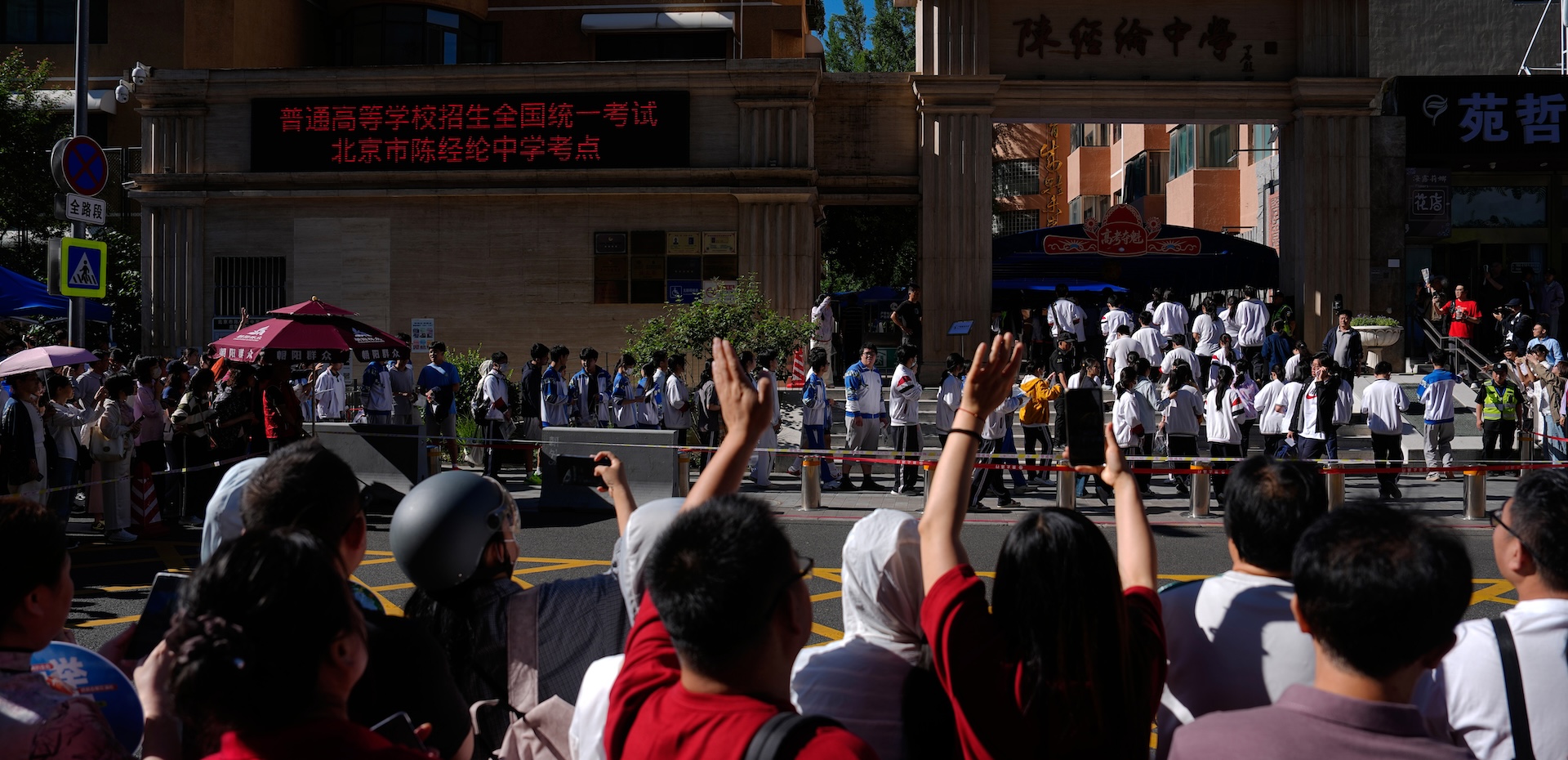
Following the introduction of Western sanctions in 2022, the international movement of Russian students and early-career researchers has gradually shifted towards China, where new linguistic, professional, and institutional ties are emerging. For the West, this represents a long-term loss of influence over a generation of scientists who, within the next 10–20 years, will be working in government institutions, corporations, laboratories, and universities. China, in turn, gains both talent and knowledge that support the development of its own scientific, technological, and industrial base.
Russia’s break with the West
After 24 February 2022, dozens of leading universities in Europe and the United States condemned Russia’s invasion of Ukraine and halted their cooperation with Russian partners. In March, the European Commission suspended payments under contracts with Russian research organisations within the €95.5 billion Horizon Europe programme, and stopped concluding new agreements. One month later, the participation of Russian institutions in other EU research programmes, including Euratom and Erasmus+ exchanges, was also suspended. Germany, the Netherlands, Denmark, Finland, Poland, Norway, and the Baltic states recommended that their universities completely sever ties with Russia. Many universities and research organisations complied.1
In the United Kingdom, the Universities of Cambridge, Glasgow, and Reading announced that they were severing or suspending ties with Russian universities and academic organisations. The British government also announced the suspension of research and innovation cooperation with Russian universities and companies which could provide a strategic benefit to the Russian state.
In the United States, the Massachusetts Institute of Technology (MIT) announced on 25 February 2022 that it was terminating the Skoltech Program, under which the Skolkovo Institute of Science and Technology and its innovation centres, modelled on Silicon Valley, were established in Russia. Later, the White House Office of Science and Technology Policy instructed federal agencies and research institutions to wind down cooperation with Russian state-affiliated research projects.
Beyond reputational considerations, the rationale behind these restrictions was to avoid providing the Russian state with scientific knowledge and research training which it could use, directly or indirectly, to support the war. Governments, intergovernmental organisations, and scientific institutions alike explicitly stated that these measures did not apply to individual contacts with Russian researchers and students. Indeed, after 2022, the number of Russian nationals enrolled at universities in the United States, Germany, and France actually increased.2
However, the breakdown of institutional ties has inevitably undermined the academic mobility of Russian researchers. Agreements between universities create the pathways through which early-career researchers enter professional communities, choose which language they will use in their careers, and learn where the most interesting developments are unfolding in their field of research.
Russia responded to the West’s actions with restrictions of its own. The Ministry of Science and Higher Education recommended that universities suspend participation in the Erasmus+ programme. Cooperation with Western educational, research, and policy organisations was, in effect, criminalised, as the Russian authorities increasingly designated such institutions as ‘undesirable’. For Russian citizens, participation in the activities of an ‘undesirable’ organisation is punishable first by a fine of up to RUB 50,000 and, for a repeated offence, by criminal prosecution carrying a prison sentence of up to four years. Organisations designated as ‘undesirable’ in Russia include Yale University; the University of California, Berkeley; Stanford University; the British Council; EF Education First; the International Baccalaureate; and the German Academic Exchange Service (DAAD).3
Following the invasion of Ukraine, scientific cooperation between Russia and the West did not disappear entirely, but it narrowed sharply from both sides. Western organisations primarily suspended institutional ties for humanitarian and reputational reasons. The Russian authorities, by contrast, erected barriers at the individual level in an effort to stop scientists leaving the country and, at a minimum, to slow the outflow of human capital – a decades-old problem which only intensified after the outbreak of the war.
The outflow of researchers from Russia
In 2021, Nikolai Dolgushkin, Chief Scientific Secretary of the Russian Academy of Sciences, stated that Russia was the only developed country where the number of scientific researchers had declined continuously for several decades. According to him, the number of researchers in the country had fallen from 992,000 in 1990 to 348,000 – a decline of 65 per cent. According to data from the HSE Institute for Statistical Studies and Economics of Knowledge (ISSEK), Russia employed 339,100 researchers in 2024.
In 2022–23, following the outbreak of the war in Ukraine, at least 2,500 researchers and university lecturers left Russia, according to estimates by Novaya Gazeta Europe based on ORCID data.4 Other estimates suggest that around 2–3 per cent of Russia’s research and higher education workforce – approximately 7,000–8,000 people – left the country during the first year of the war alone. This is likely to be a conservative estimate, as it may not fully include early-career lecturers, doctoral researchers, and staff at research centres.
Since 2022, Russian universities have awarded hundreds of thousands of bachelor’s degrees and tens of thousands of master’s degrees. For many graduates, continuing their studies or building a career in the West has become significantly more difficult because of institutional barriers on both sides. China has emerged as a potential alternative destination for early-career researchers, who can work there, contribute to joint projects with Russia, or use China as a stepping stone into international science and pursue careers in the EU or the United States.
A scientific pivot towards China?
Russia has become the country in Europe and the CIS with the largest number of students in China. Russian nationals account for around 4.5 per cent of all international students in the country, which hosts approximately 500,000 international students in total. In 2022, 3,800 Russian master’s and doctoral students represented nearly 15 per cent of all international postgraduate students in China.
According to Russia’s Minister of Science and Higher Education, Valery Falkov, more than 21,000 Russian citizens studied in China during the 2024–25 academic year. Meanwhile, more than 56,000 Chinese students studied in Russian universities, while around 10,000 others attended foundation programmes and Russian language courses. In 2019, before the COVID-19 pandemic, around 20,000 Russians studied in China, while approximately 40,000 Chinese citizens were enrolled in Russian universities.
Falkov stated that Russia and China aim to increase the number of international students they exchange to 100,000 by 2030. Between 2023 and 2024, the number of applications for student visas submitted by Chinese citizens to Russian consular offices in China doubled. Russian applicants receive between 500 and 1,000 scholarships and grants from the Chinese government each year.
By 2026, Russia had become one of China’s three leading international partners in joint higher education projects, behind only the United States and the United Kingdom in terms of the number of joint projects. Russian–Chinese initiatives include joint universities, such as the MSU–BIT University in Shenzhen, and branch campuses of Russian universities, including MAI–Hainan, located in the Hainan International Education Innovation Pilot Zone. However, China appears to be the leader and principal beneficiary of this partnership.
The Russia–China partnership in higher education concentrates on the undergraduate level, which accounts for 55 per cent of all projects, and on vocational education, which accounts for a further 30 per cent.5 Master’s programmes make up just 7 per cent of joint projects, while doctoral programmes are entirely absent. In other words, the highest level of research training – without which comprehensive scientific cooperation is not possible – has yet to be established.
Most Chinese universities which partner with Russia are regional institutions. The majority of joint projects are concentrated in inland provinces, including Shandong, Hebei, Jiangxi, and Henan, and in north-eastern China.6 By contrast, universities in China’s economically dominant eastern regions and its leading centres of research and higher education – Beijing, Shanghai, Guangzhou, and Shenzhen – are largely absent from joint programmes.
This is partly explained by the substantial gap in international academic competitiveness. In the QS World University Rankings, Peking University ranks 13th out of 1,504 institutions,7 whereas Lomonosov Moscow State University ranks only 115th, with all other Russian universities placed even lower. Likewise, no Russian university is included in the top 100 as listed by the Academic Ranking of World Universities (ARWU). China’s leading universities primarily seek partnerships with institutions of comparable standing, including those which Russia has designated as ‘undesirable’.
Moving from education to research
Academic relations between Russia and China are not limited to joint higher education programmes. Plans have already been announced to deepen cooperation at the research level as well. The two countries have designated 2026 and 2027 as the cross-cultural ‘Russia–China Years of Cooperation in Education’. The programme, which includes more than 100 events, points to a shift in the focus of academic cooperation from education towards research, primarily in engineering, technology, and the natural sciences.
Among the announced initiatives are the opening of a joint campus by Harbin Institute of Technology and St Petersburg State University; the establishment of the Russia–China Institute of Mineral Resources; the launch of a Mission Control Centre for Small Scientific and Educational Spacecraft, which is jointly operated by Bauman Moscow State Technical University and Tsinghua University; and the organisation of the 15th Forum of the Association of Sino-Russian Technical Universities (ASRTU). The association was established in 2011 by Bauman Moscow State Technical University and Harbin Institute of Technology, and now brings together more than 70 technical universities from Russia and China. Its stated objectives include preparing students for careers in the ‘innovation economy’ and promoting academic exchange among students and faculty members.
Another example of the shift towards deeper institutionalisation of scientific cooperation is the Russia–China Institute for Fundamental Research, which Moscow State University and Peking University agreed to establish in 2025. The Institute is intended to serve as a bilateral platform for fundamental research. Its structure will include five research centres based in laboratories in Russia and China, as well as in partner organisations in other countries.
The creation of a sustainable research infrastructure for Russia–China cooperation remains a long-term objective. At present, student and faculty exchanges constitute the only well-established mechanism for cooperation. In the near term, however, joint research activity is likely to become the most dynamic area of bilateral cooperation.
Why deepen scientific cooperation?
Deep academic integration with Russia gives China access to Russia’s scientific institutions and distinctive expertise in a number of fundamental and applied fields, while also enabling it to attract highly qualified researchers. For Russia, cooperation with China offers an opportunity to offset the effects of the chronic underfunding of science, the loss of other international academic links, and restricted access to advanced research equipment. China, by contrast, possesses substantial financial resources, modern research infrastructure, and a powerful industrial base capable of rapidly scaling up the results of scientific research.
The financial incentives driving Russian science towards closer cooperation with China are illustrated by Russia’s participation in the China Hi-Tech Fair in Shenzhen in November 2022. Russian universities and institutes of the Russian Academy of Sciences presented developments in advanced materials, energy, photonics, space technologies, and biotechnology with the aim of attracting Chinese investment and finding research partners. Recommendations issued by the Russian Ministry of Science and Higher Education, which entered the public domain after the event, explicitly include cooperation with Chinese businesses. In particular, the experts recommend:
- expanding joint science and technology education programmes via university associations;
- the transformation of joint universities, particularly the MSU–BIT University in Shenzhen, from institutions focused primarily on student education into platforms for joint research and development;
- revising the development strategy of the SCO, BRICS, and EAEU university networks so that academic programmes are more closely aligned with the needs of industry;
- retaining the requirement, in joint grant programmes with China’s Ministry of Science and Technology, for projects to include an industrial partner responsible for the practical application of research outcomes.
The documents point to three indicators of Russia’s structural dependence on China in the field of educational cooperation. Funding, even for the flagship joint university, comes primarily from the Chinese side. The arrangements governing the protection of patents and the results of joint research and development have yet to be fully established. The work of Russian researchers in Chinese technology parks also carries risks related to intellectual property protection, prompting the experts to recommend that the early stages of research and development be carried out in Russia. Taken together, these points illustrate the asymmetrical nature of the Russia–China partnership. China provides the resources, sets the rules, and defines the agenda.
Long-term implications
Research into the motivations of Russian students in China identifies a notable shift in attitudes. Many now view China as a stable and rising superpower, in contrast to what they describe as Russia’s ‘stagnation and unpredictability’. They see studying in China as a strategic career decision. Around 60 per cent of the Russian students who attend Chinese universities study in Chinese rather than English. This means that their future professional networks are more likely to develop within the Chinese-speaking world. The language of instruction shapes the academic and professional system in which a scientist is embedded. The choice of many Russian students to study in Chinese is therefore a key mechanism of the Russian scientific community’s reorientation.
A generation that might previously have learned English and become integrated into Euro-Atlantic research networks is instead learning Chinese and becoming embedded in Chinese ones. Professional networks, research collaboration, and career trajectories are increasingly developing within China’s academic and scientific orbit. Today’s students will become the heads of government agencies, companies, and university departments in 10–20 years’ time. The shift in perspective which is now under way will become fully apparent only when it is too late to reverse.
In absolute terms, the flow of students from Russia to China remains relatively modest, and students’ motivations are largely pragmatic, including access to higher-quality education, participation in joint research projects, and better-paid jobs. Most joint programmes are still concentrated at the undergraduate level and involve regional universities. At the same time, mechanisms are already emerging that redirect Russian researchers and academics – individuals who previously worked primarily with partners in the EU and the United States – to China.
By distancing itself from Russian science, the West has, in effect, relinquished its influence over Russia’s emerging intellectual elite – a generation that will help to shape the country’s future. China is gradually filling the resulting vacuum, doing so systematically and thinking decades ahead.
Endnotes
- These included all eight universities in Denmark, nearly all universities in Estonia, the Universities of Gdańsk and Łódź in Poland, Sorbonne University in France, and many other higher education institutions across Europe. The German Research Foundation (DFG) suspended funding for all joint projects with Russian organisations, and stopped accepting applications for new projects or extensions of existing ones. The G6 alliance of Europe’s leading research organisations also suspended all forms of institutional scientific cooperation with Russian organisations. ↩︎
- According to the annual Open Doors report published by the Institute of International Education (IIE), 5,071 students from Russia were enrolled at US universities in the 2023–24 academic year – the highest figure since 2019, when the total stood at around 5,200–5,500. According to data from the German Academic Exchange Service (DAAD), the number of Russian students in Germany increased by 1 per cent between the 2018–19 and 2023–24 academic years, reaching nearly 10,600. In France, around 5,400 Russian students were enrolled in 2022, compared with 5,290 in the 2019–20 academic year. ↩︎
- In 2024, the German Academic Exchange Service (DAAD) supported 992 people from Russia, including 334 who received individual scholarships. Following its designation as an ‘undesirable’ organisation, DAAD withdrew from Russia. ↩︎
- ORCID is an international database established in 2012 to provide researchers with unique digital identifiers. It contains records for more than 20 million researchers worldwide. Registration with ORCID was mandatory for staff who published at many major Russian universities, which often created ORCID accounts for their employees centrally. ↩︎
- Data from the Chinese Ministry of Education’s ‘Supervisory Information Platform for Chinese-Foreign Cooperation in Running Schools’ (中外合作办学监管工作信息平台) for the 2025–26 academic year. ↩︎
- Ibid. ↩︎
- A total of six Chinese universities are ranked in the top 100. Tsinghua University ranks 14th, Fudan University 26th, Shanghai Jiao Tong University 36th, Zhejiang University 47th, and Nanjing University 90th. ↩︎