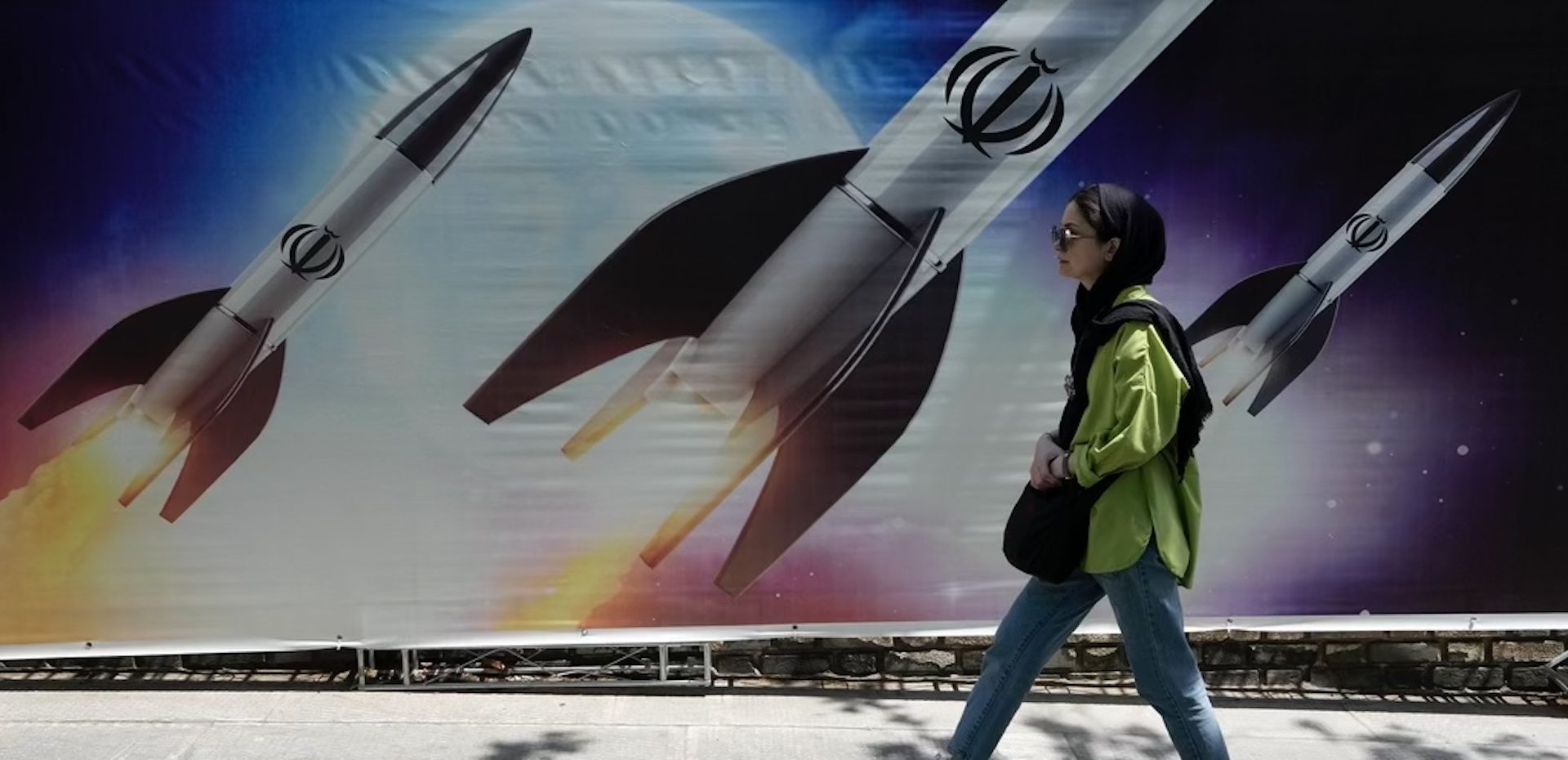
Moscow seeks to preserve its position of equal distance from all countries in the Middle East, balancing between the parties and avoiding direct confrontation with the United States. The Kremlin aims, by every means, to preserve opportunities for continued dialogue with the administration of Donald Trump and therefore has no interest in obstructing the US military operation in Iran. In any case, Russia’s capacity for such confrontation is extremely limited. Instead, a prolonged crisis in the Middle East offers obvious advantages: it diverts Western attention away from Ukraine while rising oil prices support the Russian budget, even if it is still too early to assess how significant this benefit will be.
Limited partnership
A week after the start of the military operation by the United States and Israel against Iran, it is clear that Moscow has only the capacity and the willingness to provide statements of support to Tehran.
Russia condemned the US and Israeli strikes and the killing of Iran’s supreme leader. It also issued statements in support of Tehran at the International Atomic Energy Agency (IAEA) and in the United Nations Security Council. At the same time, Russia has taken no steps that could alter the balance of forces or increase Iran’s security.
‘The war that is under way is not our war. We must do what corresponds to our interests. We must secure benefits for ourselves where this is possible, however cynical that may sound. Are we capable of stopping this war? No, we are not. The one who started it can stop it.’
Dmitry Peskov
Vladimir Putin’s Press Secretary
The key constraint for Moscow remains the shortage of resources – the war against Ukraine absorbs the main part of Russia’s military capabilities. In addition, Russia has no military infrastructure or permanent bases in Iran, which significantly limits its ability to intervene in the conflict directly.
Despite the signing of a comprehensive strategic partnership agreement between Russia and Iran early last year – albeit without a commitment to mutual defence – military cooperation between Russia and Iran remains limited. After the 12-day war, Russia did not supply Iran with any air defence systems, and the country today remains largely defenceless against air strikes by the United States and Israel. Of the full range of discussed deals, only a few have clearly resulted in actual deliveries, according to open sources. These include primarily Yak-130 subsonic combat trainer aircraft, a small batch of Mi-28 attack helicopters, and probably a limited number of armoured vehicles and precision small arms.
Most projects of military-technical cooperation remain at the level of promises, memoranda, or medium-term plans. The contract for the supply of 48 Su-35 fighter aircraft to Iran has repeatedly appeared in media reports and analytical assessments, but there is no reliable information that even a single aircraft has actually been transferred. Similarly, a deal for the supply of several hundred launchers for the Verba man-portable air defence system (MANPADS), along with thousands of missiles for them, is widely regarded as agreed. Yet the schedule for their delivery lasts to the end of the decade, while reports of early ‘advance’ deliveries remain based only on anonymous sources.
Russia today is largely no longer dependent on Iranian military assistance as it was in the early stages of the war. At the beginning of the conflict, Moscow relied to a significant extent on Iranian Shahed-136 unmanned aerial vehicles. By mid-2023, however, Russia had established its own production of drones based on this design, which received the designation Geran‑2. By the end of 2024, Russia had significantly modernised them by installing turbojet engines, which substantially increased their flight speed (Geran‑3), and began producing thousands of these drones each month.
However, Moscow’s restraint is determined not only by limited capabilities. More active support for Tehran would mean openly joining the camp of US adversaries and could undermine the dialogue with Washington that is highly important for Moscow in the context of a settlement of the war in Ukraine and the possible easing of sanctions. To some extent, there is symmetry in the way the US approaches the war in Ukraine, and Russia’s response to the war in Iran. Both want to avoid a serious deterioration in bilateral relations.
In the case of Moscow, this approach weakens Russia’s image as a state capable of protecting its partners and acting as an alternative centre of power for countries of the Global South. Yet Russian policy makers have no alternative.
A crisis beneficial to Moscow?
The Kremlin views a prolonged conflict in the Middle East rather positively since it diverts Western attention away from Ukraine and increases global oil prices and demand for Russian hydrocarbons. President Trump has been forced to temporarily accept the continuation of India’s purchases of Russian oil, although in August last year he imposed secondary sanctions on New Delhi over such supplies and as recently as a month ago demanded they be completely halted.
On the one hand, the new crisis reduces the focus of Western countries on the Ukrainian theatre. Media and political attention is partially shifting to the Middle East, which complicates efforts to maintain the previous level of mobilisation around Ukraine. Some military resources – air defence systems and ammunition – may also be redistributed to the Middle Eastern theatre.
The rise in oil prices and, above all, gas prices linked to the suspension of hydrocarbon exports through the Strait of Hormuz is set to hit the economies of European countries hardest. A deterioration in the economic situation will leave European leaders with fewer resources and possibly less willingness to support Ukraine. In addition, Trump’s foreign policy has so far not contributed to easing divisions within the Western coalition. Taken together, these factors clearly work to the Kremlin’s advantage.
At the same time, Moscow cannot ignore the risks associated with a prolonged war. If the United States becomes deeply involved in the Middle Eastern conflict for a long period, Trump may lose interest in the Ukrainian issue. In that case, Moscow would lose an important instrument of pressure on Kyiv.
Moreover, Trump’s policy is becoming increasingly unpredictable, including for the Kremlin. It is difficult to anticipate what the next step of the US president will be if the objectives of his administration in Iran – whatever they may be – are not achieved and the conflict does not come to an end.
Oil bonus
In Moscow, there is a clear understanding that a prolonged conflict in the Middle East, even if its intensity decreases, will lead to higher oil prices and thereby support the Russian budget, which has evidently faced serious revenue problems in recent months.
The new war has already affected the global energy market. On March 6th, Brent crude exceeded $92 per barrel, while a week earlier it was around $20 lower. The main reason has been Iran’s de facto closure of shipping through the Strait of Hormuz – a key route for oil exports from the Gulf states.
The financial effect for Russia depends primarily on the duration of the crisis. In the short term (up to six months), Russian companies will not be able to significantly increase oil production and exports. In this scenario, Russian budget revenues from oil will depend on the level of global oil prices and on the discount applied to the price of Russian crude.
During the three months preceding the military operation against Iran, Russian oil was sold at around $42 per barrel, with the discount relative to Brent exceeding 35 per cent. This resulted in the loss of more than one third of the planned oil revenues in the budget. Recent information suggests that not only has the discount on Russian oil disappeared, but that it has begun to trade at a significant premium relative to Middle Eastern crude. However, due to the rules governing the calculation and payment of taxes, the Russian budget will only see these additional revenues in April.
If the closure of the Strait of Hormuz ends within a few weeks, the impact of higher oil prices on Russian public finances will be limited. However, assuming the conflict drags on and higher prices persist for several months, then even at a price of $60 per barrel for Russian oil, the additional budget revenues would amount to around 1.5 per cent of GDP on an annualised basis.