Questions by Ben Noble, responses by Nikolai Petrov.
We’re now into the fifth year of Russia’s war against Ukraine. I’m keen to explore the implications inside Russia of a conflict originally meant to last 72 hours.
There is sustained attention on the war economy and possible signs of stress. But what do Russians think about the ongoing war? For instance, what proportion of Russian society now supports the ongoing conflict?
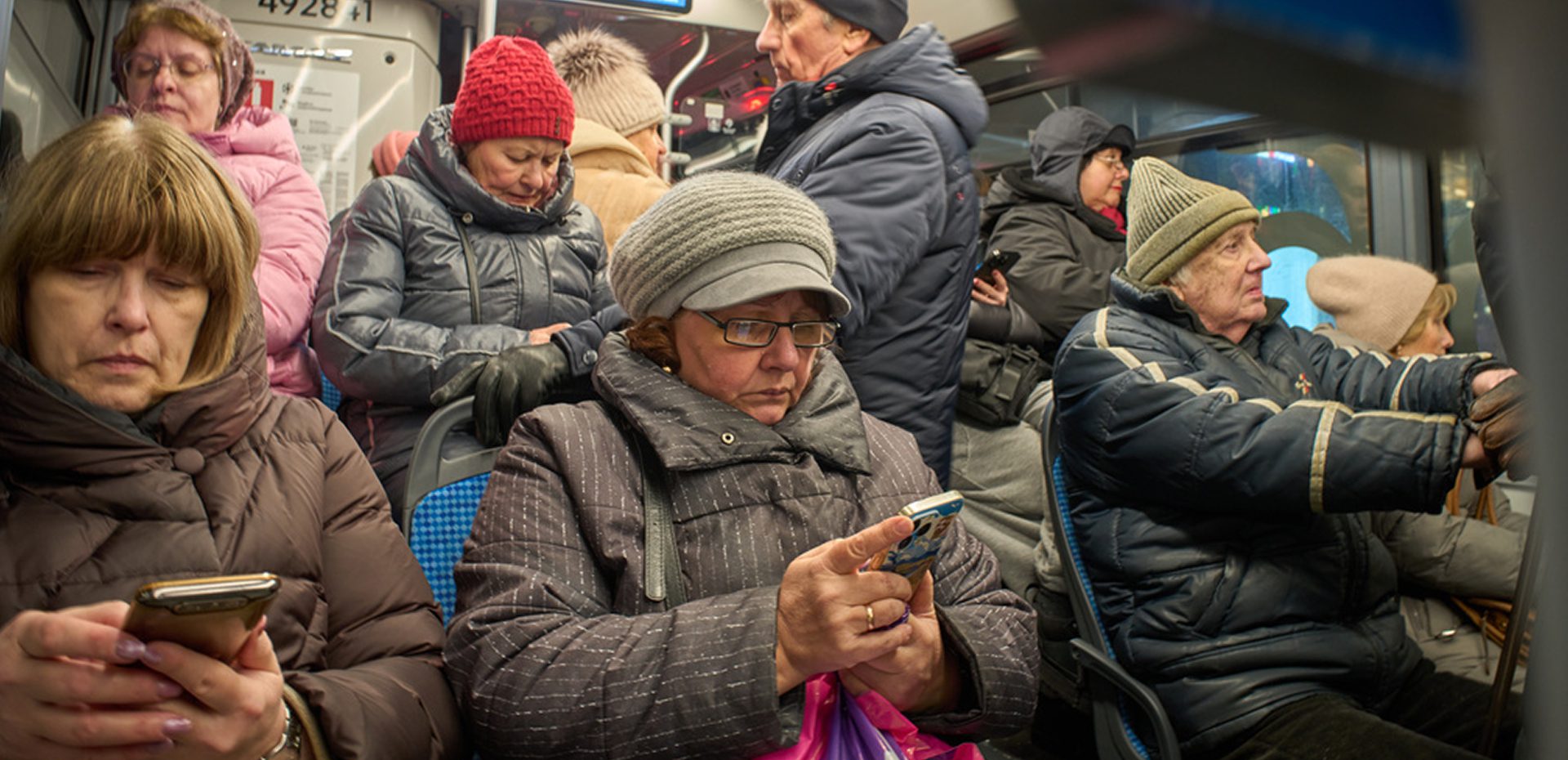
For most ordinary Russians, the war is not a central concern. This may sound cynical, but it’s the truth.
When they do think about it, they tend to view it much like the weather: something that one may or may not like, but which lies beyond individual control and to which one simply adapts.
According to a wide range of sociological surveys, roughly 50 per cent of Russians say they support the war – and this figure has remained broadly stable since the full-scale invasion in February 2022.
Within this group, however, the share of actively pro-war respondents is closer to about 20 per cent. A roughly similar proportion of Russians can be described as anti-war. The majority occupies a middle position characterised by political passivity rather than strong ideological commitment.
Building on that final point, can you say a bit more about the nature and depth of support for the war?
For most respondents, support for the war is less ideological than deferential. Many Russians simply support whatever decisions the authorities make, including the invasion of Ukraine and the ongoing war.
For many in Russian society, the state leadership presumably knows what it is doing: the government’s role is to conduct national policy; the role of ordinary citizens is to manage their personal affairs and care for their families.
All political parties support the war, with the single exception of Yabloko, which is not represented in the national legislature and which operates under considerable political pressure from the authorities.
At the same time, when pollsters ask whether respondents would support a presidential decision to end the war and sign a peace agreement with Ukraine, a majority responds positively. Such answers, however, usually imply a peace settlement on Russia’s terms, which, in practice, presupposes something close to Ukrainian capitulation.
How might economic hardship affect these societal views?
First, Russia’s economic difficulties should not be exaggerated. Household incomes have, in fact, grown during the war years, and the authorities have made considerable efforts to prevent a decline in living standards.
Second, even when people experience the negative consequences of the war, they do not necessarily become more anti-war or more pacifist. On the contrary, societies facing external pressure often become more militarised rather than more anti-war, attributing hardship to an external adversary rather than to their own government.
According to a survey conducted in autumn 2025 by the Chronicles project – an independent Russian research platform analysing Russians’ perceptions of the war against Ukraine – nearly 90 per cent of respondents reported that the war had negatively affected their communities, and around 60 per cent said that they had experienced negative effects personally. These included disruptions to mobile internet services (72 per cent of respondents), shelling and drone attacks (47 per cent), disruptions to rail or airport operations (32 per cent), interruptions to electricity or water supplies (31 per cent), and shortages of petrol at filling stations (21 per cent).
Importantly, different types of wartime hardship affect attitudes in different ways. Direct military threats – such as shelling, drone attacks, and transport disruptions – correlate with higher levels of declared support for the war (by around 5–7 percentage points) and greater unwillingness to support troop withdrawal without achieving Russia’s stated war aims (by around 4–5 percentage points).
By contrast, everyday disruptions – such as mobile internet shutdowns or electricity outages – are associated with lower levels of declared support for the war (by around 7–11 percentage points) and somewhat greater openness to withdrawal without achieving the war’s official objectives (by around 4 percentage points).
Overall, Russians appear not to radically revise their attitudes once they personally experience the negative consequences of the war.
When war reaches people’s homes, societies often rally around the government against a perceived external threat rather than turning decisively against it.
And what does this all mean for Vladimir Putin’s regime?
It’s very unlikely that public opinion – which Vladimir Putin’s regime has managed and operated within for more than a quarter of a century, including four years of large-scale war – will suddenly shift in a way that forces the regime to change course.
At the same time, if the regime were to adjust its policy under the influence of other factors, it could likely rely on public opinion to accommodate such a shift.
The Kremlin closely monitors public sentiment and responds relatively quickly in those areas that matter most to citizens – namely socio-economic conditions, everyday welfare, and cultural issues.
Foreign policy, including military policy, is widely perceived as the prerogative of the Kremlin itself. Citizens generally do not attempt to intervene in this domain, not least because such attempts are both harshly and swiftly punished.