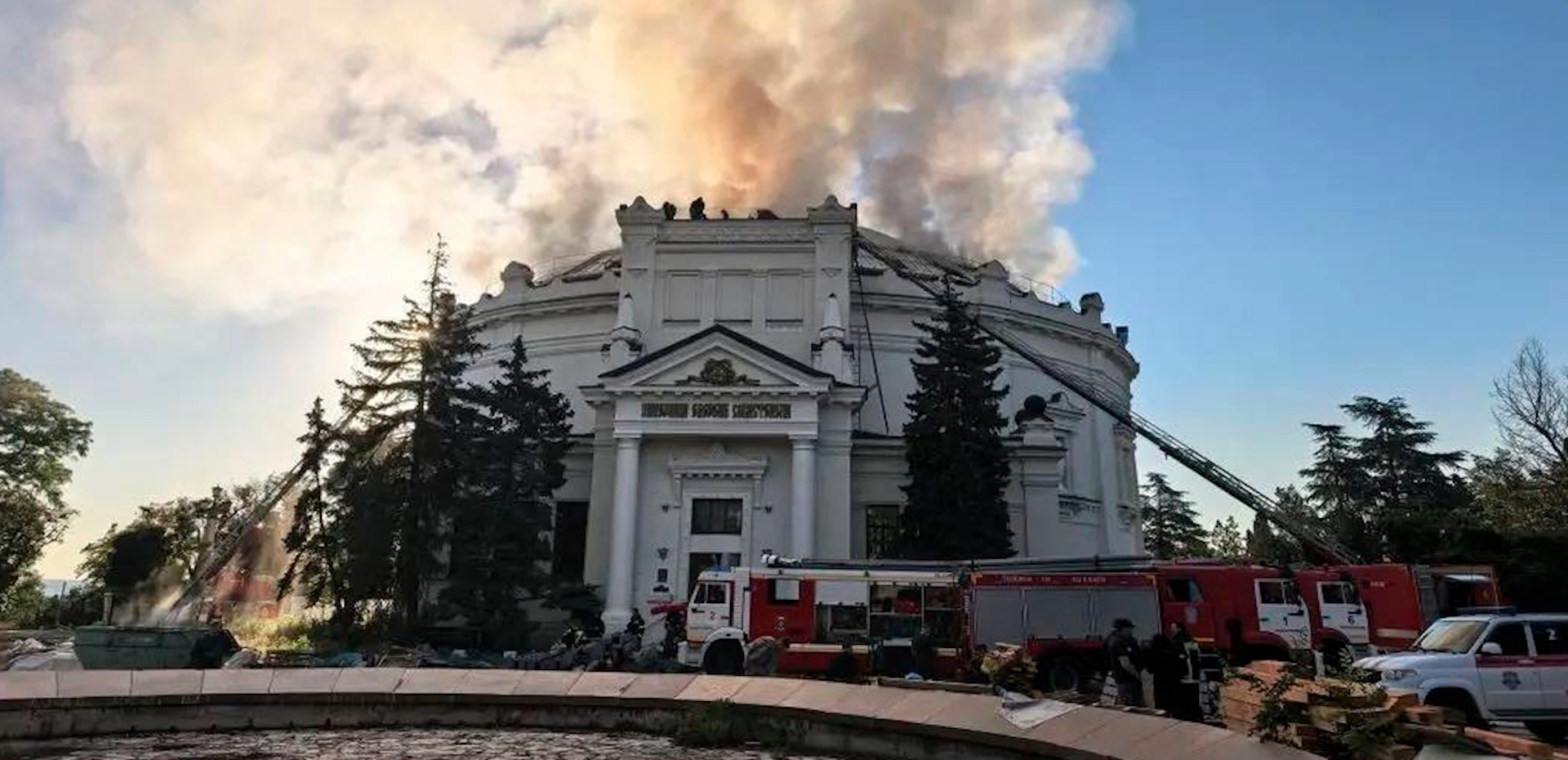
Regular Ukrainian air strikes on the annexed Crimean Peninsula and on southern Russia have led to large-scale travel disruption, directly affecting Russians’ plans for the summer holidays. Against the backdrop of a prolonged military conflict, the disruption of the holiday season could well accelerate the decline in Vladimir Putin’s approval rating which started in spring 2026.
For most Russians, who live in a predominantly northern country with a long winter, the summer holiday is an important social ritual. Holidays in the south have long been regarded as a special privilege. Even before the full-scale invasion of Ukraine, 6 per cent of holidaymakers travelled to resorts in Krasnodar Krai and another 4 per cent to Crimea, together accounting for roughly 14.5 million people. Most Russians, however, stayed at home (33 per cent) or travelled to the countryside or their dachas (27 per cent). Even in the relatively stable year of 2019, only around 8 per cent of Russians could afford to travel abroad.
After 2022, the closure of European destinations to Russians redirected tourism, including the most affluent travellers, towards the Black Sea coast. However, the overall share of Russians visiting Krasnodar Krai and Crimea changed little, remaining at 11 per cent. Among Russians who take seaside holidays, affluent residents of Moscow, St Petersburg, and other major cities are disproportionately represented, although this category also includes public-sector employees and middle-income families who save throughout the year for their holiday. It is fair to assume that the relative ‘invisibility’ of the war, and the continuation of affluent city-dwellers’ peacetime way of life, has helped reduce the potential for protest.
By the summer of 2026, attacks on energy and transport infrastructure in Russia’s southern regions had created critical risks to the safety and comfort of holidaymakers. The most acute situation emerged in Crimea. Since the closure of Simferopol Airport in 2022, access to the peninsula has been limited to road and rail transport. Large-scale Ukrainian strikes in May and June 2026 against air defence facilities, oil depots, and key transport hubs resulted in traffic jams stretching for many kilometres at entry points and fuel shortages that complicated tourists’ return journeys. At the same time, residents began stockpiling non-perishable goods, which triggered food shortages. As a result of the increased Ukrainian attacks, hotel bookings in Crimea fell by 31 per cent in early June compared with the previous year, and around 80 per cent of planned trips were cancelled.
In Krasnodar Krai, the main problem was the environmental consequences of strikes on oil refineries, which led to the pollution of coastal waters and the shoreline. In view of the official assurances that beaches in the resort town of Anapa remain safe, the redirection of tourism from Crimea to Krasnodar Krai risks creating excessive demand on local utilities and hotels, which may struggle to cope.
The disruption of the holiday season coincides with the decline in support for Putin which was recorded in April and May 2026. In authoritarian regimes, regular monitoring of the leader’s popularity serves as a key indicator of the system’s stability. The state’s inability to ensure that citizens can enjoy their customary holidays undermines the social contract, and shows how the long-term consequences of a prolonged military conflict could potentially cause a serious problem for the authorities.